Can Old Leather Items Be Fully Restored or Not?
Old leat her has a way of holding memories. A favorite sofa might remind you of family gatherings, a worn jacket could carry years of character, and a car interior can still feel special even after thousands of miles. But when leather starts to crack, fade, dry out, or lose its shape, many owners ask the same question: Can it be fully restored, or is replacement the only option?
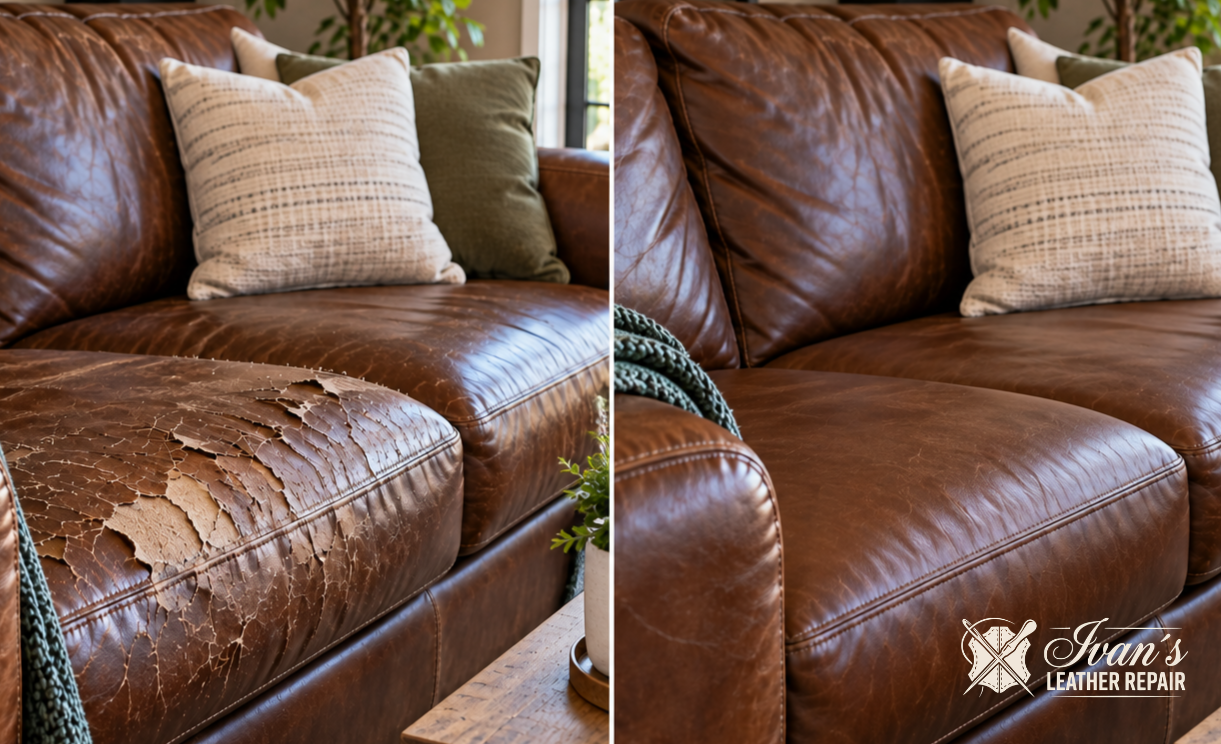
The honest answer is that restoration is often possible, but not always complete in the sense of making an item look and feel brand new. The final result depends on the leather type, the depth of the damage, the item’s age, and the quality of the restoration process. In many cases, professional work can dramatically improve appearance, comfort, and durability. If you want to understand what is realistic, this guide breaks it down in plain language and shows where expert help, such as residential leather repair or leather sofa and couch repair, can make the biggest difference.
For context, leather care and restoration are not just about appearance. They also support waste reduction and longer product life, which fits into broader sustainability goals. The U.S. Environmental Protection Agency explains that extending the life of goods helps reduce landfill waste and resource use, while the U.S. Forest Service has long noted the importance of properly maintaining natural materials to preserve value and function. Those ideas matter when deciding whether to repair, restore, or replace leather items. You can also read more about maintenance and finish care through the National Park Service’s leather care guidance.
What “Full Restoration” Really Means for Leather
Appearance versus structural recovery
When people say they want leather fully restored, they usually mean one of two things. They may want the item to look nearly original again, or they may want it to be fully usable and comfortable, even if some aging remains. Those are not always the same outcome. A skilled technician can often repair color loss, stabilize cracks, smooth surface wear, and improve texture, but deep deterioration may still leave traces of age.
Structural recovery is the more important goal for longevity. If the leather has lost flexibility, split at the seams, or worn thin in high-contact areas, a restoration plan must address those problems first. Cosmetic work like dyeing and topcoating comes later. This is why professional leather repair can be so valuable: it targets the damage before it spreads and creates a better foundation for finishing work.
Why can some pieces be revived better than others
Not all leather behaves the same way. Full-grain leather, top-grain leather, corrected-grain leather, bonded leather, and suede all respond differently to cleaning, conditioning, fillers, dyes, and protective coatings. A jacket with moderate surface wear may respond beautifully to restoration, while a low-quality bonded leather chair that is peeling apart may only improve temporarily. The more natural and intact the leather fibers are, the better the chances of a high-quality outcome.
Age also matters. Vintage leather can sometimes be restored surprisingly well if it has been stored properly and not exposed to extreme heat, sunlight, or moisture. On the other hand, leather that has repeatedly dried out and re-cracked may be too fragile for aggressive repair. That is why a thoughtful inspection should always come before any promise of results.
The Main Factors That Decide Whether Leather Can Be Restored
Type of leather
The first step is identifying what kind of leather you have. Aniline leather, semi-aniline leather, pigmented leather, nubuck, and suede all need different techniques. For example, pigmented leather is more forgiving because it has a protective finish, while aniline leather shows natural beauty but can stain or fade more easily. Each type changes how cleaners, conditioners, and color systems should be used.
This is also where an informed approach helps avoid mistakes. A harsh cleaner on delicate leather can cause more damage than the original problem. A restoration professional will usually test products in a small area and adjust the process to the specific material. For a deeper look at how material differences affect repair decisions, our related article on how leather types affect durability and care is a useful companion read.
Extent of damage
The damage itself is the next major factor. Surface scratches, light fading, and minor scuffs are often highly repairable. Deep cracks, torn panels, water damage, burns, and pet damage require more advanced work and may not disappear completely. The more the leather has broken down, the more likely the restoration will be about stabilization and improvement rather than total reversal.
Professionals often follow a damage-based decision tree. Light wear may only need cleaning and conditioning, while more serious damage can require sanding, fillers, color matching, and sealing. When the issue is severe, such as burned upholstery or torn seams, the work may involve patching or panel replacement. If that sounds familiar, services like burn hole leather repair or pet damage leather repair may be the right fit.
Value and intended use
The value of the item also shapes the restoration plan. A family heirloom, a designer jacket, a classic car interior, or an expensive sofa often justifies more detailed work than a low-cost mass-produced piece. In other words, the goal is not always to make every item perfect; the goal is to make a smart investment that preserves value and function.
For example, a business owner may choose commercial leather repair for lobby seating because the customer experience matters, while a homeowner may prioritize comfort and appearance in a favorite sectional. In both cases, the right repair strategy depends on what the item is worth to the owner and how it is used every day.
What Professionals Can Usually Restore Successfully
Scratches, scuffs, and surface fading
Minor scratches and faded color are among the easiest problems to improve. In some cases, gentle heat and reconditioning products can soften superficial marks. When the color is uneven, technicians can clean, recolor, and protect the surface so the item looks more consistent. These methods are especially effective on pieces with intact leather fibers and limited cracking.
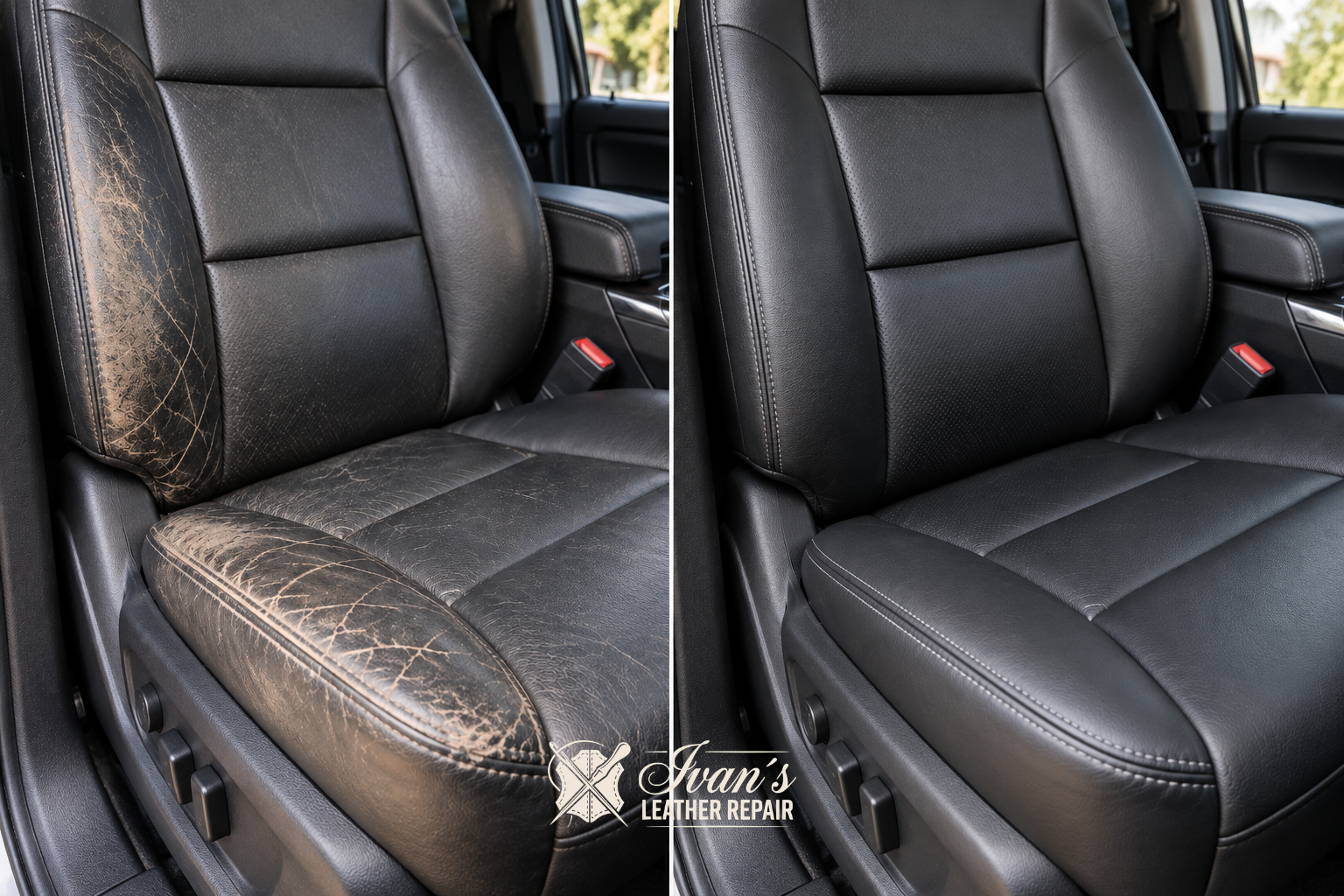
This is where real-world expectations matter. A restored piece may not look untouched under close inspection, but the overall visual improvement can be dramatic. It can go from looking tired and neglected to polished, clean, and usable again. For auto interiors, that might mean a refreshed cabin that feels newer without replacing the seats. Our auto leather repair service is designed for that kind of result.
Dryness and loss of flexibility
Dry leather often responds well to proper cleaning and conditioning, especially if the material has not yet started to split. Conditioners restore some softness and may reduce the risk of new cracks forming. However, restoration works best when dryness is caught early. Once leather becomes brittle, the fibers may be too weakened to return to their original feel.
If dryness has already led to stiffness or surface checking, a careful process is needed to avoid overworking the leather. The good news is that even severely dry pieces often look better and last longer after treatment. For readers dealing with that problem, our related post on fixing stiff or dry leather gear explains the causes and practical next steps.
Color loss and finish wear
Color loss is often one of the most visible signs of aging, but it is also one of the most correctable. Recoloring systems can be custom mixed to match existing tones, then sealed with a compatible topcoat. This works especially well when the underlying leather is still stable, and the finish layer is the main issue. The result is a more uniform and revived look.
Industry best practices emphasize careful color matching rather than simply applying a close shade and hoping it blends. That attention to detail is what separates a patchy result from a professional one. If you are curious about the technique, our article on how color matching works in leather car seat restoration explains the process in more depth.
When Leather Cannot Be Fully Restored
Severe cracking and fiber breakdown
Deep cracking is one of the biggest challenges in leather restoration. Once the leather fibers have broken down far enough, fillers and coatings can only do so much. A piece may look far better after repair, but the original surface integrity may never be fully regained. This is why early intervention matters so much.
Professional restorers often use flexible fillers, sanding, dye work, and protective topcoats to improve cracked areas. Still, if the leather is splitting in multiple directions or the damage has spread across large surfaces, the best outcome may be stabilization rather than total restoration. That is why a service like sun damage leather repair is often about preserving what remains before the damage becomes irreversible.
Peeling bonded leather and weak backing layers
Bonded leather is a special case because it is not the same as natural leather. Once the top layer starts peeling, the material may continue to break down even after cosmetic fixes. In those situations, restoration can improve appearance temporarily, but it may not provide a lasting solution. This is one reason many professionals recommend replacement for heavily deteriorated bonded products.
The same caution applies to items where the backing or foam structure has failed. If the support underneath is collapsing, the leather surface may only be part of the problem. A well-designed repair plan considers the whole item, not just the outer layer.
Major burns, cuts, or loss of material
When leather has missing material, the restoration challenge becomes more complex. A burn hole, for example, may require patching, fill work, color blending, and careful finishing to make the damage less visible. The goal is often to disguise and stabilize rather than erase every trace. Deep cuts or missing sections may be similar, especially when the damage affects load-bearing or visible areas.
That is why certain services are highly specialized. For instance, burn hole leather repair can produce a strong visual improvement, but it usually cannot recreate untouched factory leather from scratch. Honest expectations lead to better decisions and better satisfaction with the final result.
Latest Trends in Leather Restoration and Sustainability
Bio-based and eco-friendly materials
In 2026, the leather industry continues to move toward sustainability and innovation. Bio-based alternatives such as mushroom leather and lab-grown materials are gaining attention, while repair and restoration work is also becoming more eco-conscious. The projected growth of the sustainable leather market to €400 billion by 2026 shows how much the sector is changing. That shift is important because repair is becoming part of the sustainability conversation, not just a cost-saving choice.
As consumers become more selective, restoration businesses are also adopting lower-impact dyes, safer cleaners, and longer-lasting finishes. You can see the broader trend discussed in the article from LeatherAdvice on 2026 leather fashion trends, which highlights sustainability and new finishing methods as key developments. This matters for anyone deciding whether to restore or replace a leather item.
Smarter finishing systems
Modern finishing products are designed to balance flexibility, durability, and visual quality. Better topcoats can help restore sheen without making the leather feel stiff or plastic-like. Improved pigments and coatings also make it easier to blend repairs into surrounding areas. These tools are especially helpful for furniture and vehicle interiors that need both beauty and daily wear resistance.
For homeowners, this means repairs can last longer and look more natural than older methods allowed. For businesses, it means seating can stay presentable without frequent replacement. The industry’s direction is clear: restoration is becoming more refined, more sustainable, and more effective.
How a Professional Restoration Process Usually Works
Inspection and material assessment
The best restoration process begins with a thorough inspection. A technician identifies the leather type, damage patterns, finish condition, and any hidden structural issues. This stage matters because it determines whether the leather should be cleaned, filled, recolored, patched, or protected. Without it, the repair plan can easily miss the real cause of deterioration.
Professionals also consider whether the item is a candidate for full restoration or a partial improvement. This step prevents overpromising and helps owners make practical choices. If you are comparing options, our guide on whether professional leather repair is worth it can help you evaluate the tradeoff between DIY and expert service.
Cleaning, conditioning, and surface prep
After inspection, the leather is cleaned to remove dirt, oils, and residues that can interfere with repair products. Conditioning may follow to improve flexibility before color work begins. Surface preparation can also include light sanding or deglazing, depending on the finish and damage. These steps create a better foundation and improve how well the repair materials bond.
This is where many DIY attempts go wrong. Skipping preparation can cause dyes to look uneven or fillers to fail early. A professional process is slower, but it usually produces a more durable result.
Repair, recolor, and seal
Once the surface is ready, the technician addresses the actual damage. That may mean filling cracks, patching tears, or blending worn spots. After that, custom color matching and topcoating bring the appearance back together. The last step is important because it protects the leather from future wear and helps the finish look consistent.
For many pieces, this stage is where the transformation becomes visible. A sofa with faded arms, a jacket with worn cuffs, or a classic car seat with sun damage can look dramatically better after a proper finishing pass. In some cases, the final result can extend the life of the item for years.
DIY Restoration Versus Professional Help
When DIY is enough
DIY leather care can be effective for minor issues. Light cleaning, routine conditioning, and small scuff touch-ups are manageable for many owners. If the leather is still in good shape and the problem is mostly cosmetic, basic maintenance can go a long way. Regular care also helps prevent bigger problems from developing later.
However, DIY should be approached carefully. Using the wrong conditioner, applying too much product, or scrubbing too aggressively can worsen damage. It is wise to test any product first and avoid shortcuts on valuable items.
When a professional is the smarter choice
Professional help is recommended when the damage is serious, the item is valuable, or color matching must be precise. Expert restorers have access to materials, tools, and experience that most owners do not. They also know how to judge when a repair will help and when it may only provide a temporary cosmetic fix.
This matters for specialized items like leather jacket repair, furniture with heavy wear, or pieces with unique finishes. If the item has sentimental value, professional service is often worth the investment because it preserves the look and usability of the piece without unnecessary risk.
Real-World Examples and Common Restoration Outcomes
Vintage jackets and family heirlooms
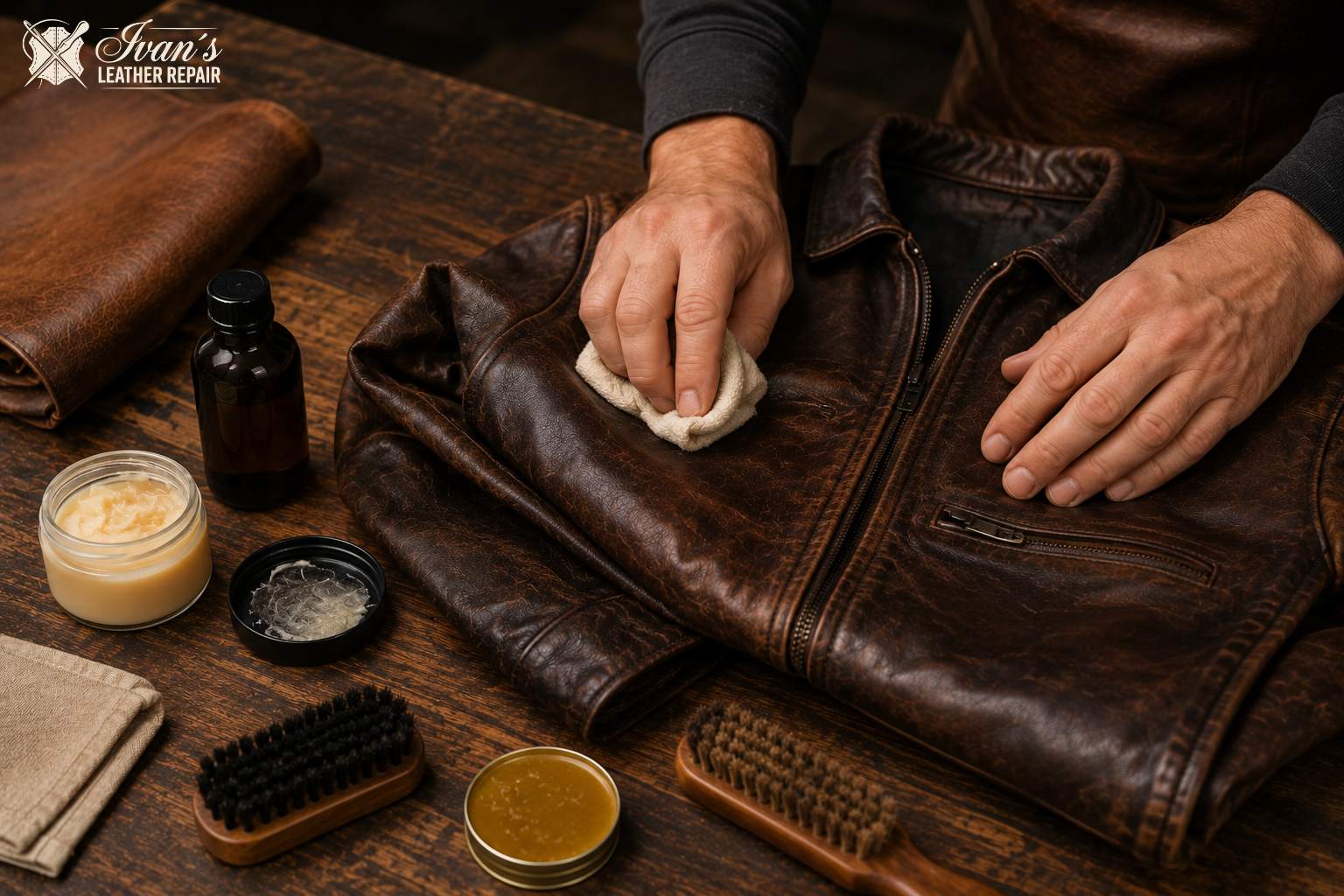
A vintage leather jacket with worn cuffs and fading on the shoulders can often be revived through cleaning, conditioning, and color blending. The goal is to preserve the character while making it wearable again. Many owners are pleasantly surprised by how much life remains in a jacket they thought was too far gone.
Antique furniture can be similar. A chair or sofa may have years of wear, but if the frame and leather remain structurally sound, restoration can make it a centerpiece again. In these cases, antique furniture restoration is not just about aesthetics; it is about preserving history and usefulness.
Cars, offices, and hospitality spaces
Vehicle interiors often benefit from targeted restoration because sunlight, temperature changes, and daily use cause predictable wear. Seats, trim, and steering surfaces can usually be improved if the leather is still intact. For classic vehicles, the goal may be to keep the interior period-correct while making it comfortable and clean enough for regular use. That is exactly where classic car interior restoration can provide major value.
In commercial spaces, even small improvements matter. Clean, well-kept seating can influence how clients and guests perceive a business. A restaurant booth or lobby chair that looks worn can send the wrong message, while a thoughtful repair helps maintain a polished environment.
How to Prevent Future Leather Damage
Routine cleaning and conditioning
Prevention is the best long-term strategy. Leather should be cleaned gently and conditioned at appropriate intervals so it stays supple and protected. Dust, body oils, sunlight, and dry air all contribute to wear over time. A consistent care routine slows that process and reduces the need for major restoration later.
If your item already has signs of wear, it may be worth combining care with targeted restoration. For example, someone with a couch showing both fading and cracking may need a mix of leather chair repair principles and maintenance habits to prevent the same issue from returning.
Smart storage and placement
Where leather is kept matters almost as much as how it is cleaned. Avoid placing furniture in direct sunlight, near heat sources, or in damp areas. Jackets should be stored in breathable covers, not sealed plastic bags, and vehicles should be parked with sun protection when possible. These simple steps can make a big difference over time.
For anyone dealing with repeated sun exposure, the key is to protect the finish before fading becomes severe. Once the surface dries out and color begins to break down, restoration becomes more involved. A small prevention effort now can save a much larger repair later.
Final Answer: Can Old Leather Items Be Fully Restored?
The practical truth
Old leather items can often be restored significantly, but not always fully in the literal sense of returning them to factory-new condition. If the leather is still structurally sound, professional repair can do an impressive amount of work. If the material is severely cracked, peeling, or missing pieces, the outcome is usually partial restoration with strong visual and functional improvement. In short, the answer is usually “yes, to a meaningful degree,” but not always “perfectly.”
The best results come from early action, realistic expectations, and a restoration plan tailored to the item. That is especially true for pieces with special value, whether sentimental, financial, or practical. For local help in Brooklyn, Ivan’s Mobile Leather Repair offers experience across furniture, vehicles, jackets, and specialty items.
What to do next
If your leather item still has good structure, do not wait until the damage worsens. Start with cleaning, avoid harsh products, and get a professional assessment before deciding on replacement. If the item is already heavily worn, ask whether partial restoration, targeted repair, or panel work would produce the best balance of appearance and value.
For a detailed evaluation or service recommendation, explore our repair options, learn more about home leather restoration and commercial seating repair, or contact Ivan’s Mobile Leather Repair at (347) 207-3031 or info@repairleathernyc.com. Restoring leather is often less about making it brand new and more about giving it a longer, better-looking life—and that is usually worth it.