Why Your Leather Feels Stiff or Dry (And What It Means)
We all love leather for its classic look and feel. It gets better with age and can last for years if you take care of it. But what happens when your favorite chair, jacket, or car seat starts feeling stiff or dry? That's usually a sign that it's lost some of its moisture and flexibility. If you ignore it, things can get worse.
In many homes and vehicles, when leather first starts feeling stiff, it's often a wake-up call that you might have skipped some regular maintenance. If you're dealing with a dry couch or a jacket that doesn't bend smoothly anymore, figuring out why can help you fix it. And if it needs more than a DIY touch, services like leather chair repair or leather sofa and couch repair can bring it back to life.
This guide will walk you through why leather gets stiff, what that tells you about its condition, how to care for it, and when a repair might be better than tossing it out. Plus, we'll share some handy tips to prevent future problems and show you real examples of how leather can bounce back with the right care.
What Stiff or Dry Leather Is Telling You
Leather is losing the oils that keep it flexible.
Leather is a natural material, which means it doesn't behave like synthetic stuff. Over time, the oils that keep it soft can evaporate or break down. When that happens, the fibers tighten, the surface feels less supple, and it starts to resist bending. That's why your jacket sleeve might feel crunchy, or your car seat gets hard in spots where everyone sits.
The science behind this is linked to aging, moisture balance, and how exposed it is to the elements. According to the National Park Service, leather conservators pay close attention to humidity, temperature, and how often things get handled. The same goes for the leather goods you use every day.
Dryness often comes before visible cracking.
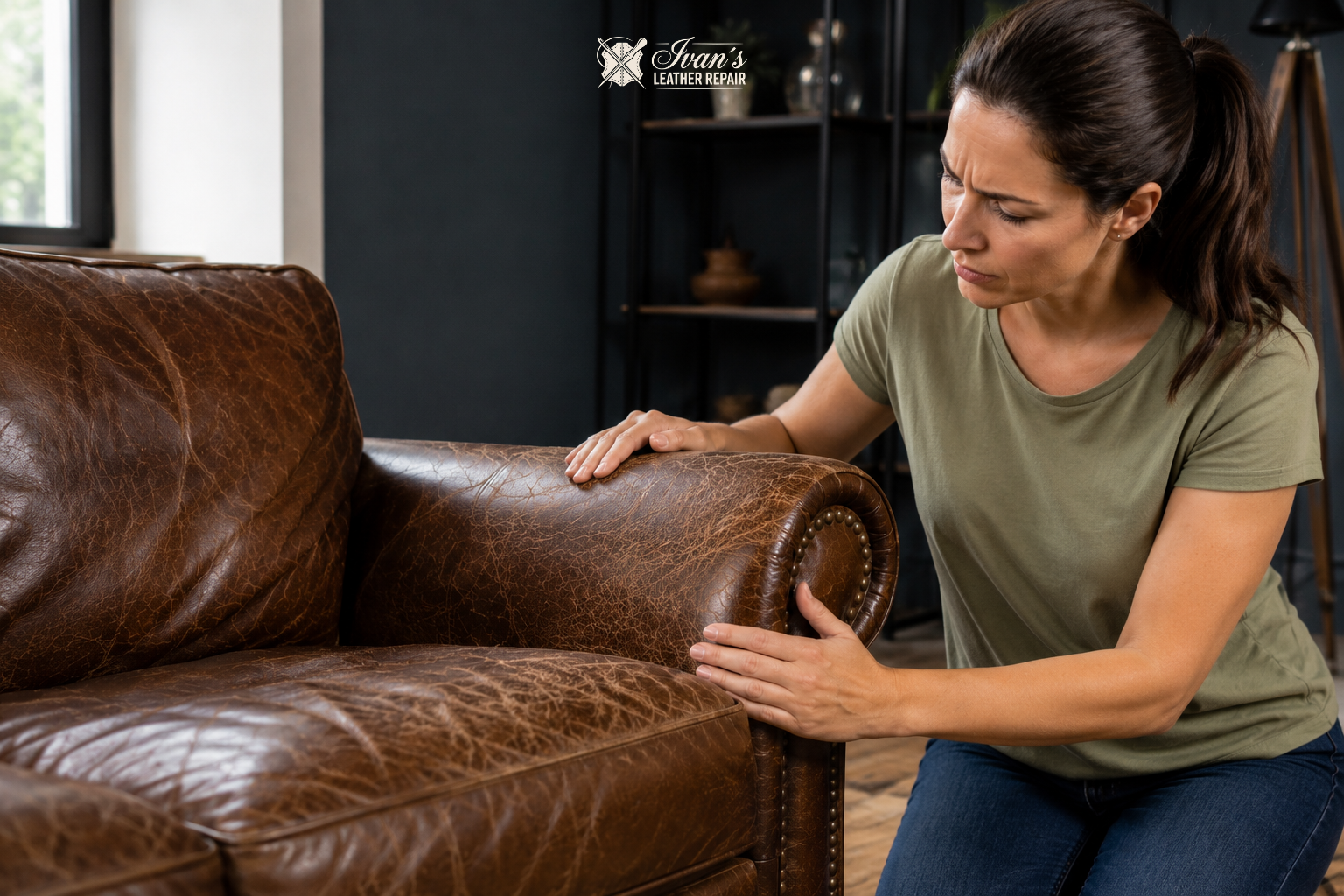
Here's something to keep in mind: stiffness is often an early warning sign. You might not see cracks yet, but the leather is on its way there. As fibers become less lubricated and more brittle, you might notice fine lines, dullness, or uneven color. So, dry leather isn't just uncomfortable, it's getting weaker.
If your leather is already showing some surface damage, a targeted approach like cracking leather repair might be needed before it gets worse. Catching the issue early can mean the difference between simple conditioning and a bigger restoration job.
The Most Common Causes of Leather Stiffness
Natural oil depletion from age and neglect
Leather naturally ages, but without regular conditioning, it ages much faster. Even if you don't use it much, the oils that keep it soft gradually disappear. This can happen to anything from a stored handbag to a jacket in the closet.
Regular care is key because different types of leather react differently to age and use. To dive deeper into this, check out our guide to how leather types affect durability and care. Knowing your leather's finish makes it easier to keep it soft and looking good.
Heat and sunlight accelerate drying.
Direct sunlight, radiators, heaters, and hot storage areas are big culprits when it comes to stiff leather. Heat speeds up evaporation, pulling moisture out. In homes, you often see this on furniture near windows. In cars, it's common on dashboards and seats exposed to summer heat.
Research from the U.S. Forest Service shows how environmental stress affects natural materials. While the details differ, the main point is clear: heat and dryness can make leather brittle and less resilient.
Improper storage can lock in creases and rigidity.
If leather is folded tightly, hung on thin wire hangers, or sealed in plastic bags, it can stiffen because it can't "breathe" properly. This is common with garments, cushions, and unused accessories stored for months. Once rigid fold lines form, they're tough to remove.
For clothing and outerwear, professional leather jacket repair can help restore shape and surface condition when storage causes damage. Even if the damage seems minor, a poorly stored jacket can lose comfort long before it shows major wear.
Lack of movement causes fibers to settle.
Think of leather like a muscle. If you use it regularly, it stays flexible. If it sits untouched, the fibers can settle into rigid positions. That's why a rarely used chair or a seasonal jacket often feels stiffer at first use.
This is why commercial leather repair is so important for businesses. Restaurant booths, lobby seating, and waiting room furniture often get uneven use, leading to stiffness and wear in unexpected places.
Water and harsh chemicals can strip the surface.
Water damage is another big cause of stiffness. When leather gets wet and dries without proper conditioning, the fibers tighten. Harsh cleaners can do similar damage by stripping protective layers. Household detergents and alcohol-based sprays might seem handy, but they can make things worse.
For more on moisture issues, our article on water damage and leather explains what happens during wet-dry cycles. If your leather's lost flexibility after a spill or cleaning mistake, a professional check can help decide if conditioning or repair is needed.
What Stiff Leather Means for Different Items
Leather furniture: comfort and structure are both affected
When a sofa or chair feels dry, the issue isn't just how it looks. Comfort takes a hit, the finish can dull, and seams might start to stress more quickly. In sofas, stiffness often shows first on cushions, headrests, or arms.
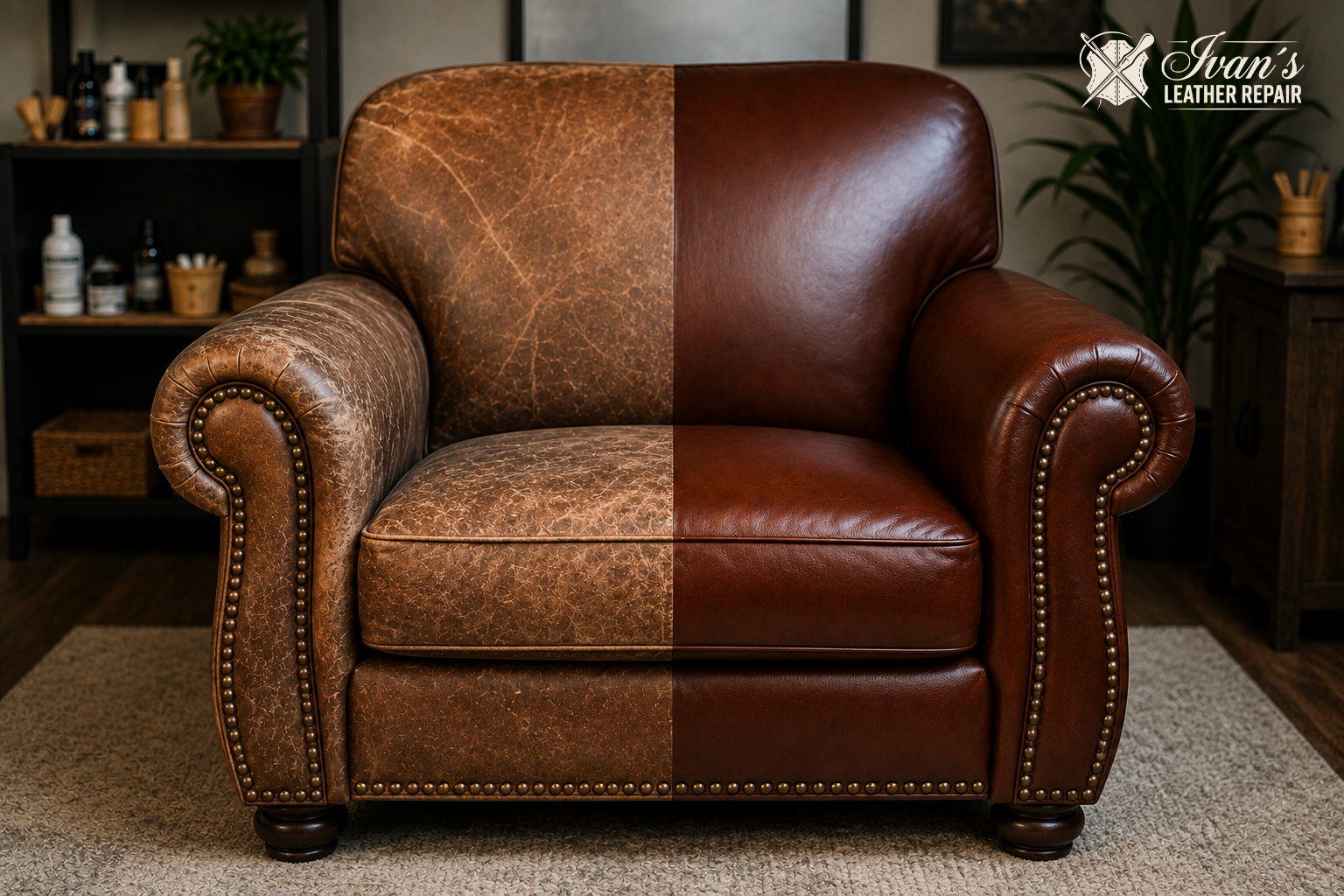
Furniture can often be improved with conditioning and restoration work. If your piece has sagging, scuffs, or fading along with dryness, residential leather repair can tackle both the look and the function. For bigger pieces, a well-thought-out restoration can be more budget-friendly than buying new.
Auto leather: heat exposure is usually the main culprit
Car interiors are especially vulnerable to heat, UV exposure, friction, and rapid temperature changes. Leather seats can dry out faster than furniture due to the environment. Once auto leather becomes stiff, it might crack at seams or wrinkle in bolsters.
For worn seats, trim, and panels, auto leather repair can restore flexibility and appearance. If you have a classic car, classic car restoration might be better because older interiors often need color matching and surface renewal.
Jackets and handbags need shape retention.
Leather garments and accessories need a balance of support and flexibility. When they dry out, they might become hard at seams, shoulders, cuffs, or handles. This can make them uncomfortable to wear or carry.
Usually, a combination of cleaning, conditioning, and careful reshaping can help, but deeper wear might need expert help. If the leather has scratches, lost finish, or weakened stitching, professional restoration can save both the look and usability.
How to Tell Whether Your Leather Needs Conditioning or Repair
Signs that conditioning may be enough
If the leather feels dry but isn't cracked, peeling, or deeply discolored, try conditioning first. A good conditioner can replenish lost oils and improve flexibility. You might notice the surface relaxes, sheen returns, and the item feels better after treatment.
Before applying anything, test a small hidden area and make sure the product is meant for leather care. The Federal Trade Commission offers general advice on using cleaning products, and the same caution applies to leather: don't assume a household product is safe just because it works elsewhere.
Signs that repair is the smarter choice
If stiffness comes with cracking, peeling, color loss, or open seams, conditioning alone won't cut it. The leather might need filling, surface correction, recoloring, or structural repair. Ignoring these signs can cause damage to spread.
When damage is visible, services like sun damage leather repair or pet damage leather repair might be the right call. Matching the repair to the problem is key to a lasting result.
Best Practices for Softening and Protecting Leather
Clean gently before conditioning.
Conditioner works best on clean leather. Dust, grime, and body oils can block absorption and create an uneven finish. Use a soft cloth and a leather-safe cleaner, then let it dry naturally before conditioning. Rushing or conditioning dirty leather can trap debris and leave it looking patchy.
This is why leather maintenance should be routine, not reactive. Light cleaning every few weeks can cut down on buildup and make future conditioning more effective. For busy homes or offices, maintenance is even more important because contact points wear down faster.
Condition with the right product and the right amount
More conditioner isn't better. Over-conditioning can leave leather greasy, overly soft, or dull. Apply a high-quality leather conditioner in thin layers and work it in evenly. Give it time to absorb, then buff away excess if needed. If the leather has a delicate finish, choose a product recommended for that type.
Regular, moderate conditioning supports flexibility without overloading the surface. For pieces with broad wear patterns, like couches and lounge chairs, a mix of cleaning, conditioning, and professional restoration can produce the best results.
Store leather in a stable environment
Temperature and humidity matter more than you might think. Keep leather away from direct sun, heating vents, damp basements, and sealed plastic storage. Breathable covers, padded hangers, and a cool, dry room are better choices. When stored well, leather retains its balance and lasts longer.
Caring for the environment is one of the simplest ways to prevent major damage. A piece that's conditioned once but stored poorly may dry out quickly. In contrast, leather stored correctly might only need occasional care to stay supple for years.
Why Professional Leather Restoration Matters
Repair can save more than just the appearance.
Professional leather restoration helps protect your investment. Once leather becomes dry, stiff, or cracked, the damage can spread beyond the surface. A skilled technician can assess if it needs reconditioning, recoloring, filler work, seam repair, or a mix of methods. That's especially useful when leather has multiple issues going on.
There's also a growing focus on sustainability and waste reduction in the repair industry. Research on repair-centered fabrication and the broader right-to-repair movement highlights the value of keeping durable goods in use rather than replacing them. For leather items, that means more furniture, vehicles, jackets, and commercial seating can be restored and reused.
Professional care is especially helpful for high-use items.
High-use seating and commercial spaces can be tough to maintain on your own. Restaurant booths, office chairs, and aircraft interiors all need durability and a clean appearance. In these settings, even minor stiffness can signal a larger issue. That's why services like restaurant booth repair and aircraft interior repair are valuable for keeping spaces functional and presentable.
For Brooklyn residents and businesses, local support is handy because mobile repair can cut downtime and make the process more convenient. Whether it's a worn family sofa or business seating, restoration is often faster and more practical than full replacement.
Case studies show the value of experienced restoration.
Examples from the field make the benefits clearer. Leather Spa in New York City is known for advanced repair and care technology, showing how detailed restoration methods can bring damaged pieces back to life. Mobile services like LeatherFixUp demonstrate another trend: convenient on-site repairs for furniture, car interiors, and business seating. These examples reflect a larger industry shift toward flexible, specialized restoration rather than one-size-fits-all replacement.
That trend is backed by technical research, too. An arXiv study on leather defect classification reported an 84% accuracy rate using an integrated neural network and machine vision approach. While this kind of tech is mainly used in analysis and quality control, it shows the attention now being paid to identifying damage accurately before treatment begins.
Frequently Asked Questions About Stiff Leather
Can stiff leather be softened again?
In many cases, yes. If the leather has only dried out, a proper conditioner and gentle handling can restore much of its flexibility. The earlier you address the problem, the better the results tend to be. Once cracking or surface loss appears, the leather may still be restorable, but it usually requires more than conditioning alone.
Should I use household products to soften leather?
It's best not to. Household cleaners can strip natural oils or leave residues that damage the finish. Use products specifically formulated for leather care instead. The goal is to nourish the leather, not force a quick cosmetic change that causes long-term harm.
How often should leather be conditioned?
There's no universal schedule because use, climate, and leather type all matter. However, many pieces benefit from periodic conditioning several times a year, with more frequent care in dry or sunny environments. If the leather is exposed to heat or heavy daily use, it may need attention sooner.
What if the leather is already cracked?
Cracks usually mean the leather has lost flexibility for a while. In that case, the repair should be evaluated before trying more conditioner. A professional can assess whether the surface can be filled, recolored, or strengthened. If you notice cracking in cushions, chairs, or seams, consider leather chair repair or another relevant restoration service sooner rather than later.
How to Prevent Leather from Feeling Stiff Again
Build a simple maintenance routine.
The best prevention plan is simple and consistent. Dust the leather regularly, keep it away from strong heat and direct sun, and apply a quality conditioner on a reasonable schedule. Small habits create big results over time. Preventive care is usually much cheaper and easier than trying to reverse major drying or cracking later.
It also helps to inspect the item at the change of each season. Winter indoor heat and summer sun are common culprits, so checking leather a few times a year can help you catch early changes before they become expensive repairs.
Watch for environmental stressors.
If your leather is near a window, vent, radiator, or frequently used doorway, it may be at greater risk. Moving the item a few feet away or adjusting the room setup can make a meaningful difference. For cars, park in shade when possible and consider using sun protection to reduce exposure.
When environmental damage has already started, specialized services can target the root issue. For example, sun damage leather repair helps address fading and dryness caused by prolonged exposure, while residential leather repair can support worn furniture inside the home.
Final Thoughts: Stiff Leather Is a Warning, Not a Dead End
When leather feels stiff or dry, it's usually telling you that its natural balance has changed. In many cases, the problem is reversible if you act early with proper cleaning, conditioning, and storage habits. In more advanced cases, repair can restore appearance, comfort, and durability while preventing further damage.
That's why leather maintenance should be seen as protection, not just appearance care. Whether you're caring for a sofa, a jacket, a car interior, or commercial seating, the right response depends on the cause of the stiffness. If you're unsure what your item needs, a professional evaluation can save time and protect the material.
If your leather is already showing dryness, cracking, or wear, Ivan's Mobile Leather Repair can help you explore the next step. From home furniture to vehicles and business seating, we provide practical restoration solutions designed to bring comfort and life back to leather items. To learn more or request help, visit our website and choose the repair service that fits your piece best.