Leather is known for its classy look and lasting quality, but not every leather fits the bill the same way. The type you pick influences how long it'll last, how you should clean it, and how easy it is to fix up. Whether you're looking at furniture, car interiors, jackets, or accessories, getting to know leather grades can help you make smarter choices and avoid wasting money.
This guide breaks down how different leather types impact durability and care, offering practical tips for everyday maintenance and long-term care. You'll discover how to spot common leather types, the kind of upkeep each needs, and when to call in the pros. Need help with worn-out furniture? Our residential leather repair and leather sofa and couch repair services can help you bring your favorite pieces back to life.
With more people interested in sustainability, leather care is changing too. Repairing leather is becoming more popular as folks look to keep durable items instead of tossing them out. For more on sustainable habits, check out the U.S. Environmental Protection Agency’s page on reducing waste through reuse and recycling.
Why Leather Type Matters More Than Most People Realize.
Durability is built into the hide.
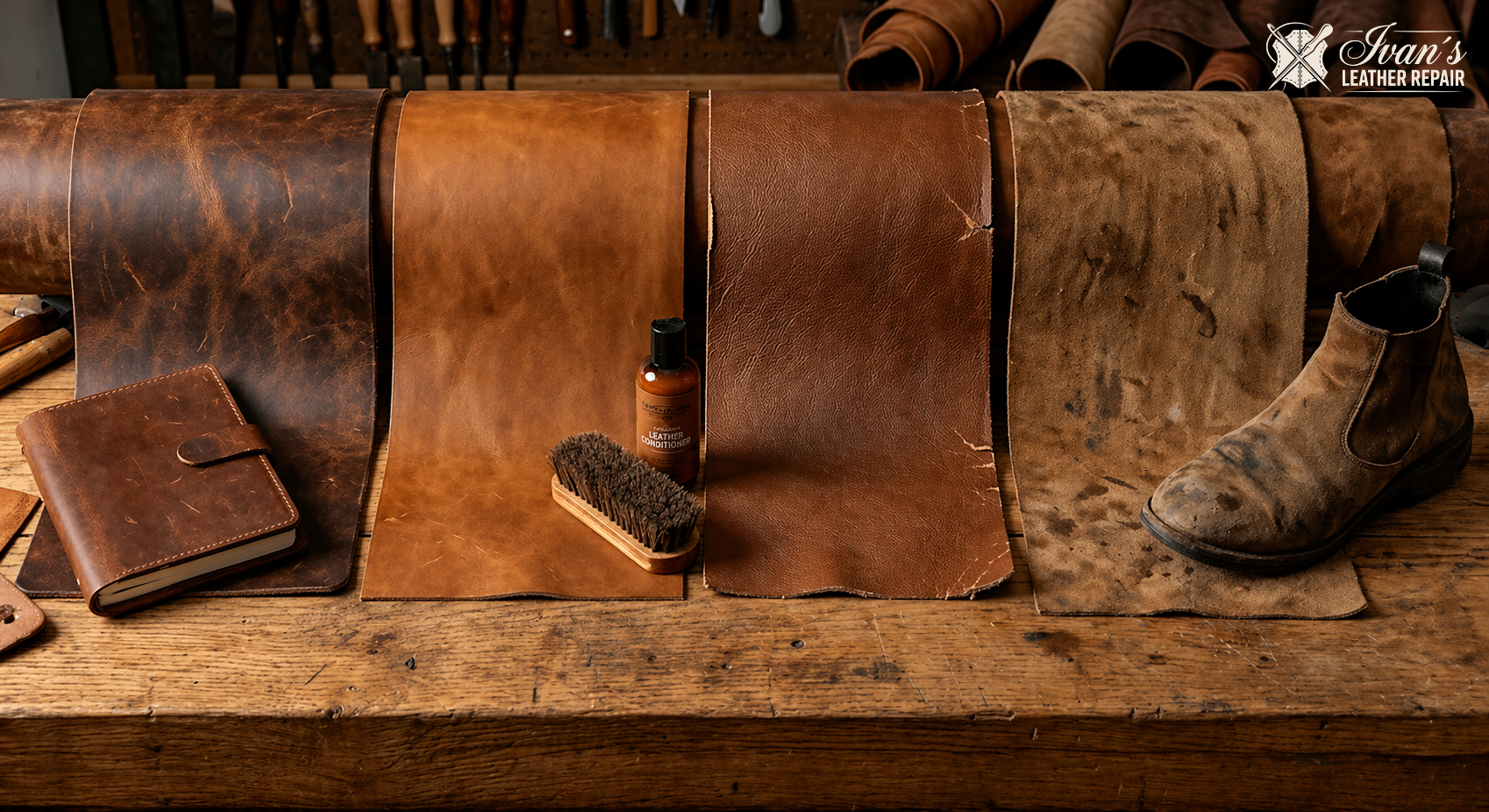
Leather isn't just one type of material. It varies based on the animal hide, how it's tanned, the finish, and how much of the original grain remains. These factors determine whether it can handle daily wear or needs frequent touch-ups. For instance, a full-grain sofa and a top-grain car seat can both be called leather, but they age quite differently.
Maintenance needs change with the finish.
Some leathers handle regular wiping and conditioning, while others need special brushes, protection from moisture, and careful stain removal. Families might choose easy-to-clean leather, while collectors might love the character of a more natural hide. The best choice depends on how you'll use it, not just how it looks in the store.
Repairability is part of the value equation.
Leather is a favorite because it can often be repaired rather than replaced. Scratches, fading, and cracks are common issues, but repair success depends on the leather type and damage severity. Want to know more about preserving leather? Our guide to restoring scratched or faded leather offers insights on what can be fixed and what might need professional help.
Full-Grain Leather: The Most Durable and Natural Option.
What full-grain leather is.
Full-grain leather comes from the top layer of the hide, keeping the natural grain intact. This means the surface shows small marks and variations that reflect the animal's life. Many consider it the highest quality because it’s strong, breathable, and develops a rich patina over time. According to leather specialists, well-cared-for full-grain leather can last 50 to 100 years or more.
How does it age over time?
Full-grain leather doesn't wear out quickly. Instead, it gains character as it ages. The patina develops through use, light exposure, and natural oils from handling. This aging process makes it a favorite for luxury handbags, heirloom furniture, and premium accessories. However, its natural surface can absorb spills and show wear if neglected.
Best care practices for full-grain leather.
Regular dusting, gentle cleaning, and conditioning help full-grain leather stay in top shape. Protect it from moisture and UV rays because dryness and sunlight can shorten its lifespan. For big items like sofas and chairs, consistent care is easier than major restoration later. If you notice cracking or drying, our cracking leather repair service can restore its smooth, healthy look.
Top-Grain Leather: Balanced Durability with a More Uniform Look.
Why do people choose top-grain leather?
Top-grain leather is high quality too, but it's sanded or buffed to remove some surface imperfections, creating a cleaner, more uniform appearance. It's slightly less durable than full-grain because the outer natural layer is altered, but it still holds up well for everyday use. Many furniture makers choose top-grain for its balance of beauty, softness, and practicality.
Maintenance requirements are moderate.
Top-grain leather is generally easier to maintain than more delicate finishes. It resists stains better and has a more predictable surface. A damp cloth can handle light dirt, while a quality conditioner every six to twelve months keeps it supple. The University of Nebraska-Lincoln Extension offers good advice on leather basics: leather care principles.
Where top-grain works best.
Top-grain is a strong choice for sofas, chairs, office seating, and many car interiors because it handles regular use without needing as much care as more delicate leathers. If it's in a high-traffic area, proper maintenance can extend its life. For business settings, our commercial leather repair service addresses wear in busy spaces before it becomes widespread.
Suede and Nubuck: Beautiful, Soft, and More Delicate
Understanding the difference.
Suede and nubuck share a soft, velvety texture, but aren't the same. Suede comes from the underside of the hide, while nubuck is the outer grain side, lightly sanded for a similar feel. They offer a luxurious look but need more careful care than smooth-finished leathers.
Why do these leathers need special care?
The napped surface of suede and nubuck can trap dirt and absorb liquids quickly. Regular brushing with a suede brush helps lift the nap and remove debris, while treating stains immediately is crucial. Avoid aggressive cleaning or soaking, as too much moisture can flatten the texture and leave spots. For a detailed comparison of leather types, restoration experts suggest looking at the surface: natural imperfections often mean full-grain, while a soft texture usually indicates suede or nubuck.
When professional restoration matters.
Suede and nubuck are manageable with the right maintenance, but deep stains or discoloration can be tricky. Sun exposure, water damage, and oil marks are particularly tough. If your jacket or specialty item has lost its finish, leather jacket repair can restore its appearance and extend wearability. For high-value items, professional treatment saves time and reduces the risk of worsening the problem.
Bonded, Split, and Corrected Leather: Lower Cost, Higher Trade-Offs.
Bonded leather and its limitations.
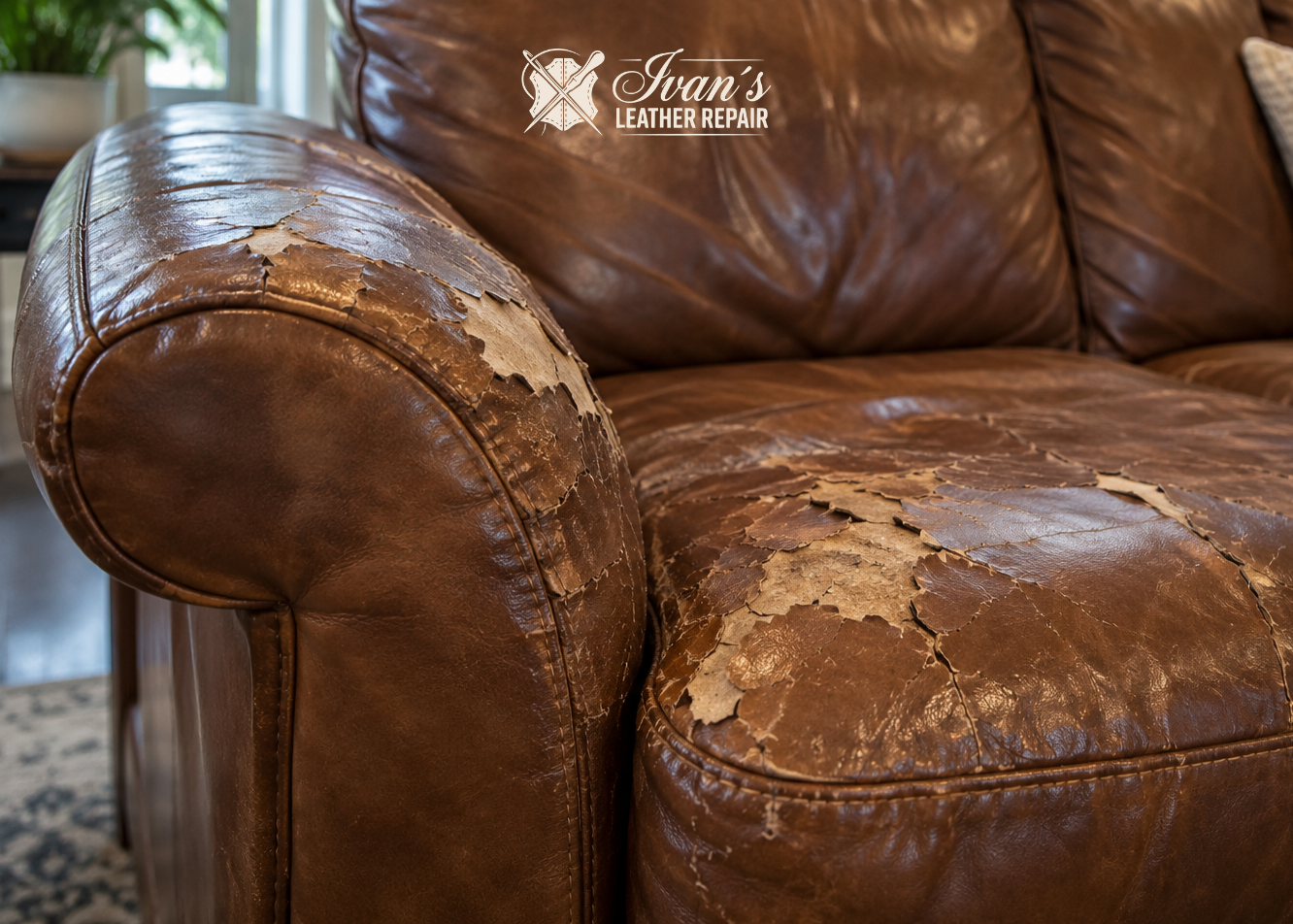
Bonded leather is made using scraps and fibers combined with adhesives. It can look good initially and often costs less, but it usually doesn't last as long as genuine full-grain or top-grain leather. Over time, the surface may peel, flake, or crack, especially in areas with heavy use. That's why bonded leather is often less repair-friendly and durable in the long run.
Split leather and corrected grain options.
Split leather comes from the lower layers of the hide after the top grain has been removed. Corrected grain leather has had imperfections sanded away and usually gets a protective coating. These types can still be useful, especially when budget is a concern, but they may not hold up as well under intense daily wear. Since the surface coating affects breathability and appearance, maintenance should be tailored carefully to avoid damaging the finish.
How to decide if lower-cost leather is worth it.
The right choice depends on the item, its use, and your expectations. For decorative pieces or light-use furniture, a lower-cost leather can work fine. For items that need to last for years, especially in homes with kids or pets, investing in a higher-grade leather often provides better long-term value. If your piece is suffering from scratches or pet-related wear, our pet damage leather repair service might help you recover more than you expect.
How Tanning and Finishing Affect Maintenance.
Vegetable tanning and chrome tanning.
Tanning turns raw hides into stable leather, and the process affects how the material behaves. Vegetable-tanned leather is usually firmer and develops a warm patina, while chrome-tanned leather is softer, more flexible, and more resistant to water and staining. Neither is universally better; each has strengths for different products and uses. For instance, furniture and car interiors often prioritize flexibility, while heritage goods may focus on natural aging.
Surface finishes change cleaning needs.
Some leathers have protective coatings that make them easier to wipe clean, while others are more porous and absorbent. A coated leather may handle spills better, but deep scratches can be more noticeable if the surface layer is compromised. On the other hand, uncoated natural leather might show marks more readily, but it can often be revived with conditioning and careful restoration. Here, the finish matters just as much as the leather base.
What this means for buyers and owners.
When shopping for a sofa, car interior, or office chair, ask about both the leather type and the finish. These details tell you a lot about future care needs and repair options. For those interested in how leather ages in different conditions, our article on how climate and humidity influence your leather over time is a useful read. It explains why heat, moisture, and seasonal changes can alter performance and appearance.
Daily Care Habits That Extend Leather Lifespan.
Cleaning on a routine schedule.
Routine cleaning is one of the easiest ways to preserve leather. Dust, body oils, and small particles act like abrasives if left in place too long. A soft cloth or vacuum with a gentle brush attachment is usually enough for basic upkeep, while deeper cleaning should be done with products appropriate for the specific leather type. Overcleaning can be just as harmful as neglect, so moderation is key.
Conditioning and moisture balance.
Leather needs a healthy moisture balance to remain flexible. Conditioning helps replenish oils that naturally dissipate over time, reducing the risk of stiffness and cracking. At the same time, too much conditioner can create buildup or alter the surface feel, so follow product directions carefully. As a rule, smooth leather furniture and accessories benefit from conditioning on a regular but not excessive schedule, while suede and nubuck should receive specialized treatments instead.
Protecting leather from light and heat.
Direct sunlight, radiators, and hot car interiors can dry out leather and cause fading. This is especially important for leather placed near windows or in vehicles that sit outside for long periods. Practical protection includes blinds, rotation of cushions, and parking in shaded areas whenever possible. For auto owners, our auto leather repair and sun damage leather repair services are designed to address these common issues.
When Leather Damage Can Be Repaired and When It Cannot.
Common damage that is often repairable.
Scuffs, surface scratches, faded color, small cracks, minor tears, and worn finish layers are often repairable, especially when caught early. The success of the repair depends on the leather type, the depth of the damage, and how much the surface has already broken down. In many cases, targeted restoration can dramatically improve both appearance and function without requiring replacement.
Problems that need professional evaluation.
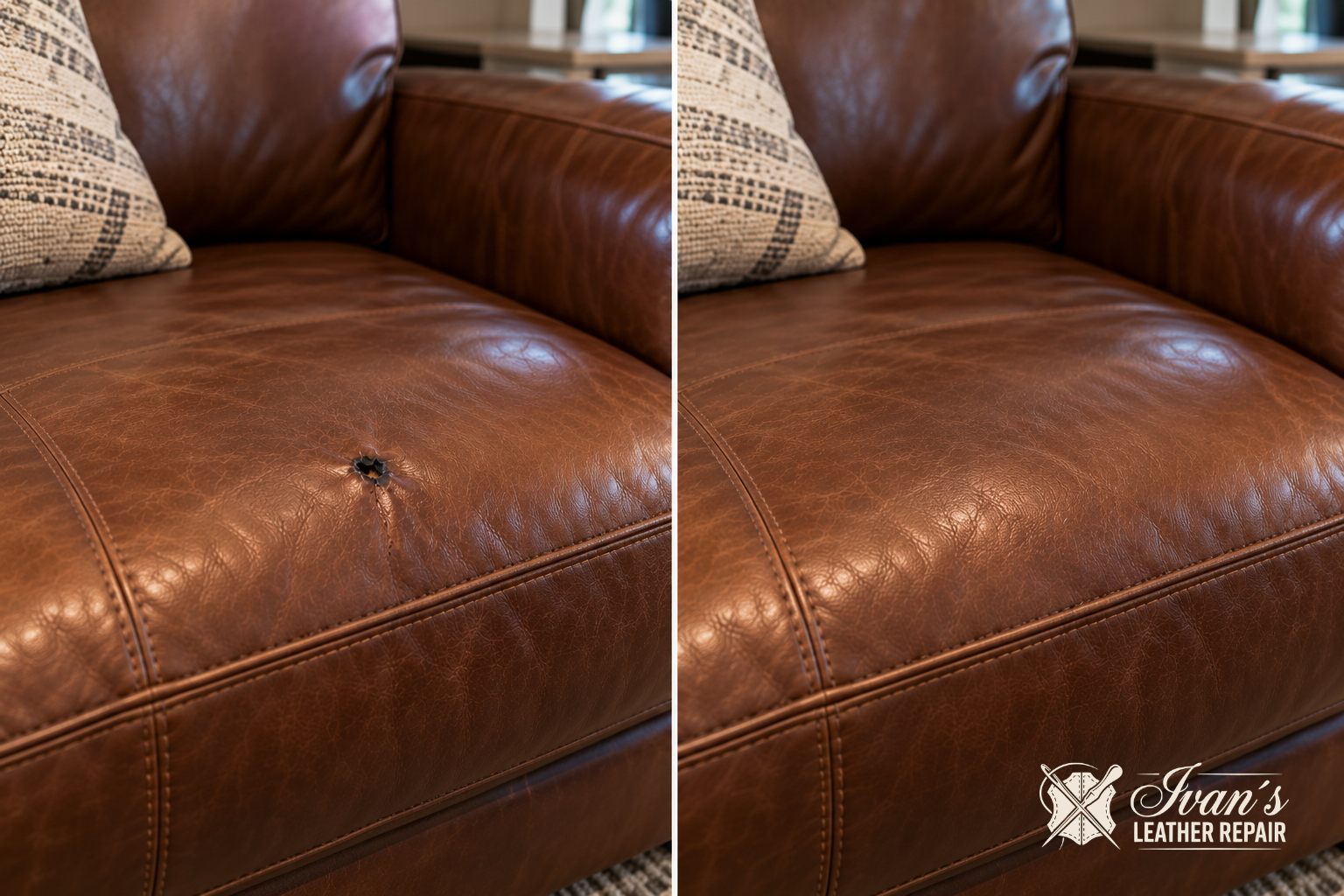
Severe tearing, structural failure, widespread peeling, and extensive drying may require more involved work or replacement of certain sections. Because different leather types accept color and filler products differently, a professional can determine the best approach based on the material and condition. If the damage involves a burn mark or hole, our burn hole leather repair service can often address the affected area with careful blending and resurfacing.
Why early repair saves money.
Waiting usually makes leather damage more expensive to fix. A small crack can widen, a faded section can become more obvious, and a loose seam can develop into a larger tear. Acting early often preserves the original material and reduces the need for extensive restoration work. For a broader decision-making guide, see our post on repair or replace decisions for leather.
Real-World Examples from Homes, Businesses, and Vehicles.
Luxury furniture and full-grain leather.
Many high-end furniture brands choose full-grain leather because it supports a premium look and can age beautifully. In a living room setting, the material may develop gentle creasing and a deeper patina that adds character rather than signaling failure. Families who value longevity often find this trade-off worthwhile, especially when the furniture is maintained consistently.
Office seating and top-grain leather.
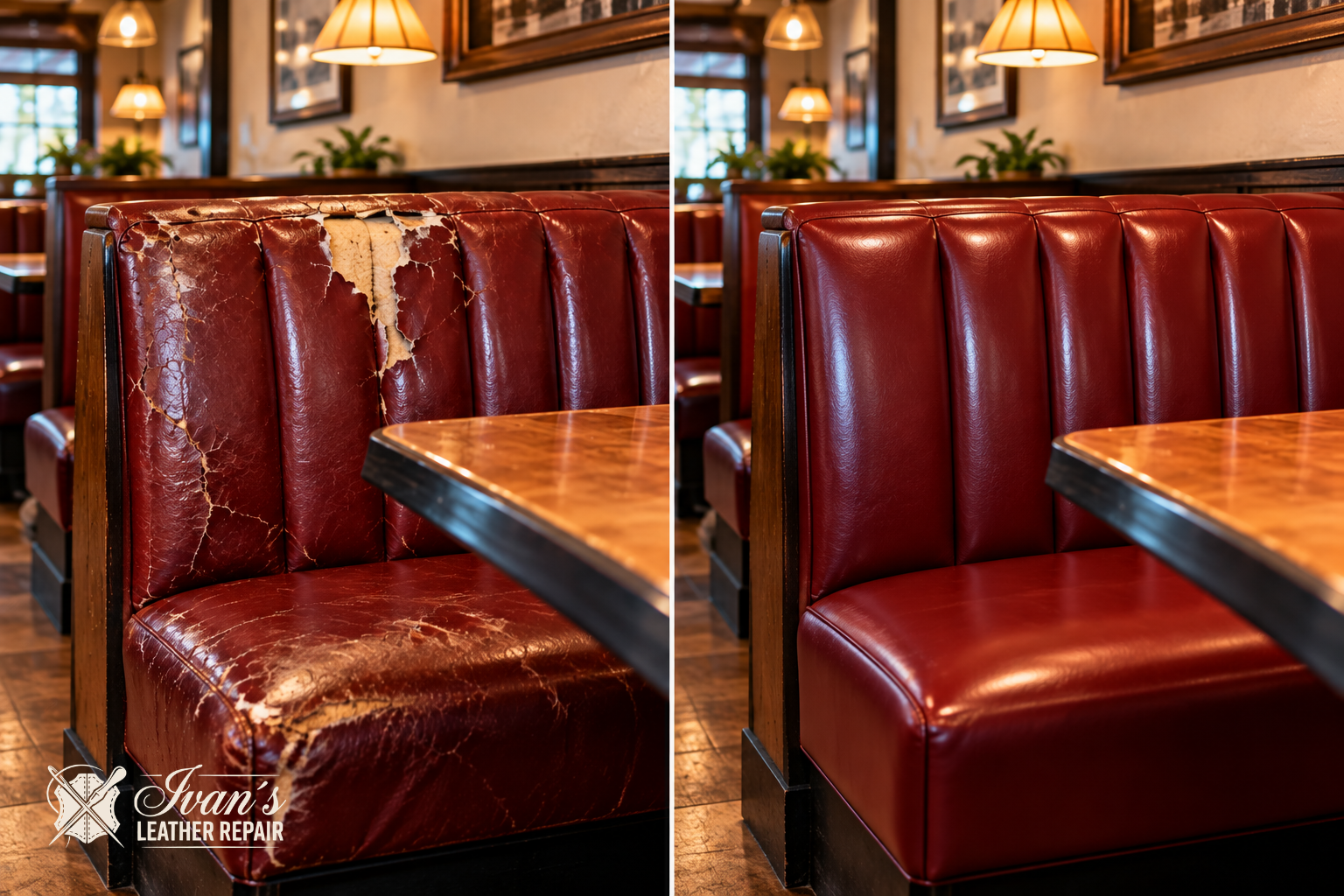
Businesses frequently choose top-grain leather for executive chairs, lobby seating, and conference room furniture because it offers a polished appearance and steady performance. These surfaces endure repeated use, so periodic cleaning and timely repair are important. When wear begins to show, early intervention can keep a professional environment looking clean and welcoming. Our restaurant booth repair and leather chair repair services are good examples of how commercial and hospitality seating can be preserved rather than replaced.
Cars, jackets, and classic interiors.
Vehicle interiors and leather jackets face their own challenges: friction, sunlight, temperature swings, and everyday handling. Leather used in cars often needs specialized cleaning and color restoration because it is exposed to more heat and UV stress than furniture. For heritage vehicles, our classic car interior restoration service helps preserve authenticity while improving comfort and appearance. In humid or climate-variable environments, maintenance becomes even more important to prevent premature wear.
How Brooklyn Homes and Businesses Can Make Smarter Leather Choices.
Matching material to use.
For busy households, the best leather is often the one that balances durability with manageable upkeep. In a living room, a top-grain sofa may be easier to maintain than a more delicate finish, while a full-grain accent chair can become a centerpiece that ages beautifully. In commercial settings, a practical surface with good stain resistance may be more important than a highly natural look.
Think repair, not just replacement.
One of the most sustainable decisions you can make is choosing leather that can be repaired later. Durable leather products reduce waste when they are maintained rather than discarded, and that mindset is increasingly reflected in the industry’s focus on repairability. For more on this sustainability trend, consider reading the Leather Working Group’s work on responsible leather production and industry standards: Leather Working Group. This perspective supports both environmental responsibility and better long-term ownership.
Work with the right repair partner.
When damage does occur, an experienced repair specialist can often extend the life of the item far beyond what owners expect. Whether the issue is fading, cracking, pet damage, or wear in a high-traffic seating area, professional assessment can save time and prevent unnecessary replacement. If you want to discuss a specific item, Ivan's Mobile Leather Repair is available to help homeowners and businesses make informed decisions about restoration and maintenance.
Frequently Asked Questions About Leather Durability and Care.
How can I identify the type of leather?
Start by looking closely at the surface. Full-grain leather usually shows natural imperfections and a rich, organic texture. Top-grain looks more uniform, while suede and nubuck feel soft and velvety. Bonded leather often has a more synthetic, repeated pattern and may wear differently at the edges. When in doubt, ask the seller or manufacturer for specifics before buying.
Can I repair leather myself?
Minor dusting, light cleaning, and careful conditioning can often be handled at home. Small scuffs or superficial marks may respond well to proper products. However, significant cracking, color loss, tears, or delicate materials such as suede are better left to professionals. If you are unsure, a small mistake can make restoration more difficult later.
How often should leather be conditioned?
The answer depends on the leather type, climate, and amount of use. Many smooth leathers benefit from conditioning every six to twelve months, while heavily used items or dry environments may need closer attention. Suede and nubuck require different care products and should not be conditioned like smooth leather. A better routine is to observe the material and respond before dryness becomes visible.
Does every leather get better with age?
Not necessarily. Full-grain and some well-made top-grain leathers can develop a beautiful patina, but lower-grade materials may peel, crack, or degrade. Aging well depends on the quality of the hide, the tanning method, and how consistently the leather is cared for. The best leather is usually the one that matches your lifestyle and receives proper maintenance from day one.
Conclusion: Choose Leather with Care and Maintain It Consistently.
Different types of leather have different strengths, weaknesses, and upkeep needs. Full-grain leather offers exceptional durability and a rich aging process, top-grain provides a balanced mix of beauty and practicality, and suede or nubuck delivers a softer look that requires more delicate care. Lower-cost options can still serve a purpose, but understanding the trade-offs helps you make smarter purchase and maintenance decisions.
The biggest takeaway is simple: leather lasts longer when its type is matched to its environment and cared for consistently. Regular cleaning, proper conditioning, and timely repair can dramatically extend the life of furniture, auto interiors, jackets, and commercial seating. If you are dealing with wear, fading, cracks, or damage, explore our related services and blog resources, or contact Ivan's Mobile Leather Repair for expert help restoring the value of your leather items.
Ready to protect your investment? Browse our repair services, read more leather care guides, and take the next step toward longer-lasting, better-looking leather.