How Color Matching Works in Leather Car Seat Restoration
Color matching in leather car seat restoration is both an art and a science. Whether you're fixing a single torn panel or giving your entire interior a new look, getting the right hue, gloss, and texture is crucial. This ensures the repair looks natural and helps maintain your car's resale value. Let's dive into how experts approach color matching, the tools they use, and the practical tips you can apply when working with a repair service.
Introduction: Why Accurate Color Matching Matters
Visual continuity and customer expectations
If leather repairs don't blend well, they stand out and can make the whole car interior look off. People expect these repairs to be invisible, meaning the fixed area should integrate smoothly with the rest of the upholstery. Achieving this requires more than a simple paint match; it takes understanding pigments, how dyes behave on leather, and how lighting and texture affect color perception.
Protecting value and comfort
Getting the color right helps maintain a vehicle's resale value by keeping the interior consistent, which potential buyers notice. Besides resale value, a comfortable and visually appealing interior enhances the owner's experience. Mobile services and professional shops that are into Auto Leather Repair often highlight color accuracy because it directly affects customer satisfaction.
The science behind leather and color
Leather is a complex material with unique grain, porosity, and tanning residues, affecting how dyes and pigments behave. For more on leather composition, check out this Wikipedia article. It covers tanning processes and surface characteristics relevant when restoring or recoloring leather seats. Understanding these factors is why color matching leather isn't the same as matching paint on metal or plastic.
Modern Tools and Technologies for Color Matching
Digital color calibration systems
Recent tools include digital color calibration systems that can read a leather surface and suggest dye mixes. These devices measure colors in standard color spaces like CIELAB, reducing trial-and-error when blending pigments. Technicians use these systems to get close to the target color quickly, refining with hand mixing and spot testing to match the leather's texture and sheen.
AI-driven shade prediction
AI tools are becoming popular for predicting how colors will hold up over time, simulating how dyes and topcoats age under sunlight and wear. These models help technicians pick formulas that stay stable and resist fading, improving long-term outcomes for clients. While AI doesn't replace a skilled technician, it offers a helpful recommendation to ensure consistency across multiple seats or vehicles.
On-site dyeing machines and rapid prototyping
On-site dyeing machines and small-batch mixers let mobile services quickly create and test color blends. For businesses that offer mobile repairs or same-day restoration, these machines enable quick prototyping and custom tints mixed and applied on location. This results in a faster turnaround and a closer match because technicians can see and adjust the dye on the actual leather surface rather than relying only on pre-mixed factory colors.
Step-by-Step Color Matching Workflow
1. Assessment and documentation
Every accurate color match starts with a thorough assessment. Technicians document the leather’s current condition, take photos under different lighting, and note any sun fading, wear patterns, or prior repairs. This documentation becomes the reference for mixing and allows for consistent results across multiple seats or future visits.
2. Swatch selection and physical comparison
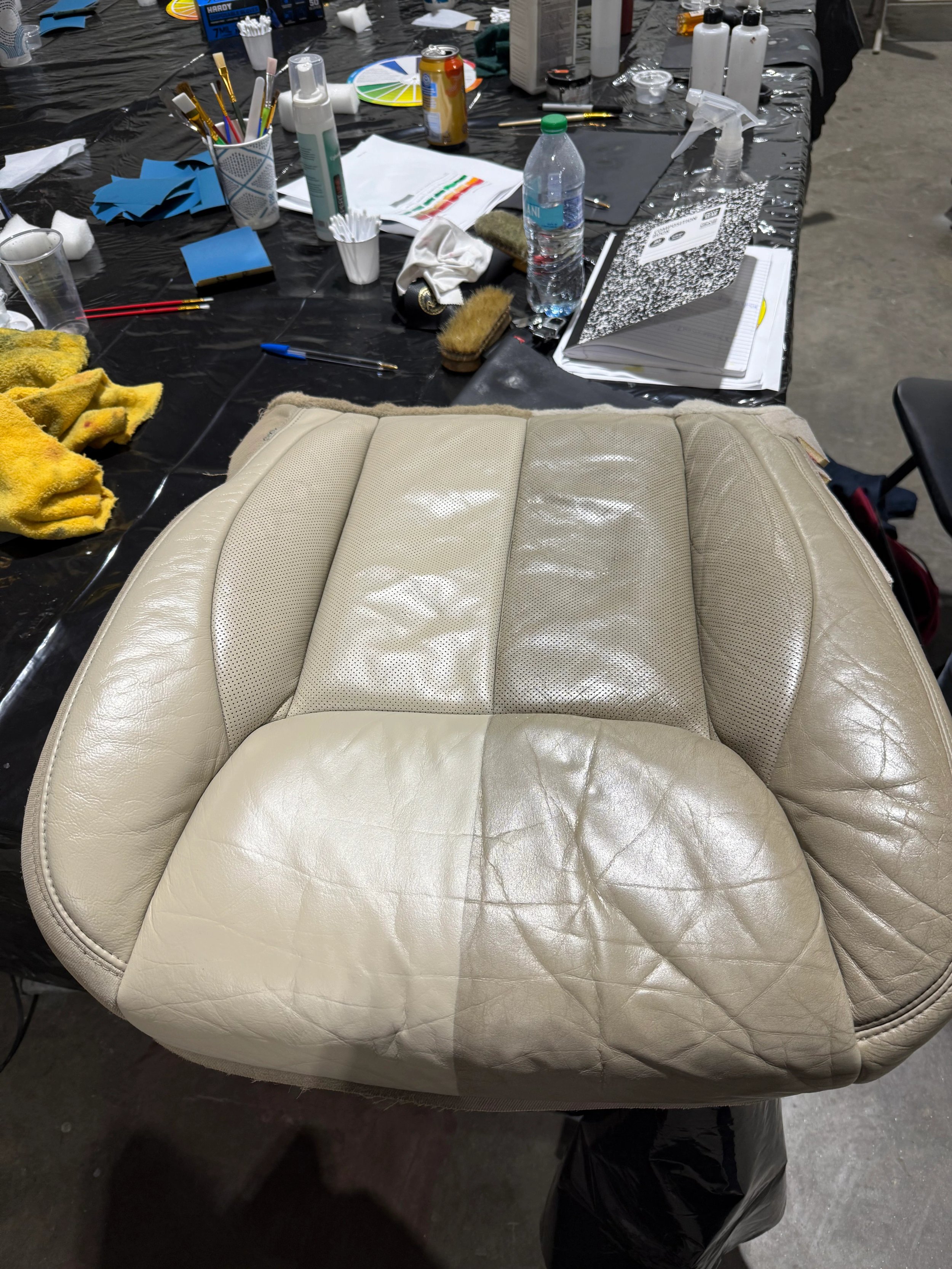
Experts stress the importance of physical leather swatches. Digital images or screen-based matches are unreliable because monitor calibration and lighting can distort hues. By placing physical swatches next to the seat in both natural and artificial light, technicians get a clearer baseline for mixing. This step is crucial for complex leathers with patinas or two-tone effects.
3. Lab-grade measurement and initial blending
Using spectrophotometers or colorimeters, technicians take objective readings of the leather surface. These devices offer numerical color coordinates that guide the initial blending of pigments. The first mix is applied to a hidden area or test patch and evaluated after drying, considering how dyes penetrate and settle into the leather.
4. Application testing and refinement
After the initial application, technicians assess the match under various lighting conditions: daylight, overhead fluorescent, and car interior lighting. Leather can look different under each condition, so refinements are made iteratively until the patch blends seamlessly. The process often requires slight adjustments to pigment ratios and topcoat sheen to match the surrounding finish.
5. Final sealing and texture matching
Once the color is right, finishing steps lock in the match with protective topcoats, finishers to replicate sheen, and texture treatments for grain consistency. These coatings also determine wear characteristics and UV resistance. Proper sealing completes the repair and helps the color remain stable through cleaning and daily use.
Practical Techniques and Best Practices from Industry Experts
Use physical swatches and natural light
Industry professionals consistently recommend using tactile swatches for the most reliable results. Comparing these swatches to seat panels in different lighting conditions helps bridge the gap between lab measurements and human perception. This hands-on approach reduces the risk of mismatches that appear when the vehicle leaves the shop.
Document mixtures and batch codes
Recording the exact pigment mix, batch codes, and proportions is a best practice that pays off for future repairs. Vehicles rarely require a single patch; owners return for additional work or refinishing, and having documented recipes ensures consistency across service dates. Technicians use these records to reproduce colors precisely, even years later.
Account for wear, patina, and texture
Leather ages with patina, subtle changes in sheen and depth that affect perceived color. A technically correct color may still look wrong if it doesn't replicate the worn sheen and texture. Skilled restorers recreate that patina by adjusting topcoats, using antiquing techniques, or applying surface textures that mimic the original finish.
Sustainability and Material Choices in Leather Restoration
Eco-friendly materials and recycled fibers
The repair industry is moving toward greener materials, like recycled fabrics and eco-friendly dyes. Using recycled polyester in seat fabric or headliners can cut CO₂ emissions compared to new fibers, aligning restoration work with sustainability goals. For more on textile sustainability and waste reduction, the U.S. Environmental Protection Agency offers guidance on textiles and circularity.
Low-VOC dyes and safer topcoats
Switching to low-volatile organic compound (VOC) formulations reduces harmful emissions during application and drying, improving air quality for technicians and car owners. Many modern dye systems balance durability with reduced VOC content while preserving colorfastness. Choosing low-VOC options is an investment in worker safety and environmental responsibility.
Repair over replacement to lower the footprint
Repairing leather seats instead of replacing entire components significantly reduces material waste and the embedded emissions of producing new upholstery. This sustainability principle supports a circular economy: extending the life of existing materials through precise repair and recoloring reduces demand for new leather or synthetic alternatives.
Common Challenges and How to Troubleshoot Them
Challenge: Fading and uneven wear
Sun-faded leather presents a different match than uniformly worn surfaces. To address this, technicians often precondition or slightly distress the surrounding area to create a consistent baseline. In some cases, a staged recolor blending the faded area into the adjacent panels produces a more natural look than attempting to match a single unaffected shade.
Challenge: Two-tone and patterned leathers
Vehicles with two-tone seats or decorative perforations introduce complexity because dyes and topcoats must respect contrast while matching hues. Technicians often mask and use micro-sprays to isolate repair areas, then hand-finish to maintain pattern integrity. This precision work benefits from practice and high-quality masking tools.
Challenge: Color shift after sealing
Topcoats can alter the appearance of pigments, especially when changing sheen levels. Always test color after sealing steps and be prepared to tint the topcoat slightly if the final finish shifts. Understanding how a specific topcoat interacts with pigments is part of a technician’s experiential knowledge base.
Case Studies and Real-World Examples
Mobile repairs with quick turnarounds
Mobile businesses that bring restoration services to the customer's location face unique constraints: limited space, variable lighting, and time pressure. Success stories from mobile technicians demonstrate the value of portable dye mixers, physical swatches, and detailed pre-service photos. These businesses rely on precise workflows to deliver high-quality matches under less-than-ideal conditions.
Classic car interior restoration
Classic car restorations demand faithful color reproduction to preserve authenticity and collector value. Specialists often reference period-correct leather swatches, factory codes, and historical photos when rebuilding interiors. For owners of vintage models, professional services such as Classic Car Interior Restoration combine archival research with modern dyeing methods to achieve both accuracy and longevity.
High-volume commercial fleet repairs
Fleet operators require efficient, repeatable results across many vehicles. Color consistency is paramount because slight variations become noticeable across a fleet. Fleet-focused restorers standardize formulas, maintain strict records, and use batch-testing to ensure uniform results across multiple seats and vehicles.
Practical Tips for Vehicle Owners
How to evaluate a repair service's color matching skills
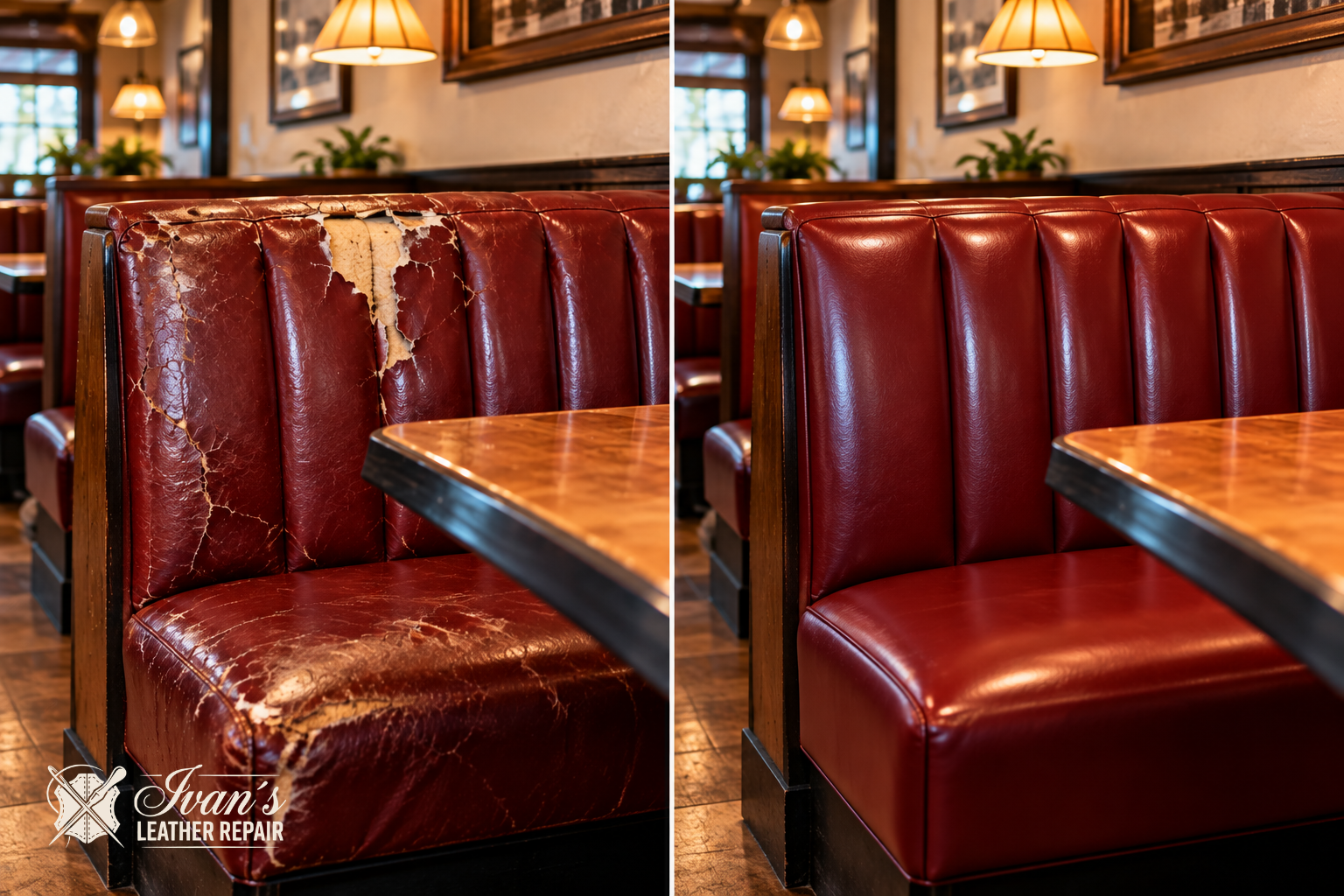
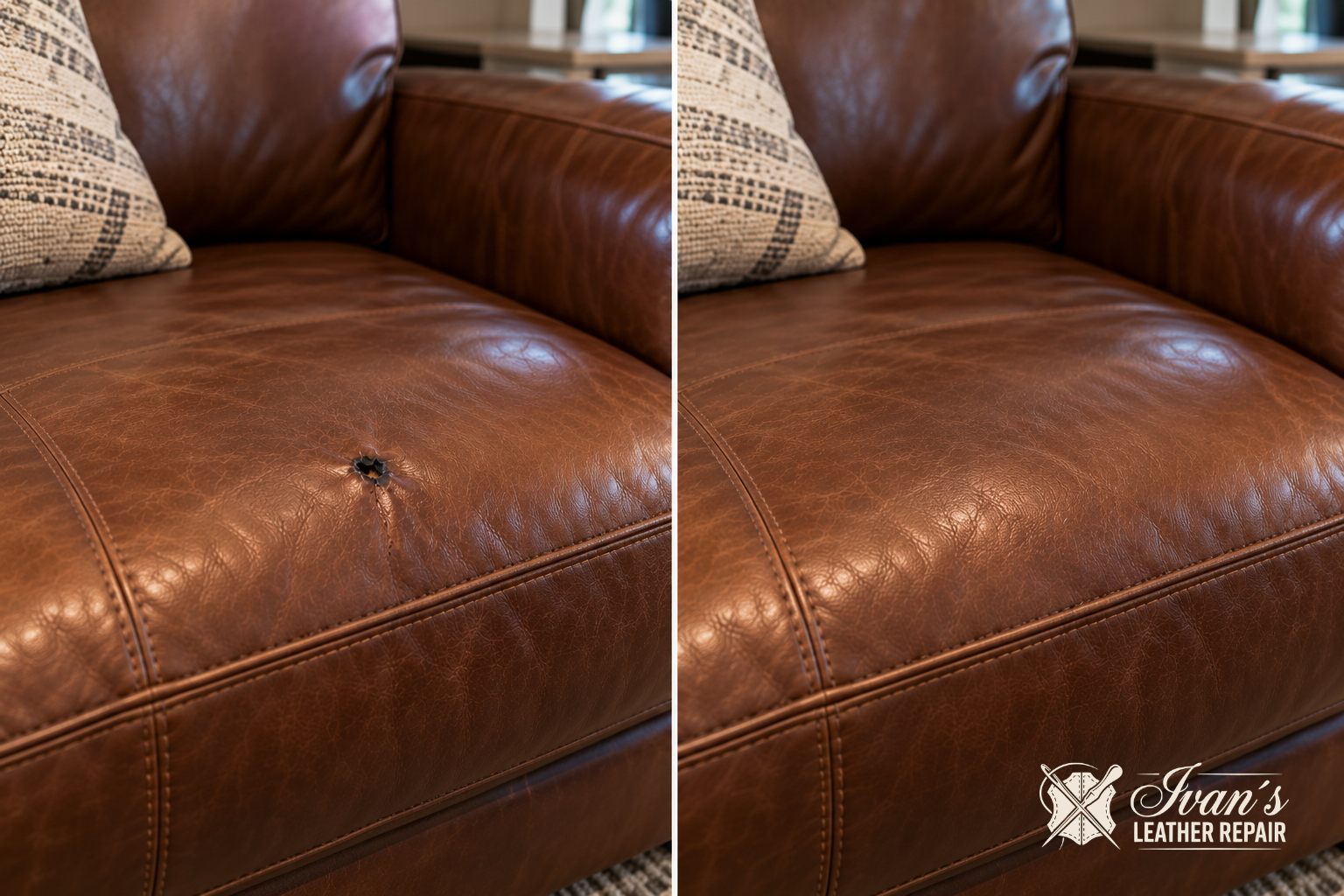
Ask to see before-and-after photos, request references, and inquire about the tools they use — especially whether they use physical swatches and spectrophotometry. A reputable shop will document their process and explain how they confirm a match under multiple lighting conditions. If you want to know what a pro can do for leather furniture as well, review options under Residential Leather Repair.
Preparing your car for a color-matching appointment
Clean the seat area before the appointment so technicians can see the true condition of the leather. Remove protectors, seat covers, and personal items to enable full access. Be prepared to let the technician work with the vehicle in shaded natural light when possible, and schedule repairs on a dry day to speed curing.
Maintenance tips to preserve matched colors
After repair, use manufacturer-recommended cleaners and conditioners to prevent premature fading and cracking. Apply UV-blocking products where appropriate and avoid harsh cleaners that strip topcoats. Regular maintenance extends the life of a matched repair and preserves the technician's work.
FAQs: Answers from Experts
Can color matching be perfect every time?
Absolute perfection is rare because leather exhibits variations in aging, grain, and sheen that are sometimes intentional. However, a professional restoration can produce a seamless match that is visually indistinguishable in everyday use. Technicians prioritize natural blending and consistent texture to make the repair invisible to most observers.
How long does a matched repair last?
With proper sealing and maintenance, a matched leather repair can last for years. Longevity depends on factors such as the quality of pigments, topcoat durability, sun exposure, and cleaning habits. Using low-VOC, high-quality topcoats and UV protections extends service life significantly.
Is it worth repairing rather than replacing seats?
Repairing is often cheaper, faster, and more sustainable than replacing seat panels or entire assemblies. Repairing preserves the original seat structure and reduces waste, while providing a visual and functional restoration that meets most owners' needs. When historical authenticity is important, as with classic cars, repair is often the preferred approach.
Troubleshooting Guide for Technicians
When the color looks right in the shop but wrong outside
Lighting is the most common culprit. Implement standardized lighting conditions for final checks, and always assess color in natural daylight as well as artificial sources. If a mismatch appears after sealing, revisit the formulation and test alternate topcoat sheens on small patches before committing to a full application.
When dyes don't penetrate uniformly
Surface contaminants, previous finishes, or leather porosity can impede dye penetration. Pre-cleaning and deglazing to remove residual conditioners can improve absorption. For problematic areas, prepare the substrate with controlled sanding or deglazer products and re-test dye application on a discreet patch.
When two-tone panels don’t blend
Use micro-masking and feathered-spray techniques to create soft transitions between tones. Consider introducing an intermediate tint to harmonize contrasts gently. Patience and incremental layering often resolve harsh boundary lines without compromising the original design.
Conclusion: The Future of Color Matching in Leather Restoration
Color matching in leather car seat restoration continues to blend craftsmanship with new technology. Digital calibration, AI-assisted predictions, and on-site mixing systems are improving accuracy and reducing waste, while sustainable materials and low-VOC formulations are reshaping industry practices. As the field evolves, experienced technicians will remain essential for interpreting data, judging texture, and applying finishing techniques that machines cannot replicate alone.
If you’re in Brooklyn or the surrounding area and need expert leather repair services, our team at Ivan's Mobile Leather Repair brings experience, modern tools, and a commitment to sustainable practices to every job. Whether you need auto leather repair, restoration for a classic interior, or help restoring a sun-damaged seat, we provide on-site diagnostics and professional color matching that blends seamlessly with your vehicle's upholstery. For other interior needs, we also offer specialized services to address sun-affected panels and worn furniture; learn more about our Sun Damage Leather Repair options.
To learn more about how leather ages and the chemical processes behind tanning and dye behavior, further reading on Color Science - Wikipedia can provide foundational context for color perception and measurement. Additionally, to understand the environmental context of textile choices and the benefits of recycled fibers, see the EPA’s textile guidance at EPA — Textiles: Material-Specific Data, which offers useful background on emission reductions and circular practices in textile management.
Ready to restore your leather seats with precision color matching and professional care? Contact Ivan's Mobile Leather Repair at (347) 207-3031 or email info@repairleathernyc.com to schedule an appointment. You can also explore our full range of services, including Leather Sofa & Couch Repair and Restaurant Booth Repair, for comprehensive interior solutions. Our Brooklyn-based team combines on-site convenience with expert color science to make your leather look new again.
Call today and let us bring color, comfort, and longevity back to your leather interiors.