Can Water Damage Ruin Leather? A Practical Guide to Repair, Restoration, and Prevention
Have you ever wondered what happens when water meets leather? It's not great, but a wet wallet, jacket, chair, or car seat isn’t always a lost cause. With the right know-how, you can often slow down, stabilize, or even improve the damage. Let's dive into what water does to leather, why acting fast matters, and when it's time to call in the pros.
Got a damp sofa or a rain-soaked car interior? Don't panic. Acting quickly can make a huge difference. If you're weighing options for home leather restoration or auto leather repair, this guide will help you figure out what can be fixed, what can be avoided, and when you need expert help.
Leather is a porous material made from tanned collagen fibers that hold natural oils and flexibility. When water gets in, it can upset the balance, making leather stiff, discolored, moldy, or even cracked. According to the U.S. Environmental Protection Agency, keeping moisture in check indoors is key to preventing mold, which is especially important for leather stored in humid places. Check out the EPA’s mold guidance for more info.
Why Does Water Damage Leather?
Natural Oils Are Key
Leather isn't like fabric or synthetic materials. It has natural fats and oils that help it stay soft and durable. When water gets in, it can wash away those oils as the leather dries, leaving it rough and tight.
This oil loss is why leather might feel okay right after getting wet, but seems worse a day or two later. As moisture dries up, the fibers tighten, and the leather can become brittle. Over time, this dryness can lead to splitting, especially on items like leather sofas and couches.
It Weakens the Structure and Finish
Water doesn't just change how leather feels; it can also mess with its structure. Long exposure softens and weakens the fibers that give leather its strength. Once those fibers lose integrity, you might see uneven stretching, bad wrinkles, or cracks.
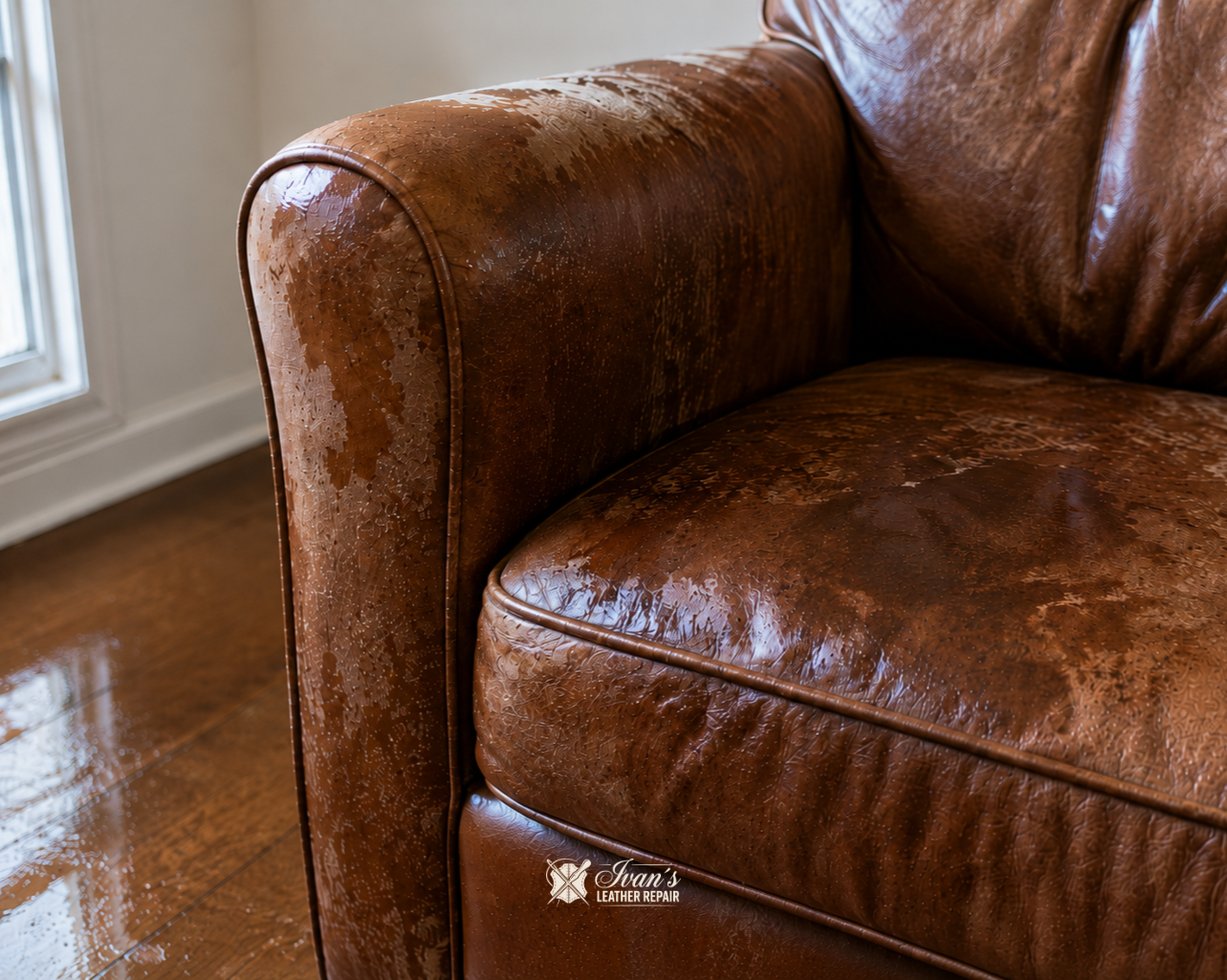
The finish can take a hit too. Dyed leather might show water spots or uneven shading. Sometimes it's just a cosmetic issue, but other times it signals more serious damage that needs fixing. This is more likely on finished furniture, lightly colored car interiors, and high-use items like leather chairs.
Humidity Can Be Just as Bad
Water damage doesn't always come from an obvious spill. High humidity can slowly add moisture to leather, especially in storage areas or places with poor airflow. Over time, this can lead to mold or a dull finish.
That's why climate matters. The National Weather Service notes that humidity can vary a lot in coastal and urban areas. For more on humidity, check out NOAA's humidity safety info. In areas with common summer humidity, regular conditioning and dry storage are must-haves for leather care.
What Happens After Water Exposure?
Dryness, Stiffness, and Brittleness
One of the first signs of damage is a change in texture. Wet leather that dries too quickly or without conditioning often becomes stiff and less responsive. If that happens repeatedly, the surface can start to feel brittle, especially around seams and stress points.
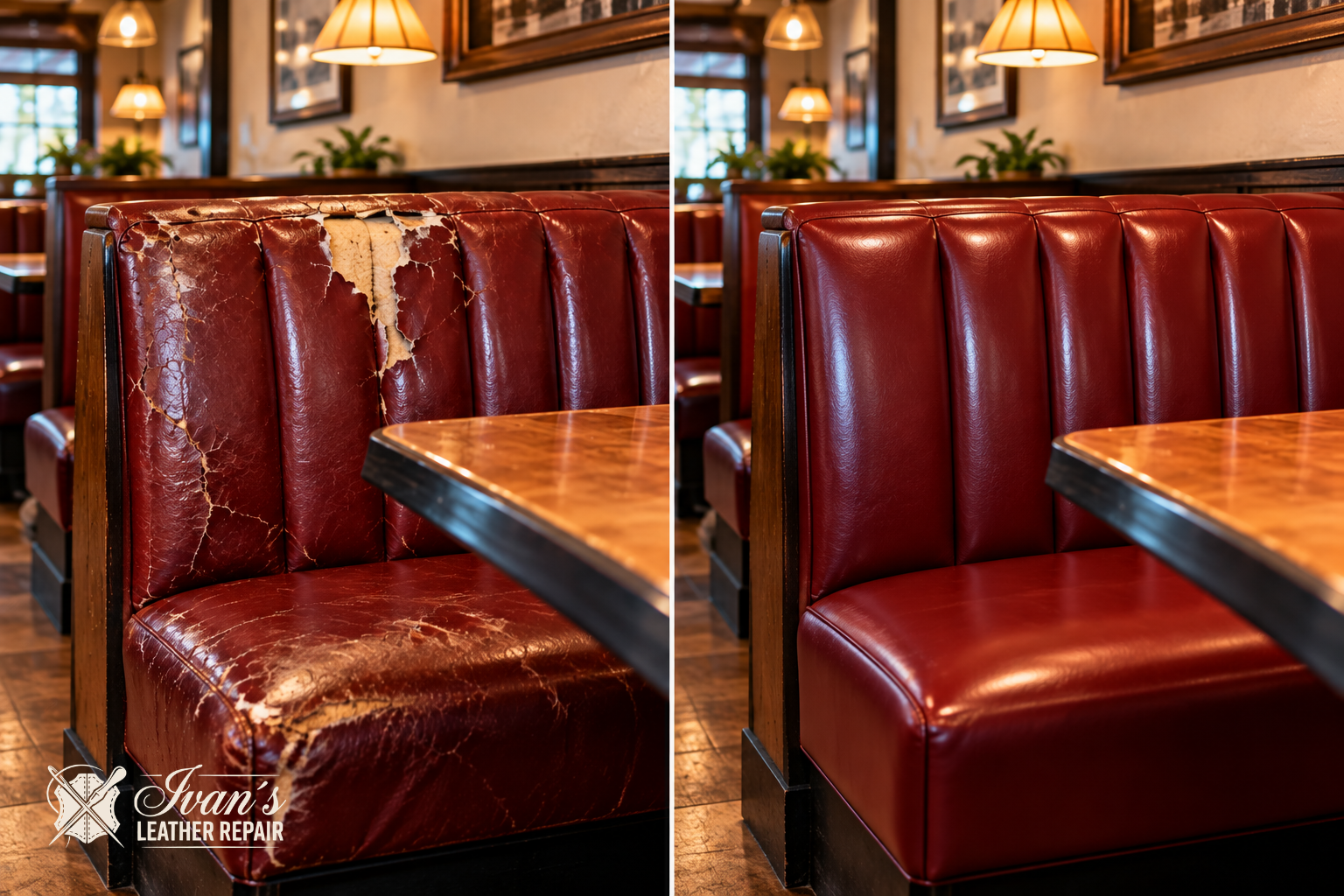
This is particularly important for items that bend or flex often, such as jackets, seat bolsters, and armrests. Once the leather begins to lose elasticity, it becomes much more vulnerable to cracking. For items showing early wear, options like cracking leather repair may help restore appearance and delay replacement.
Water Spots and Dye Migration
Water can disturb dyes in leather, especially if the finish is older or lightly sealed. That's why a spill may leave a ring, blotch, or uneven patch instead of disappearing completely. In some cases, the stain is only superficial; in others, the pigment has actually shifted in the finish layer.
Professional leather repair often relies on color balancing and surface blending to reduce the appearance of these marks. That approach is common in furniture work, including leather sofa restoration and specialty surface repairs, where visual consistency matters as much as structural repair.
Mold and Mildew Risk
Leather that stays damp can become a breeding ground for mold and mildew. It’s not just a visual problem. Mold can leave odors, stains, and unhealthy residue, especially when items are stored in closed spaces.
The CDC explains that mold can begin to grow on damp materials within 24 to 48 hours under favorable conditions. You can read more from the CDC on mold and moisture. If your leather item has that musty smell after a water incident, act quickly rather than waiting to see whether it dries out on its own.
Can Water-Damaged Leather Be Fixed?
Yes, Many Cases Can Be Improved
Good news—water-damaged leather can often be fixed if you catch it early. The best results usually come from fast drying, careful cleaning, reconditioning, and sometimes color restoration. Even if the leather looks bad, you can usually improve its texture and appearance a lot.
The extent of repair depends on how long the leather stayed wet, what type it is, and whether the damage went beyond the surface. A splash on a jacket is a lot different from a soaked couch cushion or a flood-affected car interior. In severe cases, expert evaluation is the best way to understand whether the item needs restoration or deeper structural work.
What Repair Can and Cannot Do
Repair can often reduce discoloration, restore softness, and strengthen the leather’s usability. It may also help blend marks so the damage is far less noticeable. However, if leather has been heavily warped, rotted by mold, or deeply cracked, no repair can truly make it brand new again.
That is why realistic expectations matter. The goal is not always perfect invisibility. Sometimes the best outcome is a stable, attractive piece that continues to serve for years. For larger or more complex projects, commercial leather repair and antique furniture restoration can be especially valuable when preserving the original item matters more than replacement.
How to Dry Wet Leather the Right Way
Start by Blotting, Not Rubbing
If leather gets wet, your first step is to remove excess water gently with a clean, soft cloth. Blot the surface rather than scrubbing it. Rubbing can push moisture deeper into the material and may abrade the finish, making the problem worse.
After blotting, allow the item to air dry naturally in a room with good ventilation. Positioning a fan nearby can help circulation, but keep the airflow indirect. The point is to encourage gradual drying, not force the moisture out too quickly.
Avoid Direct Heat and Sunlight
Never use a hair dryer, radiator, heater, or direct sunlight to rush the process. Rapid heat can shrink the fibers and pull the remaining oils out of the leather, leaving it hard and cracked. This is one of the most common mistakes people make after a spill or storm exposure.
Once dry, the leather should be checked for stiffness, water marks, or warped edges. If the item is a jacket, bag, or furniture panel, the restoration strategy will differ based on how the surface and structure respond. For wearable items, leather jacket repair is often the best route if the material has dried unevenly.
Let the Item Dry Fully Before Conditioning
Conditioning wet leather too early can trap moisture below the surface. That can contribute to odor, residue, or uneven results. Wait until the leather is fully dry to the touch and at room temperature before applying any conditioner.
Once the surface is dry, a quality leather conditioner can help restore some of the oils that water displaced. Use it sparingly and follow the product directions. A little care goes a long way here, especially on pieces that are already vulnerable from wear, age, or sun exposure.
Cleaning and Conditioning After Water Damage
How to Clean Safely
After drying, the leather may need a gentle cleaning to remove residue, grime, or mineral marks left by water. Use a lightly damp cloth and mild leather-safe cleaner if needed. Avoid household detergents, bleach, or strong all-purpose sprays, which can strip the finish and worsen discoloration.
For valuable items or highly visible surfaces, a safer route is to test any cleaner on a hidden area first. If the leather is already fragile, professional care is usually better than experimentation. This is especially true for seating and visible pieces like office chairs or family-room furniture.
Conditioning Restores Flexibility
Conditioner is one of the most important tools after water exposure because it helps replenish lost moisture balance and improve flexibility. A good conditioner will not erase major damage, but it can keep drying leather from becoming worse. The biggest benefit is preventative: it helps the leather resist future cracking.
Many leather care experts recommend conditioning on a regular schedule rather than waiting for a crisis. For helpful background on material care and longevity, the Smithsonian’s leather conservation resources offer insight into how moisture, oils, and aging affect leather objects over time.
Know When DIY Stops Being Enough
DIY drying and conditioning work best when the damage is light and caught early. If you see bubbling, mold, strong odor, deep staining, or texture loss, the item likely needs more than home care. Trying to scrub harder or apply multiple products usually makes matters worse.
At that point, it is smarter to consult a specialist who can assess whether recoloring, filling, patching, or panel work is necessary. That is where targeted services such as residential leather repair and auto leather repair can save both time and money.
How Professionals Restore Water-Damaged Leather
Detailed Assessment Comes First
Professional restoration begins with identifying the leather type, finish, and extent of the damage. An expert will look for surface staining, seam stress, odor, soft spots, and structural issues that may not be obvious to the eye. That assessment matters because a repair strategy that works on a finished couch may not be right for a seat, jacket, or antique item.
For example, a piece used daily in a busy household may need a different approach than a decorative chair that only sees occasional use. Matching the repair method to the item is what creates durable results. It also helps preserve the original character of the leather rather than over-treating it.
Color Work and Surface Blending
When water leaves marks or uneven fading, professionals can often improve the appearance through color matching and blending. This is one of the most noticeable ways restoration adds value. Rather than replacing the whole piece, targeted color work can make the damaged area much less obvious.
That same logic is why specialized services like sun damage, leather repair, and water restoration are often discussed together. Both problems can alter color, dry out the material, and create a patchy look that benefits from careful blending.
Repairing More Severe Damage
In serious cases, the leather may need patching, filling, reinforcement, or partial replacement. This is especially true when water has intensified pre-existing wear or when the item has also been exposed to pets, scratches, or heat. A good repair shop will not simply cover damage; it will stabilize the affected area so the repair lasts.
If a sofa has water damage plus wear from daily use, the right approach may combine several services. For instance, pet damage leather repair can address claw marks while water restoration addresses stains and stiffness, giving the item a much more complete recovery.
Preventing Future Water Damage
Use Leather-Safe Protection Products
Prevention is always easier than restoration. One of the best defenses is a leather-safe waterproofing or protective treatment. These products do not make leather invincible, but they can reduce how quickly water is absorbed and give you time to respond to spills.
Choose products made specifically for leather rather than generic sprays. Leather chemistry is sensitive, and the wrong formula can discolor the finish or leave a sticky residue. It is also wise to test new products on a small, hidden area before treating the entire piece.
Store Leather in Dry, Ventilated Spaces
Where and how you store leather matters almost as much as how you clean it. Keep leather items away from damp basements, unventilated closets, and humid corners of the home. If necessary, use a dehumidifier or moisture absorber in the storage area.
This is especially important in the summer months or in homes where airflow is limited. Brooklyn's humid seasons can create conditions where leather absorbs moisture faster than expected, so households that store jackets, bags, or extra furniture pieces should pay close attention to humidity control.
Maintain a Regular Care Schedule
Leather lasts longer when it is cleaned and conditioned regularly. Routine care helps preserve the oils that protect the surface from moisture and wear. Even a simple monthly wipe-down and seasonal conditioning routine can make a big difference over time.
Preventive maintenance is often less expensive than restoration because it stops the cycle of drying, cracking, and staining before it starts. If you own high-use items such as a home seating set or showroom furniture, pairing maintenance with occasional professional inspection can be a wise investment. For broader guidance, see our related article on how to keep leather furniture looking great every day.
Real-World Examples: What Water Damage Often Looks Like
A Rain-Soaked Leather Jacket
A leather jacket caught in a heavy storm may dry without major visible damage if handled quickly. But if it is hung near a heater or folded while wet, the result can be permanent wrinkles, stiffness, or edge cracking. In many such cases, careful cleaning and conditioning can restore most of the usable feel, though some surface marks may remain.
When the leather is older or already dry, a repair specialist may need to soften the surface, blend color, and reshape the leather so the jacket wears comfortably again. That is why fast action is more important than waiting until the garment looks “dry enough.”
A Damp Sofa After a Leak
Furniture is more complicated because cushions, seams, and hidden layers can trap moisture. A sofa that seems dry on the surface may still retain water inside, which increases the risk of odor and mold. This is one reason furniture water damage should be taken seriously, even if the top layer looks acceptable.
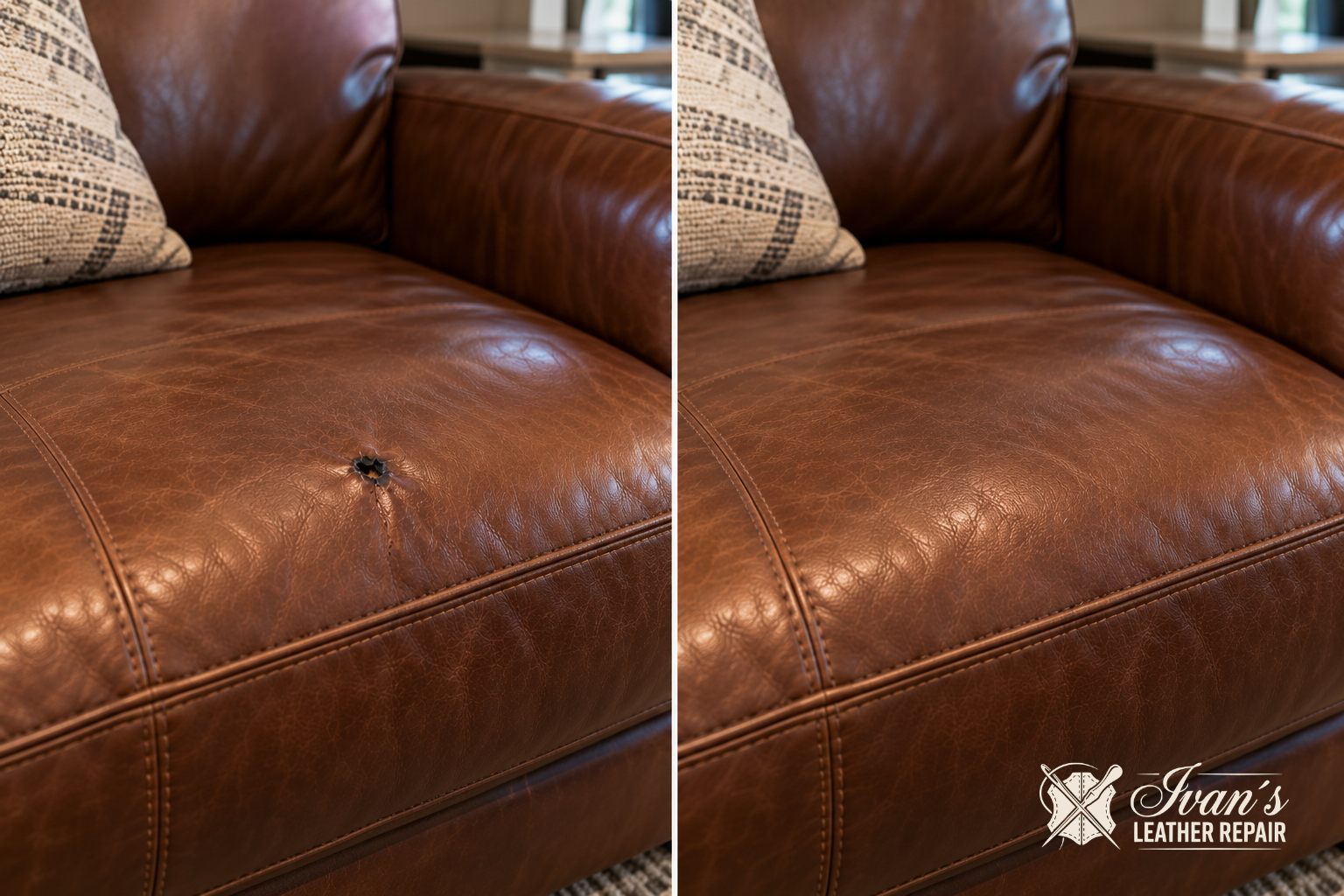
When a sofa or sectional is affected, the best result often comes from combining drying, odor control, deep cleaning, conditioning, and selective restoration. If the damage extends beyond the finish, leather sofa and couch repair may help bring the piece back to a usable and attractive condition.
A Car Interior After Flooding or Spill Exposure
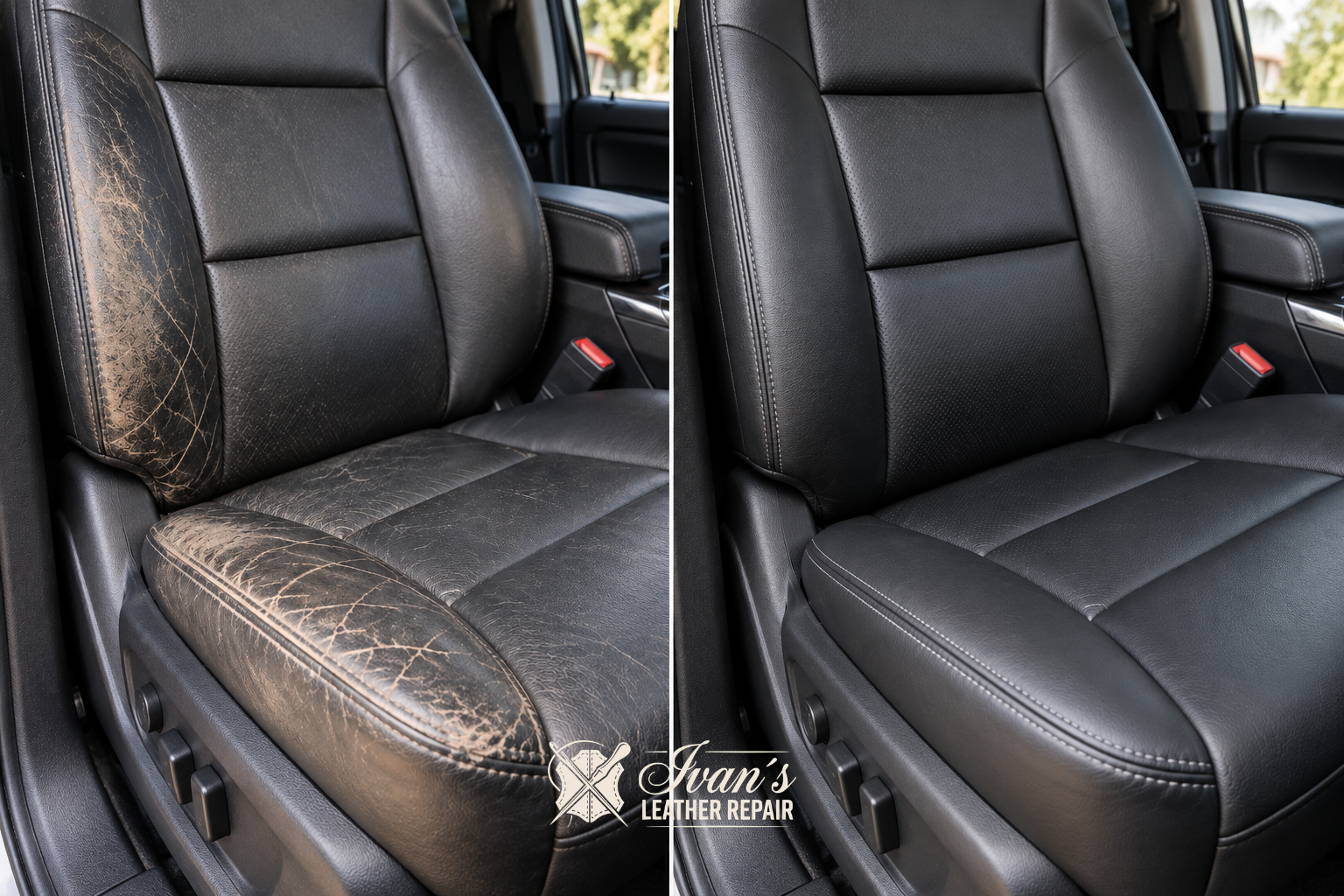
Vehicle leather is exposed to daily friction, temperature shifts, and sun in addition to moisture. If a seat gets wet, the risk is not only discoloration but also hidden damage under the upholstery. Flood exposure is especially serious because water can affect foam, seams, and electronics around the interior.
For vehicle owners, professional auto leather repair is often the safest approach when the damage is more than a small surface spill. In classic vehicles, a careful classic car interior restoration can preserve originality while addressing moisture-related deterioration.
FAQs About Water-Damaged Leather
Does Leather Always Get Ruined When Wet?
No. Light water exposure doesn’t automatically ruin leather. If the item is dried correctly and conditioned afterward, many pieces recover well. The biggest risks come from prolonged moisture, heat drying, and repeated wet-dry cycles.
Can I Use Olive Oil or Household Oil on Leather?
It’s usually not recommended. Household oils can darken leather unevenly, attract dirt, and create long-term problems with the finish. Use products designed specifically for leather care instead of improvising with kitchen products.
What If My Leather Smells Musty After Getting Wet?
A musty smell often points to trapped moisture or early mold growth. Air it out immediately, inspect hidden areas, and avoid sealing it in a closet or bag. If the odor lingers, it’s best to get a professional evaluation before the problem spreads.
How Do I Know If Repair Is Worth It?
If the piece is structurally sound and meaningful to you, repair is often worthwhile. This is especially true for quality furniture, a well-fitting jacket, or a vehicle interior that would be expensive to replace. Many people also choose restoration because it reduces waste and extends the life of items they already own.
When to Call Ivan's Mobile Leather Repair
After Spills, Leaks, and Weather Exposure
If leather has been soaked, stained, or left damp long enough to worry you, it is a good time to get help. Water damage gets harder to control the longer it sits, and a quick professional assessment can prevent minor issues from becoming permanent. That is especially true for family furniture, office seating, and vehicle interiors that see daily use.
Ivan's Mobile Leather Repair helps customers evaluate damage, restore appearance, and protect the life of their leather. Whether the issue involves a chair, sofa, jacket, or car seat, the right repair plan can make the item usable and attractive again. For property owners who want a local, practical solution, our Brooklyn leather repair service provides help where and when it is needed.
Act Early to Protect Your Investment
The best way to deal with water-damaged leather is not to wait and hope it improves on its own. Dry it carefully, avoid heat, use leather-safe conditioning, and call a professional if you notice cracking, odor, or staining. Early action gives you the best chance to preserve both appearance and comfort.
If you are unsure whether the damage is minor or serious, it is better to ask before the leather deteriorates further. A short consultation can save a valuable piece and help you avoid replacement costs. To learn more or request help, visit Ivan's Mobile Leather Repair or explore our related guide on whether professional leather repair is worth it.
Conclusion: Water Can Damage Leather, But It's Not Always the End
Water exposure can absolutely damage leather, but it does not always ruin it beyond repair. When moisture is handled quickly and carefully, many issues can be improved or reversed. The most important factors are speed, proper drying, safe conditioning, and knowing when a piece has crossed from DIY territory into professional restoration.
Whether you are dealing with a one-time spill or long-term moisture exposure, the best outcome usually comes from a calm, informed response. Protect the leather, avoid heat, and get expert help if the item shows structural or cosmetic damage that will not fade on its own. With the right care, leather can keep looking rich, comfortable, and functional for years to come.
Need help restoring water-damaged leather? Contact Ivan's Mobile Leather Repair for expert guidance and service that helps bring your leather back to life.