How Climate and Humidity Influence Your Leather Over Time
Leather is beloved for being tough, comfy, and stylish. But like any natural material, it changes with its surroundings. Whether you own leather furniture, car interiors, jackets, or bags, knowing how climate and humidity affect leather can save you from costly repairs. In this guide, we'll explore what happens to leather in different conditions, how to catch early warning signs, and what you can do to keep it in great shape.
To keep your leather looking its best, controlling the environment and regular maintenance are as important as cleaning. Whether you're taking care of a leather sofa at home or need leather chair repair or auto leather repair, the same principles apply. Leather reacts to moisture, heat, and airflow in predictable ways, and the changes can add up over time.
Research and conservation advice often highlight that stable conditions are the best protection. The National Park Service and museum standards suggest keeping temperature and humidity steady to slow down wear and tear. In practical terms, keeping leather away from very dry air, damp storage, and direct heat can really extend its life.
Why Leather Reacts So Strongly to Climate
Leather is a natural material.
Leather comes from animal hide, which means it has collagen fibers. These give leather its flexibility and character, but they're also sensitive to changes in moisture and temperature. When the air changes, leather absorbs or releases water, which can change its shape, texture, and how long it lasts.
This makes leather different from many synthetic materials. A vinyl or plastic surface may look the same in a humid room, but leather can swell, stiffen, or dry out. If the material is already worn, it's even more vulnerable. Items that need cracking, leather repair, or sun damage leather repair often show a history of environmental stress rather than a single dramatic incident.
Temperature and moisture work together
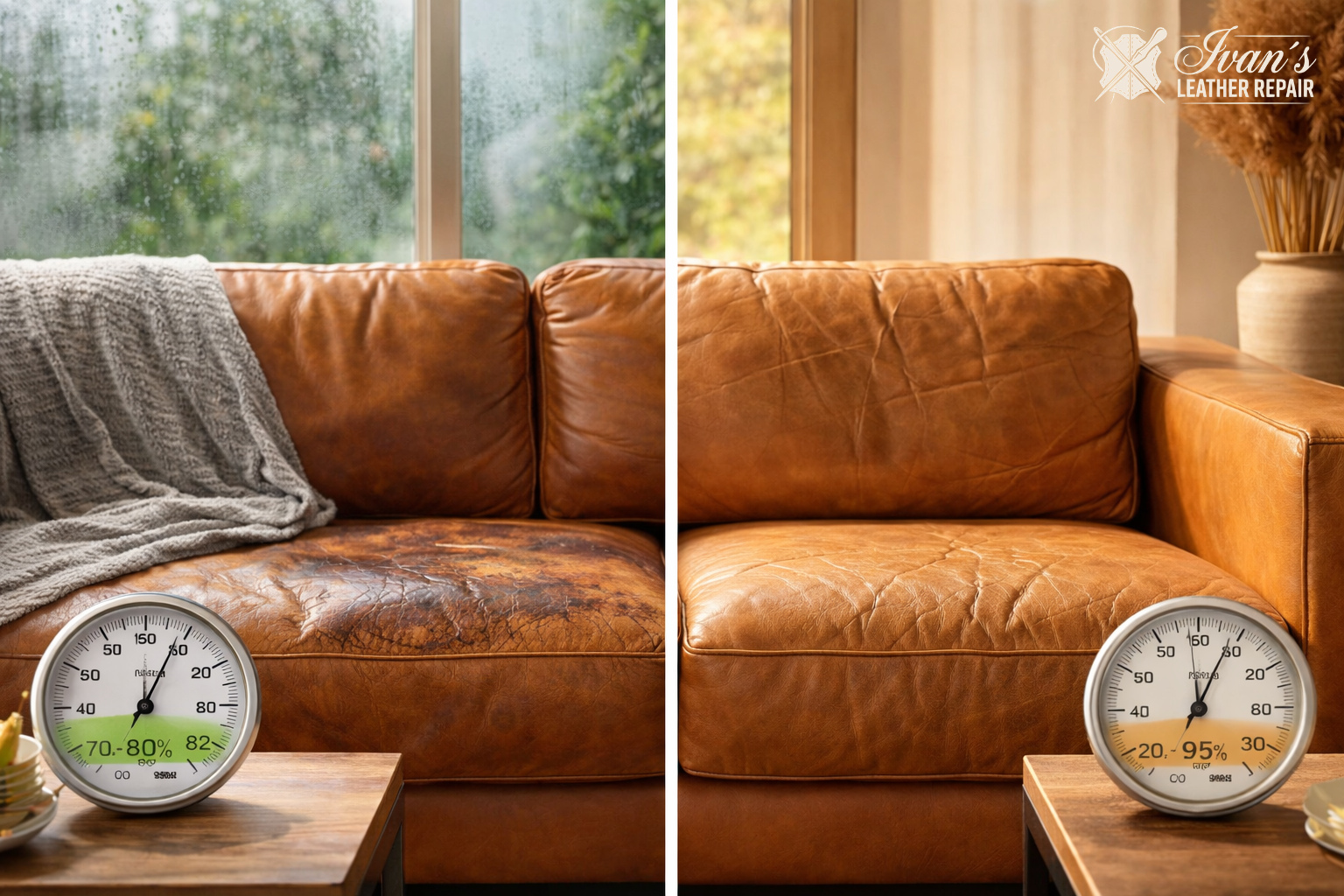
Climate affects leather through both humidity and temperature. Warm, damp air can cause swelling and mold, while hot, dry air can strip moisture from the hide and make it brittle. When these conditions change repeatedly, the damage can add up.
Experts often recommend keeping leather in conditions between 60°F and 75°F with humidity around 40% to 60%. This range helps preserve flexibility without creating a damp environment that mold loves. According to the U.S. Environmental Protection Agency, controlling indoor moisture is crucial because too much humidity promotes mold growth on organic materials, including leather.
What High Humidity Does to Leather
Moisture absorption and swelling
When humidity goes above ideal levels, leather starts to absorb water from the air, causing it to swell slightly, soften, and lose its shape. This might seem minor at first, but over time it can affect seams, surface finishes, and the overall structure.
High humidity can also make leather feel tacky or sticky. If a leather sofa or car seat feels less smooth after a humid summer, it's likely reacting to the moisture in the air. The surface finish might become cloudy or uneven, and older leather may show premature wear, especially in high-contact areas.
Mold, mildew, and odor risk
One of the biggest concerns in humid environments is mold. Leather itself isn't food for mold, but the dust, body oils, and residues on its surface can support mold when moisture levels stay high. Mold can leave stains, musty odors, and permanent damage if not addressed quickly.
Studies suggest that humidity above 60% is a major risk. That's why dehumidifiers, good ventilation, and breathable storage materials are important. If you're storing seasonal items, especially in closets or basements, consider using cotton dust bags and moisture absorbers instead of plastic covers that trap humidity against the leather.
Why do humid climates need more frequent care?
In humid areas, leather care should be more proactive. Conditioning might still be necessary, but the goal is balance rather than simply adding products. Over-conditioning in a humid space can make leather feel heavy or overly soft, so the right product and timing matter. A careful routine is important for items like residential leather repair projects and heavily used seating.
If you live in a humid climate, pay attention to ventilation, cleaning, and spacing. Leather shouldn't be pressed tightly against walls, stored in sealed containers, or left in dark, damp rooms. These conditions often lead to odor, dullness, or texture changes.
What Low Humidity and Dry Air Do to Leather
Dry air pulls moisture out of the hide.
Low humidity can be just as harmful as high humidity. When the air is too dry, leather loses moisture and becomes stiff. This drying process can lead to fine surface cracks, especially on older pieces or items that already show wear. The leather may also feel rougher and less supple.
This is common in heated homes during winter and in storage areas with forced air systems. Even if the temperature feels comfortable to people, the air may be too dry for leather. Repeated drying and rehydrating cycles can weaken the fibers, especially at folds and edges where stress is concentrated.
Cracking and color loss become more likely.
When leather dries out, the protective finish can break apart, exposing the material to more air, wear, and contamination. Color loss may follow, particularly on dyed leather exposed to the sun or friction.
For items needing leather sofa & couch repair or leather jacket repair, dry-air damage is a common reason for seeking help. Fortunately, early intervention can often slow the process, especially when conditioning and proper storage are used before cracks deepen.
How to prevent dry-air deterioration
Use a humidifier if indoor air is consistently dry, especially in winter. Keep leather away from radiators, vents, fireplaces, and direct heat sources. If you notice stiffness or light cracking, adjust the environment before applying more treatment products. Sometimes the most effective solution is not a stronger conditioner, but a more stable room climate.
Regular cleaning helps prevent dust not abrade the surface. Light cleaning supports conditioning by allowing products to absorb more evenly. If a piece already shows visible cracking, professional help may be a better option than DIY products that can mask the problem without solving it.
The Ideal Storage Environment for Leather
Target temperature and humidity ranges
Most leather care experts recommend storing leather in a cool, dry, and well-ventilated area with relative humidity between 40% and 60%. Temperatures should stay between 60°F and 75°F. These ranges help preserve flexibility while reducing the risk of mold, brittleness, and finish breakdown.
According to the Smithsonian, stable environments reduce stress on materials that expand, contract, or absorb moisture. Leather is no exception, so long-term storage shouldn't be an afterthought.
Breathable storage matters
Avoid sealing leather in plastic for long periods. Plastic can trap humidity and create condensation, especially with temperature changes. Breathable cotton dust bags, acid-free tissue, and open shelving allow air circulation while still protecting the item from dust.
If you're storing furniture covers, handbags, jackets, or accessories, make sure they are clean and fully dry before storage. Hidden moisture can create odor and mold quickly. For businesses storing inventory or seating, this is as important as it is at home.
Storage tips for different leather items
Furniture shouldn't be pushed tightly against exterior walls or placed in damp basements. Jackets should be hung on wide, supportive hangers to prevent shoulder creases. Bags should be stuffed lightly with paper that doesn't transfer ink and kept away from direct sunlight. Each item benefits from slightly different storage habits, but all leather needs airflow and dryness.
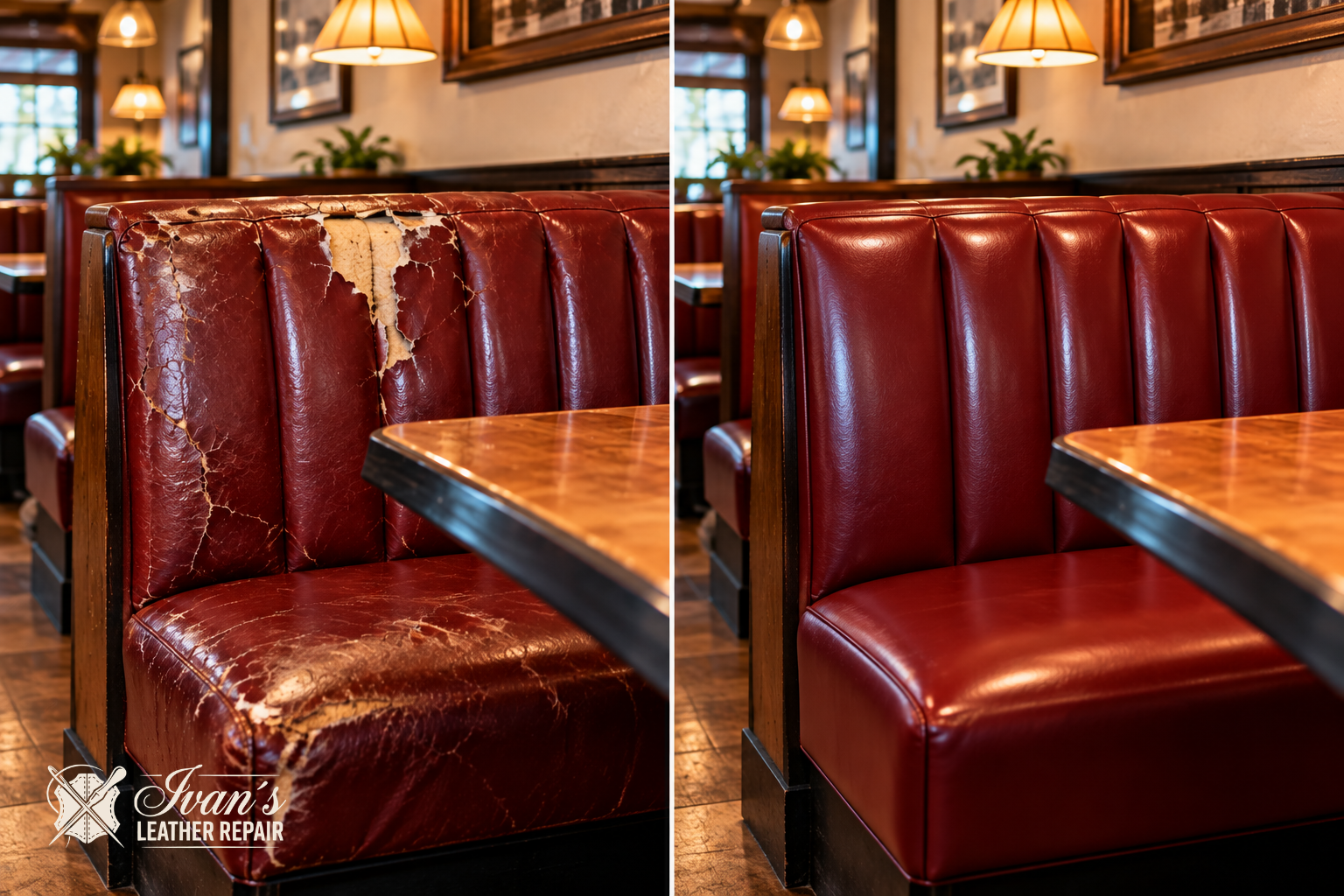
If you manage commercial interiors, regular inspections are essential. Pieces needing commercial leather repair or restaurant booth repair often show wear from poor storage or inconsistent maintenance. Prevention is much easier than restoration.
Signs Climate Has Already Damaged Leather
Visible clues you should not ignore
Leather stressed by the climate often gives clear warning signs. Look for fine cracks, stiffness, fading, warping, mold spots, sticky patches, or a powdery surface finish. If the leather no longer feels balanced between soft and firm, the environment may be the reason.
Changes may be subtle at first. A sofa corner that feels drier, a seat panel that looks duller, or a jacket sleeve that wrinkles more sharply can indicate environmental wear. These symptoms often appear before major failure, offering the best time to act.
Texture changes often appear before structural damage
Leather doesn't usually fail all at once. Instead, it often moves through stages: finish wear, color shift, surface dryness, and then cracking or tearing. That's why routine inspection is so important. If caught early, you might be able to restore the item instead of replacing it.
For instance, leather beginning to crack may still respond well to professional care if the fibers are intact. Services like sun damage, leather repair, and cracking leather repair address this kind of progressive deterioration before it becomes irreversible.
Mold and odor are urgent red flags.
If leather smells musty or shows dark spots, take it seriously. Mold can spread quickly in humid conditions, potentially damaging not only the leather but also nearby materials. In these cases, drying the room, improving ventilation, and isolating the item are immediate priorities.
For homeowners, business managers, and vehicle owners alike, urgent attention can prevent the problem from worsening. Leather repair professionals can determine whether the damage is cosmetic, structural, or environmental, helping decide the right next step.
Leather Care in Humid Climates
Daily and weekly habits that help
In humid climates, small routines make a big difference. Wipe leather with a dry, soft cloth weekly to remove dust and body oils. Keep the area ventilated, and avoid leaving wet towels, damp umbrellas, or condensation-prone items near the leather. If possible, use a dehumidifier in rooms with leather furniture or stored goods.
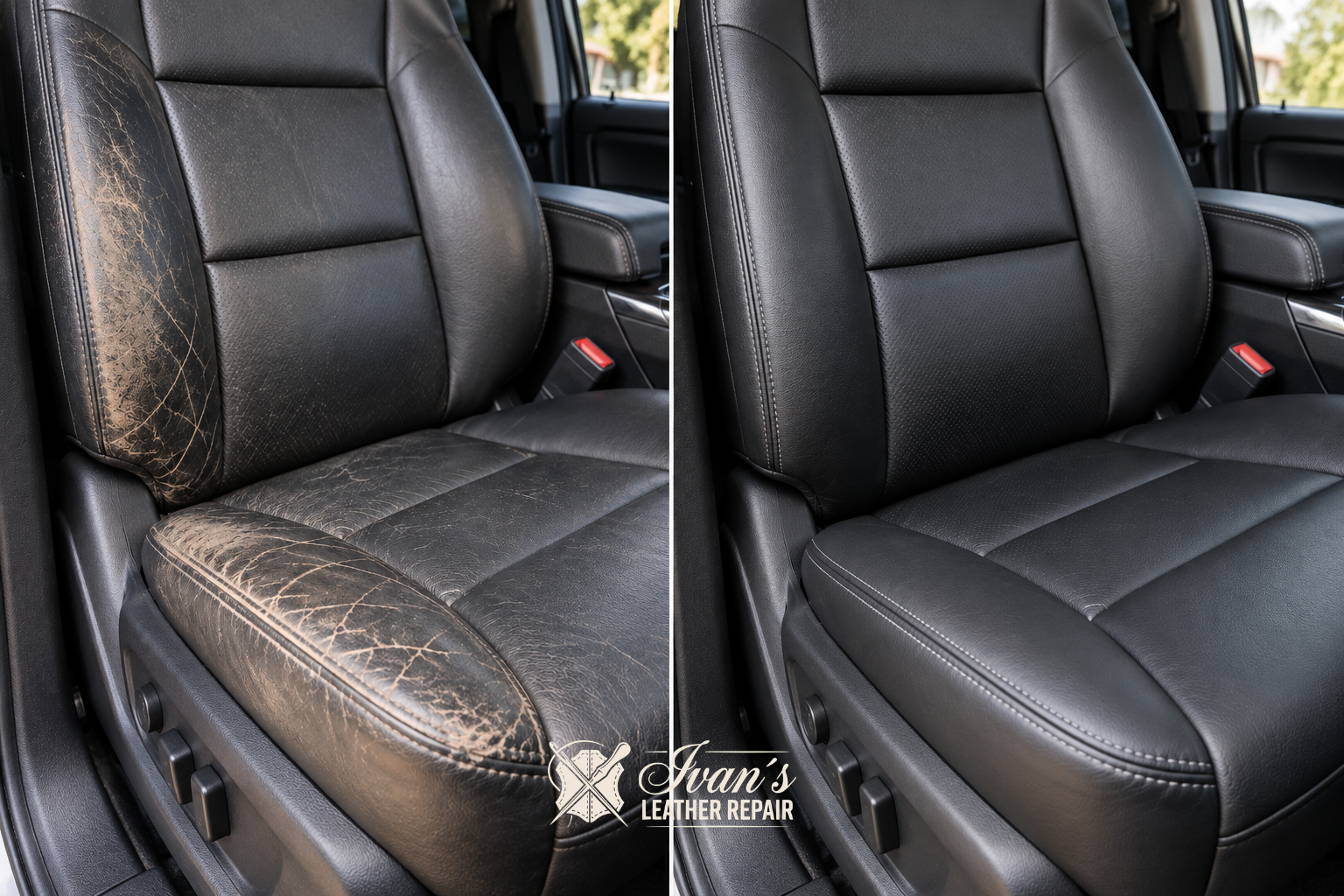
Regular care is valuable in homes and vehicles exposed to seasonal humidity changes. Car interiors, for example, might face moisture and heat in the same week, making climate stress more intense. This is why auto leather repair often involves not just surface restoration but also prevention advice.
Conditioning still matters, but timing matters more
Conditioning can replenish oils and maintain flexibility, but it should be done thoughtfully. A common recommendation is every 6 to 8 weeks, but the right schedule depends on use, environment, and leather type. In humid climates, the goal is to avoid overloading the material while still protecting it from dryness and friction.
If your leather is already soft and slightly damp from excess humidity, focus first on climate control. Conditioning an already moisture-heavy item can trap problems under the surface. On the other hand, if the leather is dry and stiff, controlled conditioning can help restore comfort and reduce future damage.
Why breathable materials are better than plastic
Breathable storage and covers help leather "breathe" with its environment. Cotton dust bags, linen covers, and open-air storage reduce the chance of condensation. Plastic may seem protective, but it often creates a mini greenhouse effect that encourages mold when humidity rises.
This simple change can have a major impact over time. If you own seasonal jackets, collectible furniture, or office seating, switching to breathable storage can preserve finish quality and reduce future repairs. This is especially important for items that see daily wear, like leather chair repair projects or family room seating.
Real-World Examples and Practical Case Studies
Silica gel and dehumidifiers in storage spaces
In humid regions, leather goods are often stored with silica gel packets or dehumidifiers to reduce excess moisture. This approach is simple, affordable, and effective for small to medium storage areas. Silica gel helps absorb moisture, while dehumidifiers actively manage the room environment.
For bags, shoes, and jackets, silica gel is most effective when paired with clean storage and airflow. For larger furniture or rooms, mechanical dehumidification is usually more reliable. These strategies aren't substitutes for cleaning or repair, but they're powerful tools for prevention.
Brooklyn-style urban storage challenges
In urban settings, climate problems can be more complicated because apartments, basements, and storefronts often have uneven airflow. In Brooklyn, for example, humidity can rise during summer months, while winter heating can dry indoor air rapidly. That combination is tough on leather because it doesn't get a stable recovery period.
For businesses and homeowners in the area, a mix of ventilation, monitoring, and preventive maintenance works best. If a sofa, booth, or vehicle interior shows early wear, local support from residential leather repair or specialized restoration services can help stop the damage from spreading. Climate-aware care is as important as cosmetic repair.
When professional restoration makes sense
Sometimes, environmental damage is beyond basic home care. Deep cracks, color loss, mold staining, and weakened seams typically require professional evaluation. Repair specialists can determine whether the leather can be stabilized, recolored, filled, or resurfaced based on the condition of the hide.
This is especially true for valuable or sentimental pieces. Antique seating, classic car interiors, and heirloom jackets often deserve restoration rather than replacement. In those situations, professional services such as antique furniture restoration or classic car interior restoration may offer the best balance of preservation and long-term value.
How Repair Professionals Evaluate Climate Damage
Looking for environmental patterns
Repair professionals don't just look at the visible damage. They also look for patterns that suggest climate stress, such as fading on sun-facing panels, cracking at folds, moisture spotting near seams, or mildew around hidden areas. These clues help identify the root cause instead of treating only the symptom.
This matters because a repair that ignores the underlying environment may not last. If the room remains damp or dry, the same damage can return quickly. A proper evaluation includes both restoration and advice on how to prevent recurrence.
Matching the repair to the material condition
Leather repair isn't one-size-fits-all. Some items need cleaning and conditioning, while others require filling, color matching, or structural reinforcement. The right method depends on the leather's age, the extent of the climate damage, and its use.
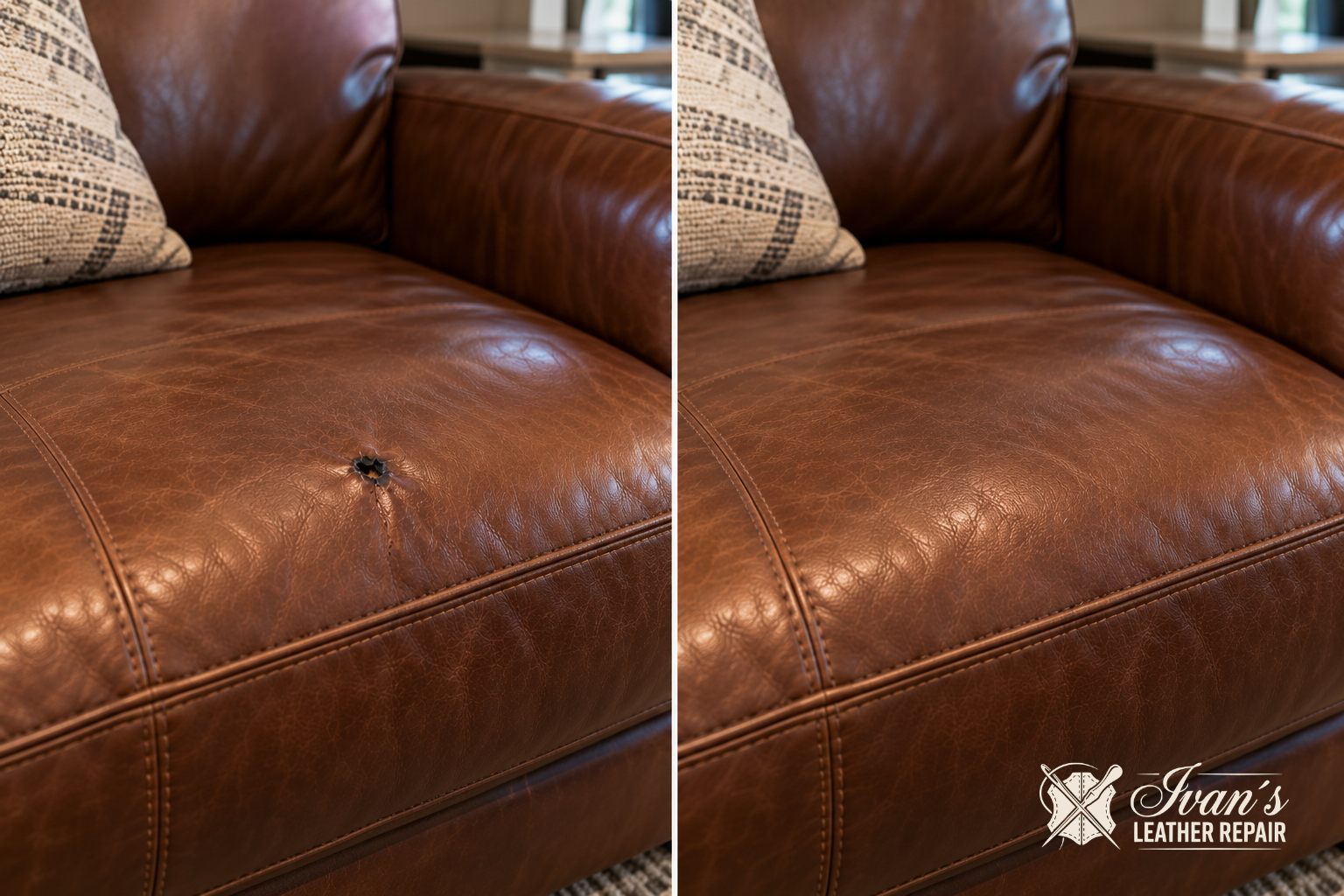
For example, a worn lobby seat may need durable commercial treatment, while a cherished jacket may need a lighter, more detailed approach. If the problem includes pet scratches, burns, or sun exposure in addition to climate stress, targeted services such as pet damage, leather repair, or burn hole leather repair may also be part of the solution.
Why prevention advice is part of quality repair
The best leather repair work does more than fix what you can see. It also helps you understand how to avoid future damage. That might include adjusting the room climate, changing storage practices, or scheduling regular conditioning. In other words, good repair extends the life of the current item and helps prevent the next repair from being needed too soon.
For businesses, that kind of guidance is especially valuable because furniture and interiors represent both function and presentation. Clean, stable leather supports comfort, brand image, and long-term cost control. For homeowners, it protects the look and feel of items used every day.
Frequently Asked Questions About Leather, Climate, and Humidity
How does humidity affect leather?
High humidity causes leather to absorb excess moisture, which can lead to swelling, tackiness, mold growth, and weakened fibers. Over time, the finish may soften or become blotchy, and the material can lose its shape. Low humidity has the opposite effect, pulling moisture out of the hide and making it dry and brittle.
What is the ideal environment for leather storage?
Leather should be stored in a cool, dry, and well-ventilated area with relative humidity between 40% and 60%. Aim for a temperature range of 60°F to 75°F whenever possible. Stable conditions matter more than perfect conditions, so consistency is the real goal.
Can leather recover after climate damage?
Sometimes, yes. If the leather has only minor drying, surface dullness, or light humidity exposure, cleaning, conditioning, and improved storage can restore much of its appearance. If the item has deep cracking, mold, or major finish loss, professional restoration may be the better choice.
How often should leather be conditioned?
A common guideline is every 6 to 8 weeks, but the right schedule depends on usage and climate. Heavily used furniture or leather in dry environments may need more attention, while leather in stable, moderate conditions may need less frequent care. Always assess the current condition before applying products.
Protect Your Leather Before Small Climate Problems Become Big Repairs
Climate and humidity affect leather gradually, so damage often goes unnoticed until it becomes expensive to fix. By keeping leather in stable conditions, using breathable storage, cleaning regularly, and conditioning at the right time, you can extend the life of furniture, car interiors, jackets, and accessories. The best protection is a combination of smart environment control and early action when problems appear.
If your leather already shows signs of drying, cracking, fading, or moisture damage, now is the time to address it. Explore our leather sofa & couch repair, sun damage leather repair, and other restoration services to find the right solution for your item. For more helpful guidance, you can also read our related post, How to Keep Leather Furniture Looking Great Every Day.
For expert help with worn or climate-damaged leather, contact Ivan's Mobile Leather Repair at (347) 207-3031 or visit our website to learn more. The sooner you respond to environmental stress, the more likely your leather is to stay beautiful, comfortable, and durable for years to come.