How Long Does Leather Repair Take? A Handy Guide for Brooklyn Property Owners
Wondering how long leather repair might take? It really depends on a few things like the damage, material, and whether you go with a DIY fix or hire a pro. Small scuffs could be done in an hour or two, but more complex issues like patching or recoloring might stretch out to days or even weeks. If you're weighing your options, this guide will break down what affects the timeline, what to expect at each step, and when it might be time to bring in a professional for leather sofa and couch repair or auto leather repair.
Leather repair isn't just about speed. It's also about getting the color match right, keeping the texture intact, allowing for curing time, and making sure it lasts. Extending a product's life is one of the best ways to cut waste and save resources, according to the U.S. Environmental Protection Agency. No wonder leather restoration is getting more popular. If you want to know how to keep your leather looking good after repairs, our daily leather care guide offers some great tips.
What Determines Leather Repair Time?
The size and type of damage
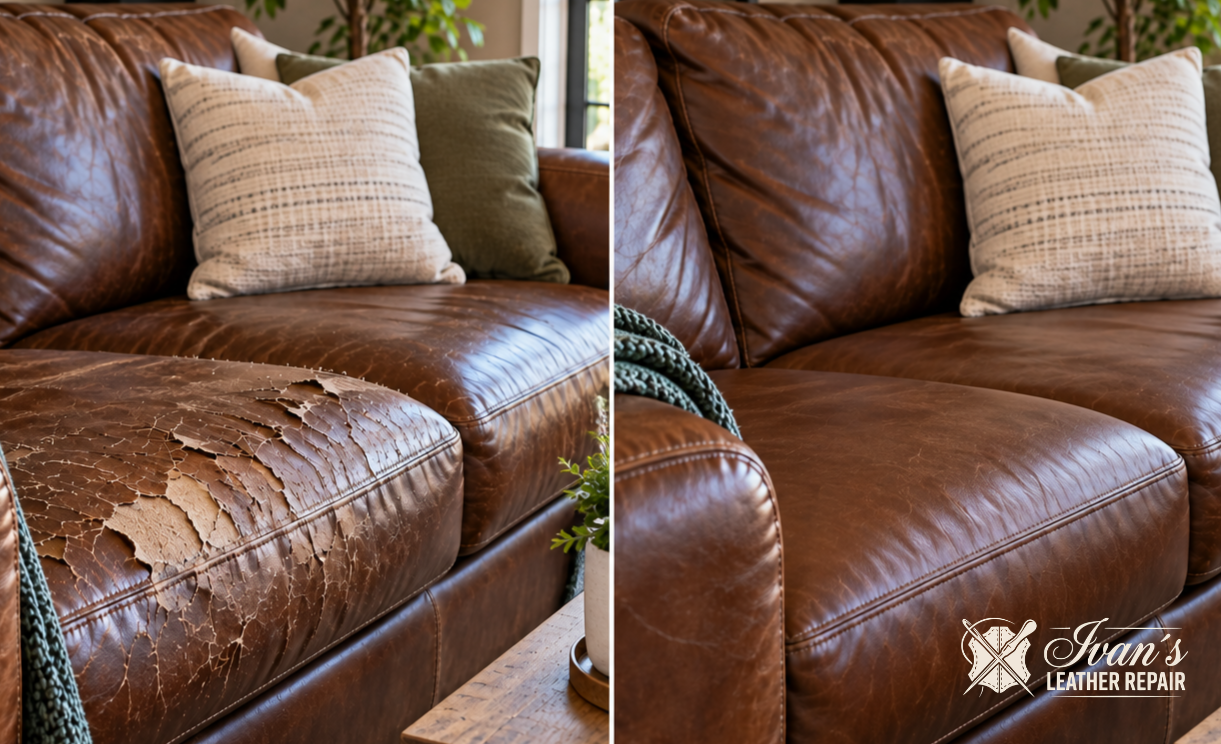
The main thing that affects how long a leather repair takes is the damage itself. A small scratch, scuff, or some light fading might only need a quick clean, condition, and recolor. On the other hand, deep tears, cracks, pet damage, burn holes, or split seams need more prep and often more than one layer of repair. A minor fix might take less than two hours if you do it yourself, but structural issues can involve multiple visits, drying time, and careful finishing. If you're dealing with cracking or age-related damage, our cracking leather repair service is here for more advanced needs.
The type of leather and finish
Repair time also changes depending on the type of leather. Smooth, finished leather is usually easier to clean and recolor than suede or nubuck, which are more delicate and absorb products differently. Older furniture, jackets, and vehicle interiors might have worn topcoats or faded dyes that need a layered process. Our guide on how leather types affect durability and care explains why full-grain, top-grain, and corrected-grain pieces respond differently to repair. Usually, the more compatible the leather and repair materials are, the faster and cleaner the job goes.
Workshop workload and curing time
Even if the repair is quick, curing time can stretch it out. Adhesives, fillers, recoloring compounds, and protective topcoats need time to set before the item can be used again. Patience pays off because rushing curing can affect durability. Some workshops also have a queue of jobs, so a simple repair might be scheduled around other commitments. This is especially true for labor-heavy projects like burn hole leather repair or panel restoration.
DIY Leather Repairs: What to Expect
Minor fixes can be fast.
DIY leather repairs work best for small, manageable issues. Simple scuffs, light scratches, and minor dull spots can often be tackled in one to two hours, especially if you have a leather repair kit and the right cleaning products. You'll usually clean the surface, prep the area, apply a filler or recoloring product if needed, and then let it dry. Leather restoration experts at Leathermagic say minor repairs are often done within this window, making DIY attractive for small cosmetic problems. For a related perspective on avoiding mistakes, see our guide to common home repair errors.
Moderate repairs take more time and skill.
Once the damage goes beyond the surface, DIY time goes up quickly. Moderate tasks like color restoration, minor seam work, or small patching jobs can take several hours or more, depending on how carefully you need to blend the finish. Leather is unforgiving if you apply products too quickly or in the wrong order. If you use too much filler, skip prep, or rush the drying stages, the final result can look uneven or peel sooner than expected. For homeowners trying to decide whether to attempt a fix themselves, our repair-or-replace guide can help clarify the decision.
When DIY is not the best option
DIY can save money, but it's rarely the best choice for large tears, extensive fading, complicated color matching, or damage on visible, high-use items. Leather jackets, car seats, and sofas often need a more refined finish than a basic kit can deliver. If the item has sentimental or financial value, professional repair usually provides better long-term value. For example, if you're dealing with a favorite coat, our leather jacket repair service can handle tears, scuffs, and color loss with a more durable finish than most home kits can achieve.
Professional Leather Repair Timelines
Surface recoloring and cosmetic repair
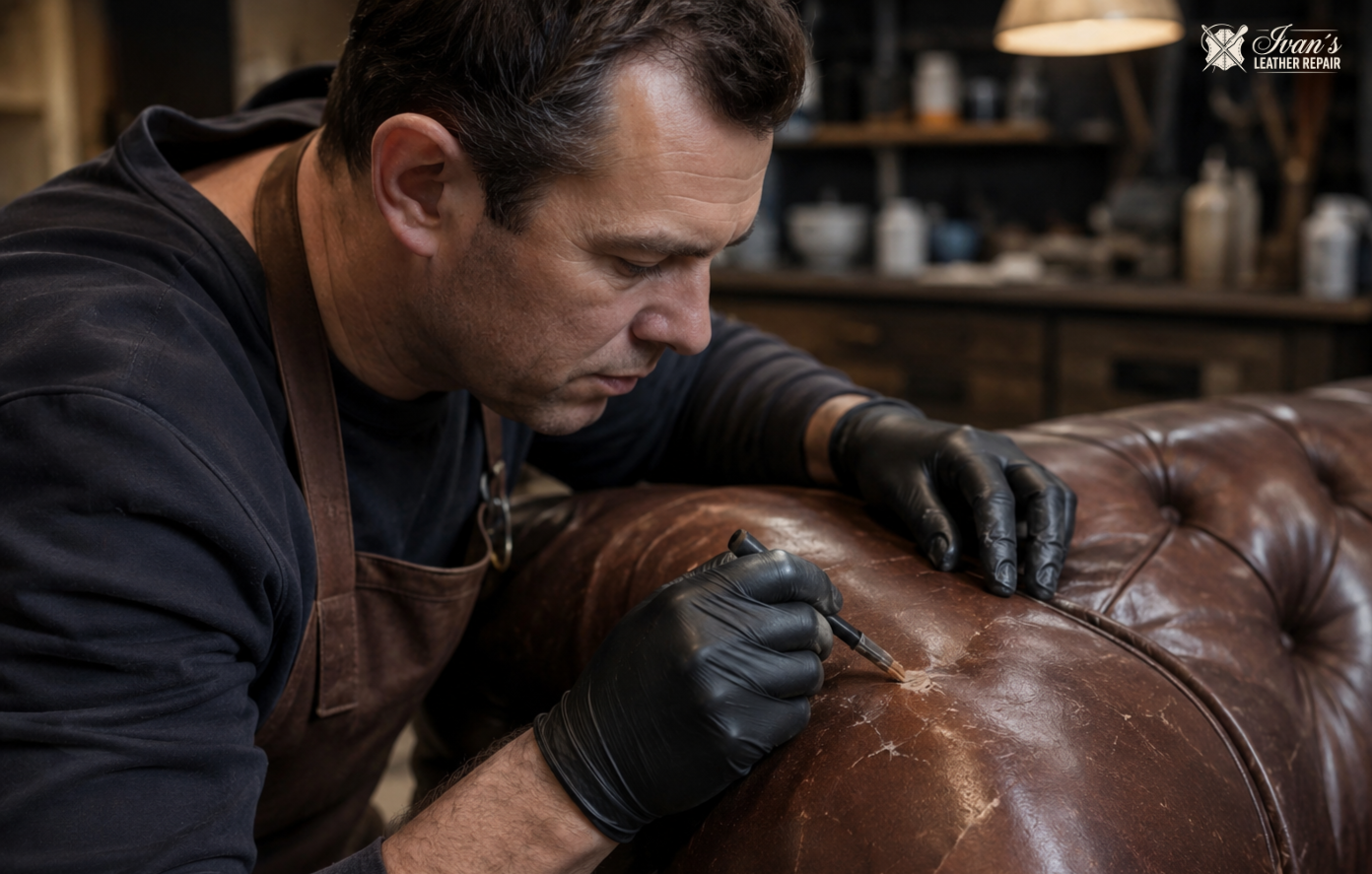
Professional surface recoloring is often quick, but it takes skill. A technician must clean the leather, assess the existing finish, select a matching color, test the blend, and apply the coating in thin layers. Surface recoloring is usually efficient but depends heavily on accurate color matching, which is where experience matters most. A simple recoloring project might be done in a short appointment or over one or two days, depending on drying and inspection. If your item has sun fading, our sun damage leather repair service is a great option for restoring faded color.
Patching and panel replacement
More extensive repairs take longer. Patching, replacing worn panels, or rebuilding severely damaged sections involves removing compromised material, preparing a new patch, bonding it properly, blending the grain, and recoloring the repaired area. According to Leather-Repairs.net, panel replacement work can stretch to 10 to 14 weeks in some cases, especially when the workshop has a backlog or the job needs custom parts. This might sound long, but it reflects the precision needed for a seamless result. If your furniture needs this level of attention, residential leather repair is often the right choice for lasting results.
Specialized projects take even longer.
Some items need special handling because of their size, structure, or use environment. Restaurant seating, commercial waiting area booths, classic car interiors, and aircraft cabin leather often require extra planning and coordination. These jobs can include fabricating replacement sections, matching aging finishes, and scheduling around business hours or vehicle access. If your project involves a vehicle with original interior details, our classic car interior restoration service can help preserve authenticity while improving appearance and comfort.
What Happens During a Professional Leather Repair Job?
Assessment and quote
Most professional repair jobs start with a close inspection. The technician checks the type of leather, the extent of the wear, the location of the damage, and whether the repair needs cleaning, filling, patching, recoloring, or reinforcement. This is also where the timeline is usually estimated. A clear assessment helps avoid surprises because some damage is more widespread than it appears at first glance. For example, what looks like one crack may actually be part of a larger dryness or UV-exposure problem.
Preparation and cleaning
Prep is crucial and often overlooked by DIYers. Leather must be cleaned thoroughly so repair products can bond properly. Oils, dirt, polish residues, and old coatings can interfere with adhesion and color consistency. In many cases, preparation takes longer than the visible repair work itself, especially on heavily used items like office seating or family sofas. If you're repairing a shared space, our commercial leather repair service focuses on both preparation quality and business-friendly scheduling.
Repair, blending, and finishing
Once the item is ready, the technician performs the repair, then blends the area to match the surrounding leather. This step may include filling gouges, sealing seams, rebuilding worn spots, or applying color layers to match the original finish. Good blending separates a temporary fix from a professional restoration. The final stage often includes protective coatings and a quality check before the item is returned or used again. For those interested in the science of finish restoration, our shine and finish restoration guide explains why the last step matters so much.
Common Repair Types and Typical Timeframes
Scuffs, scratches, and fading
Scuffs and light scratches are usually the quickest repairs. They often involve conditioning, surface cleaning, and a small amount of recoloring or finish blending. Fading can also be straightforward if the leather is structurally sound, though matching aged color may take some experimentation. These are the repairs most likely to be completed quickly because they don't require reconstruction.
Tears, seams, and pet damage
Tears and seam failures take longer because they affect both appearance and structure. A repair professional may need to stabilize the surrounding area before making the fix, especially if the leather is thin or dry. Pet damage can be tricky as well because scratches and bites often leave irregular edges and scattered surface wear. Our pet damage leather repair service is useful for restoring damaged sections while keeping the finish as natural as possible. If the damage is spread across multiple areas, the timeline naturally increases.
Burn holes and severe surface loss.
Burn holes are among the most detail-heavy repairs because the missing area must be rebuilt carefully and then recolored. This work usually takes longer than a simple patch because it needs a smooth transition between the original leather and the repaired section. The same is true for deep abrasions or areas where the leather has lost too much material to simply fill and paint over. For these cases, patience and precision matter more than speed.
How Leather Repair Time Connects to Sustainability
Repair is a green choice.
Fixing leather instead of replacing it supports sustainability by keeping usable products in circulation longer. That's important because leather furniture, car seats, jackets, and commercial seating can require a lot of materials and energy to replace. The EPA emphasizes waste reduction through reuse and extended product life, and leather repair fits right into that principle. Sustainable repair is not only about reducing landfill waste; it's also about preserving craftsmanship and cutting unnecessary consumption.
Why durability matters after repair
A repair that lasts is more green than a quick fix that fails fast. That's why material compatibility, adhesive selection, and cure times are so important. Using the wrong filler or too-rigid adhesive can shorten the life of the repair and create more waste in the long run. Matching repair compounds to the leather’s original finish and flexibility takes more time upfront, but it improves long-term performance and reduces the need for repeat work.
Brooklyn customers often choose repair over replacement.
In neighborhoods where quality furniture, vehicles, and classic pieces are part of everyday life, repair often makes more sense than buying new. Brooklyn residents frequently choose restoration for practical and environmental reasons, especially when the item still has good structure. Our local service area includes a range of home and business clients who want to preserve value while reducing waste. For nearby readers looking for a local option, our Brooklyn service area page offers a neighborhood-focused overview.
How to Get Faster, Better Results
Prepare photos and details before requesting a quote.
If you want a more accurate timeline, start with clear photos and a brief explanation of the damage. Include the item type, where the damage is located, and whether the leather is in a home, car, or commercial setting. This helps the repair professional estimate whether the job is simple or complex before they even inspect it in person. Better information up front usually means a smoother schedule and fewer delays later.
Be realistic about curing and color matching.
Many customers assume the repair itself is the only time-consuming part, but curing and color blending are often the real bottlenecks. Matching an aged leather color requires patience because the new finish must blend into a surface that may have faded unevenly over time. Likewise, adhesives and fillers need enough time to set so the repair can hold up to daily use. If you rush those steps, the result may look complete but fail prematurely.
Schedule maintenance after the repair
Once the repair is complete, maintenance matters. Gentle cleaning, periodic conditioning, and prompt attention to new damage will extend the lifespan of the restored area. For furniture owners, our everyday leather furniture care guide provides an easy routine that protects your investment. For items exposed to direct sunlight or changing humidity, consistency is especially important because environmental stress can undo good work over time.
Frequently Asked Questions About Leather Repair Time
Can a small repair really be done in one visit?
Yes, in many cases it can. Minor scuffs, scratches, and small cosmetic issues can often be repaired quickly, especially if the leather does not need extensive prep or custom color work. However, the best timeline depends on the condition of the item and the repair process used. If drying or curing is required, the appointment may be short even though the full repair is not complete until later.
Why do some repairs take weeks?
Larger jobs often involve multiple steps, custom materials, or waiting periods between layers. If a technician has to reconstruct damaged sections, source matching materials, or build color in stages, the work naturally takes longer. High-quality results usually take more time because the technician is focused on bonding strength, finish quality, and durability instead of rushing through the process.
Is professional repair worth it for expensive items?
For high-value items, professional repair is usually the better choice. A leather sofa, designer jacket, classic car interior, or commercial booth often justifies expert attention because the finish needs to look polished and last. Professional work can also help avoid mistakes that are difficult or costly to undo. If you need a durable result for a treasured piece, compare the repair to replacement before deciding.
Final Takeaway: Plan for the Right Timeline, Not the Fastest One
Leather repair can take anywhere from an hour to several weeks depending on the size of the damage, the type of leather, and the complexity of the job. DIY repair is fine for small scuffs and simple cosmetic fixes, while professional work is the safer choice for tears, fading, panel replacement, or color-sensitive projects. The most important thing is to choose a method that fits the value of the item and the result you want.
If you want a repair that looks natural and lasts, focus on quality materials, proper preparation, and enough curing time. This approach may take a little longer, but it usually saves money and frustration over time. To explore the right service for your item, browse our full range of options, including leather chair repair, restaurant booth repair, and antique furniture restoration. If you are ready to restore worn leather with professional care, contact Ivan's Mobile Leather Repair to discuss your project and get a clear estimate on time, cost, and next steps.