Can Scratched or Faded Leather Be Fully Restored?
Leather is one of those materials that can actually look better as it ages, but scratches, fading, and everyday wear can make a favorite piece seem like it's seen better days. The good news? With the right methods, cleaning, conditioning, coloring, and repair, scratched or faded leather can often be revived. Whether you’re dealing with a couch, car seat, jacket, or favorite chair, understanding the type of damage and the best restoration approach can make all the difference.
These days, people are more into restoring than replacing. It's all about being sustainable, saving costs, and keeping quality items in use for longer. As more folks talk about repairs, many are choosing options like leather sofa and couch repair, auto leather repair, and leather jacket repair instead of discarding items with good bones. If you're looking to make informed choices, this guide will help you understand what restoration can achieve, where its limits are, and how to get lasting results.
Want a broader view of furniture recovery? Check out our essential guide to restoring leather furniture. And because leather care is part of a bigger sustainability movement, it’s worth mentioning that repair and reuse are getting more attention from industry publications like Leather Mag and environmental agencies like the U.S. EPA, which focus on waste reduction and resource conservation through reuse and repair. These trends highlight that leather restoration isn’t just about looks; it’s a smart way to extend the life of your products.
What Leather Restoration Can Realistically Fix
Minor Scratches and Surface Wear
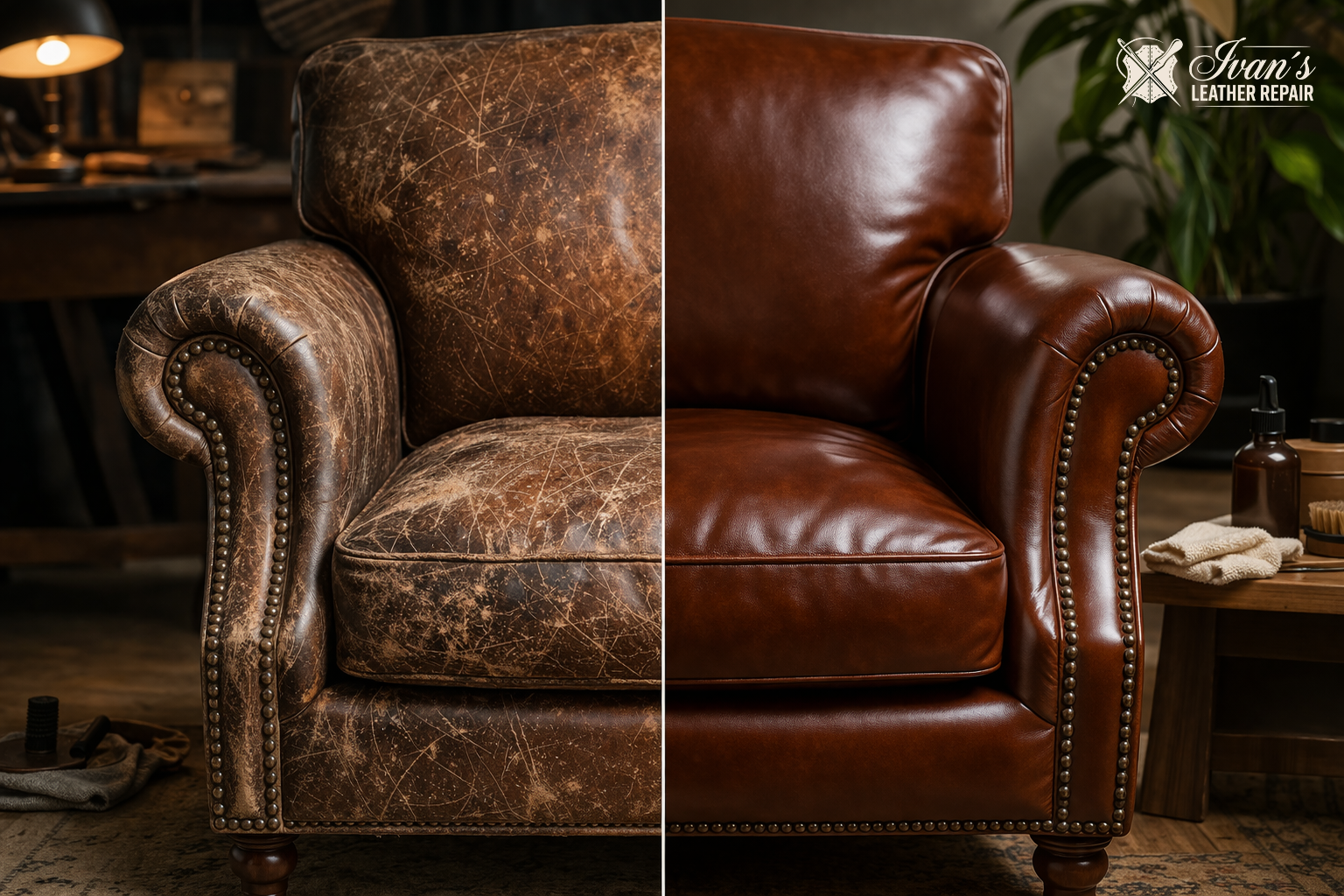
Minor scratches? No problem! Most shallow marks sit only on the surface of the leather and can often be softened with cleaning, conditioning, and a little light buffing. Sometimes, just moisturizing the leather and letting the surface fibers relax makes the scratches less noticeable. This is why professionals usually start with a thorough cleaning before considering replacement.
Fading and Uneven Color
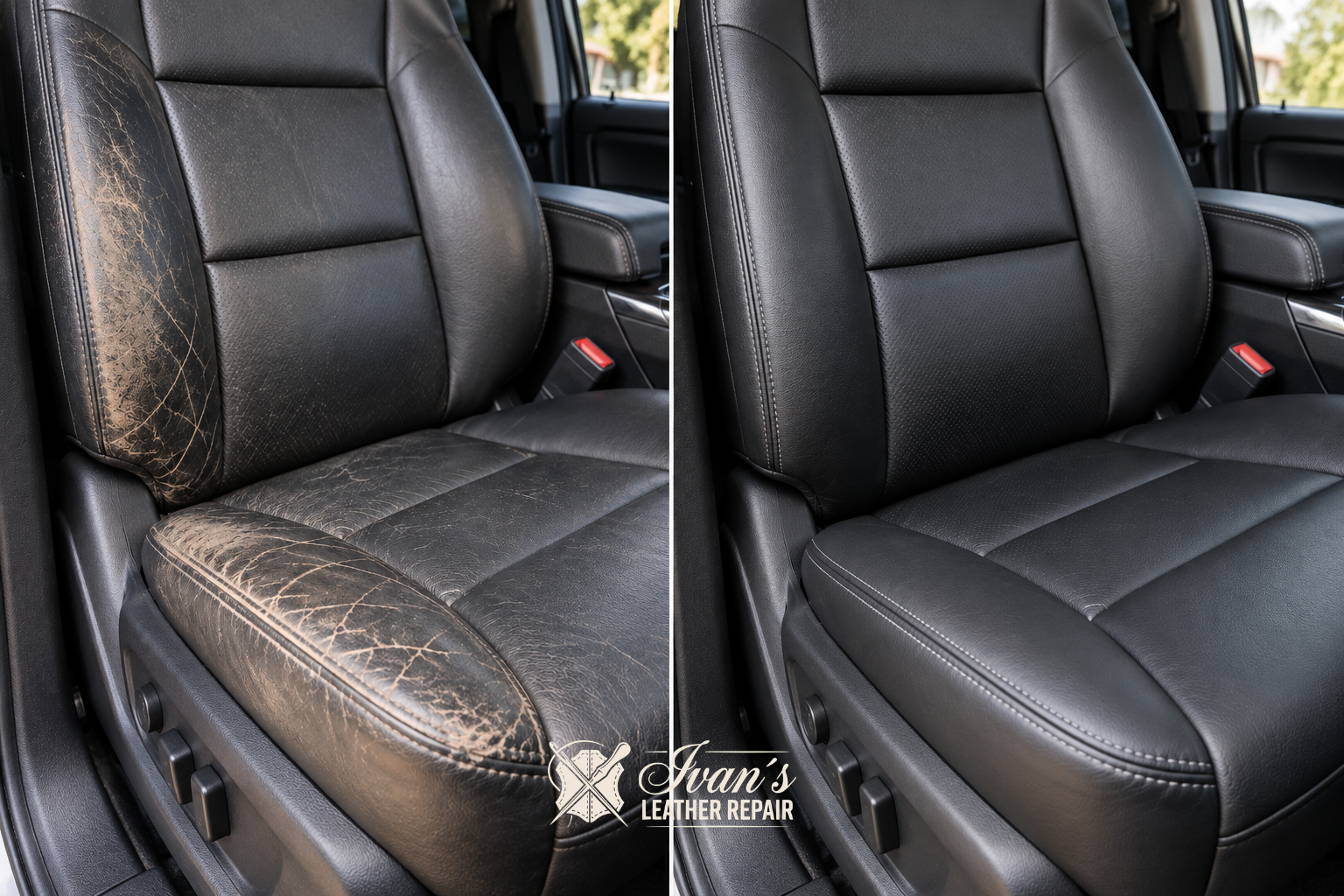
Fading from sunlight or frequent use can also be effectively treated. If the leather is in good shape but the color has dulled, a recoloring balm or leather dye can bring back that uniform look. This is especially handy for big items like sofas and car seats, where uneven fading can make an entire room or interior look tired. If you're thinking about a color refresh, our guide to leather car seat color matching shows how professionals blend tones for a natural finish.
More Serious Damage and Its Limits
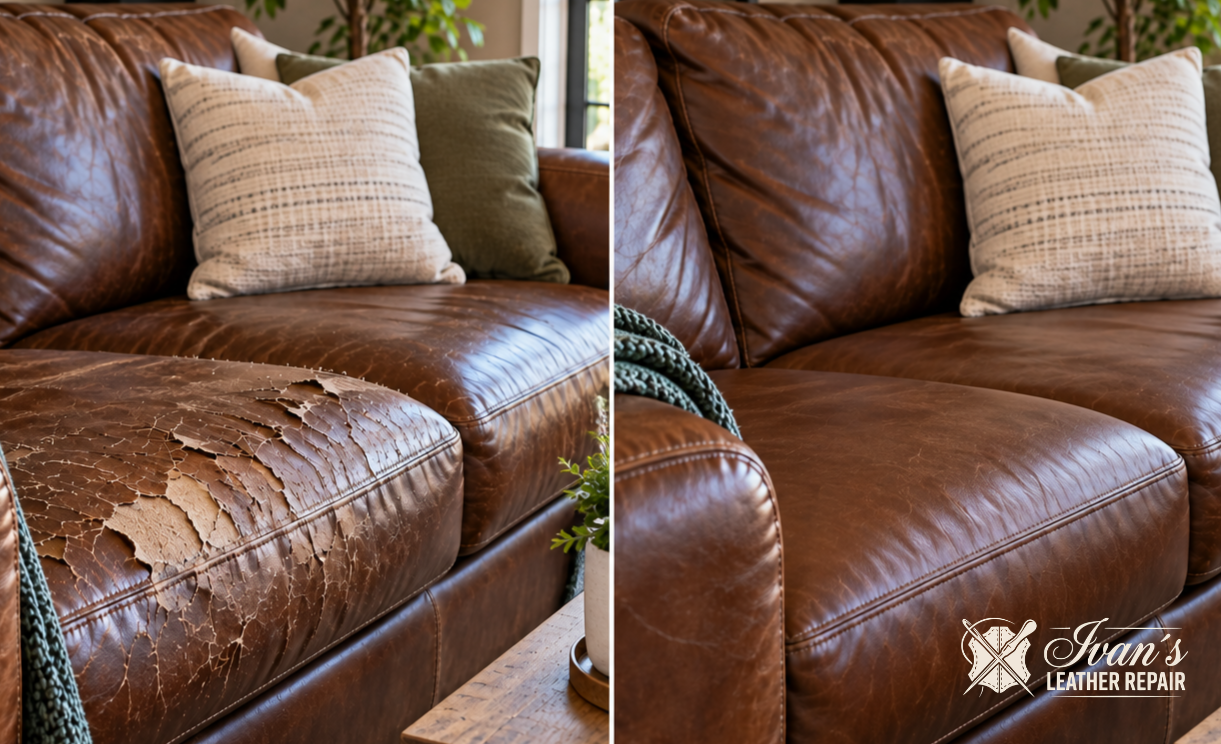
Not all damage can be fully reversed, though. Deep cracks, severe peeling, torn seams, or leather that’s become brittle from neglect might require intensive repair rather than a simple restoration. In those cases, the best results often come from combining patching, filling, recoloring, and structural reinforcement. For instance, a piece with surface fading and a few small scratches might be restored quite well, while a heavily cracked armrest might look better but not brand-new.
The Modern Leather Restoration Process
Step 1: Careful Cleaning
Every successful restoration begins with cleaning. Dirt, body oils, smoke residue, and old product buildup can stop conditioners and colorants from bonding properly. Experts suggest using a pH-balanced leather cleaner and a soft cloth to prep the surface without stripping it. This matters because leather is a natural material, and harsh cleaning can dry it out or make it fragile. A gentle first step also helps reveal the true extent of any damage before moving on to deeper repairs.
Industry experts consistently recommend this methodical approach, which aligns with guidance in professional restoration resources. For a general maintenance context, check out the American Chemical Society’s educational resources on how surface chemistry affects materials at acs.org. While not a leather-specific manual, it reinforces the basic truth that surface preparation influences every later step from conditioning to color blending.
Step 2: Conditioning the Leather
After cleaning, conditioning replenishes natural oils and keeps leather flexible. This step helps reduce fine scratches, prevents stiffness, and restores a softer feel. Quality conditioners are particularly useful on leather that's dried out from UV exposure or age. The goal isn't to make the item oily, but to bring back balance so the leather feels nourished and resilient again. Many restoration experts see conditioning as essential because it supports both appearance and long-term durability.
If your item is part of a larger furniture set, consider coordinating treatment with broader residential leather repair services. Addressing small wear patterns early can prevent them from turning into larger cracks or finish loss. For practical product care tips, you can also review consumer guidance from the U.S. Federal Trade Commission on using household products safely at ftc.gov, especially when testing any cleaner or conditioner on an inconspicuous area first.
Step 3: Repairing Scratches and Surface Imperfections
Once the leather is clean and conditioned, it’s time to tackle the damaged areas. Minor scratches might improve with gentle buffing and careful massaging of the fibers. Deeper scratches usually need a color-matched leather balm or filler that can be smoothed into the spot and blended into the surrounding finish. The challenge isn't just filling the scratch but ensuring the repair blends in under normal light.
For deeper wear on furniture, our leather chair repair service can be a practical option, especially when damage is concentrated in high-contact areas like a seat cushion or armrest. If scratches have developed into cracks, it might be more appropriate to move toward cracking leather repair to stabilize underlying damage before it worsens. This staged approach is one reason professional restoration often outdoes quick DIY fixes.
Step 4: Restoring Faded Color
Color restoration can make many leather pieces look dramatically renewed. After prepping the surface, a dye or recoloring balm can be applied to bring back richness and depth. This step is crucial when fading occurs in patches, often near windows, on headrests, or around seat bolsters. Professional color matching helps ensure the restored area blends into the original leather rather than standing out as a repaint.
For automotive interiors, color restoration adds value because visual consistency affects perceived vehicle condition. That’s why our auto leather repair solutions address both surface wear and finish uniformity. In classic vehicles, the stakes are even higher, and careful tone matching can protect long-term value. If that's your situation, explore classic car interior restoration for a deeper restoration strategy.
What Current Industry Trends Say About Leather Repair
Sustainability is Reshaping Repair Habits
The leather repair world is increasingly linked to sustainability. More consumers now prefer restoring over replacing because it keeps usable products in circulation and cuts down on waste. This shift is part of a bigger movement toward a circular economy, where products are maintained, repaired, and reused for as long as possible. Leather fits well into this because many items are built with durable hides, strong frames, and high-quality stitching that can outlast the surface finish.
Industry commentary has also highlighted the business side of this trend. Publications like Leather Mag report growing demand for repair services as consumers become more conscious of environmental impact and long-term value. That demand is visible in homes, offices, restaurants, and transportation settings, where repair can be cheaper than replacing an entire upholstered piece. For restaurants and commercial spaces, our restaurant booth repair service shows how restoration can support both design and sustainability.
Better Materials and Methods are Improving Outcomes
Advancements in fillers, flexible coatings, pigment systems, and recoloring products have made modern repair more effective than older methods. Technicians can now address damage with more precision and a more natural finish. While not every repair is invisible, the final result can be much closer to the original than many people expect. The right tools, in the hands of an experienced specialist, can transform a worn item into one that looks renewed and well-maintained.
Repair Demand is Growing Across Categories
Leather repair isn’t just for sofas and jackets anymore. Businesses now seek restoration for waiting room seating, airplane cabins, high-end vehicles, and hospitality furniture because maintaining a polished appearance matters. If your business relies on a professional look, our commercial leather repair service can help extend the life of high-traffic items. For more specialized settings, such as aviation, aircraft interior repair can meet strict durability and appearance needs while preserving the interior investment.
DIY Repair vs. Professional Restoration
When DIY Makes Sense
Many small issues can be handled at home if the leather is in relatively good condition. Light surface scratches, mild dryness, and small areas of fading might respond well to cleaning, conditioning, and cautious buffing. A homeowner or car owner who follows directions carefully can improve appearance without major expense. The key is to test products first, apply them sparingly, and avoid over-saturating the leather.
When Professional Help is the Better Choice
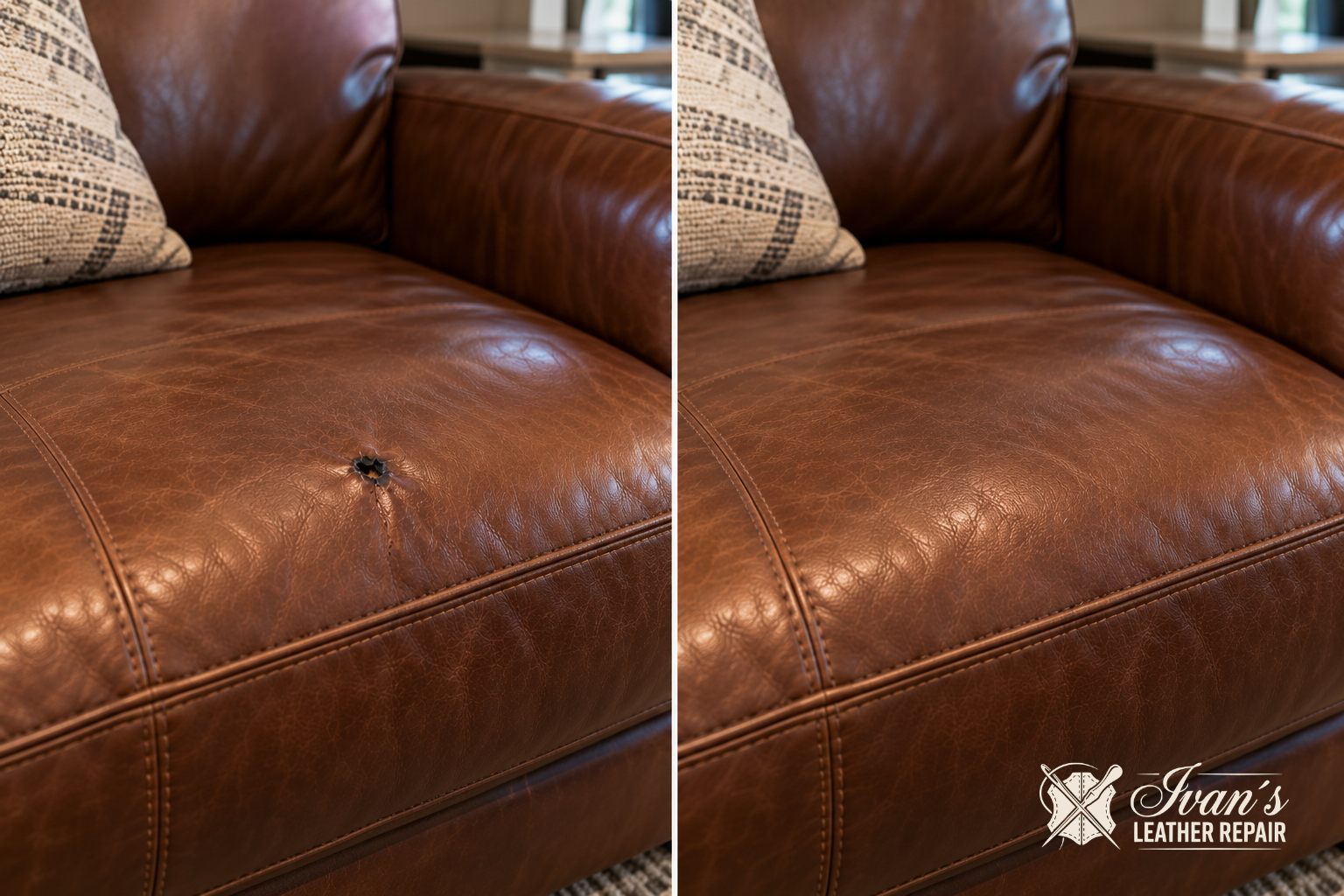
Professional intervention is usually better for more serious, larger, or highly visible damage. If the item has a burn mark, a long crack, pet-related tearing, or extensive color loss, a technician can usually provide a better outcome because they know how to build, fill, blend, and protect the surface properly. In those cases, trying to fix it quickly with household products can make the problem harder to correct later. That’s why services like burn hole leather repair and pet damage leather repair exist. They’re not just about looks; they help stabilize the area so the damage doesn’t spread. If your leather has been affected by strong sunlight, you might also want to look into sun damage leather repair since UV exposure often causes fading, dryness, and brittleness that become harder to handle over time.
A Simple Decision Rule
A handy rule of thumb is this: if the leather is dry but intact, DIY care might be enough; if it’s cracked, torn, discolored in several spots, or weak, call a professional. This logic helps preserve both the item and your budget. It also prevents mistakes that could reduce the success of later repairs. To avoid common missteps, check out our guide to common leather repair mistakes at home for practical advice.
Real-World Examples of Leather Restoration Success
Faded Sofa Brought Back to Life
One common example is a leather couch that has faded from years of sunlight near a window. The surface might still be strong, but the color looks washed out and uneven. In a case like this, a technician can clean the leather, apply conditioner, and finish with a recoloring balm that restores depth and consistency. The result is often dramatic enough that the sofa looks like part of the room again rather than a worn focal point.
For homeowners deciding whether to save a couch, our leather sofa & couch repair service can be especially useful. Often, the frame and structure remain fully usable, so restoring the surface is both practical and cost-effective. If you're comparing repair to replacement, our repair or replace guide can help you consider the trade-offs.
Worn Jacket Rescued from Regular Use
Leather jackets often get scratches, creases, and fading along sleeves, cuffs, and seams. Because jackets are worn close to the body, they also collect oils and grime faster than people expect. A proper restoration can bring back the leather's richness while preserving the jacket’s shape and character. This is a great example of how leather repair supports sustainability, as a high-quality jacket can last many more years with the right care.
Furniture in Commercial Spaces Refreshed for Daily Traffic
Commercial furniture takes a beating, especially in lobbies, waiting rooms, and dining spaces. A booth with fading and scratches might not be structurally ruined, but it can hurt the business’s atmosphere. Restoration helps maintain a polished look without the cost and hassle of full replacement. Sometimes, repairs can be scheduled to limit downtime and keep the space operational. Businesses needing durable solutions often benefit from recurring maintenance rather than one-time fixes.
How to Prevent Future Scratches and Fading
Use Regular Cleaning and Conditioning
Prevention is easier than repair. Regular cleaning gets rid of abrasive dirt before it can grind into the finish, and conditioning keeps leather supple so it’s less likely to crack or show stress marks. Light maintenance can make a big difference over time, especially for daily-use items. The goal is to keep the material healthy, not just treat it when problems become obvious.
Control Sunlight and Heat Exposure
UV rays are one of the biggest causes of fading and drying. Keep leather out of direct sunlight whenever possible, and use window coverings or furniture placement strategies to reduce exposure. Heat sources like radiators, vents, and fireplaces can also dry leather prematurely. If your item has already suffered significant light damage, it may need targeted restoration and better placement going forward.
Store and Use Leather Carefully
Avoid dragging leather furniture, overfilling pockets in jackets, or placing sharp objects where they can scrape the surface. For vehicles and homes alike, small habits determine long-term condition. If leather is stored for a season, keep it in a cool, dry place and avoid plastic covers that trap moisture. Careful use combined with periodic maintenance is the best way to extend the life of any restored piece.
Frequently Asked Questions About Leather Restoration
Can All Leather Items Be Restored?
Most leather items can be improved, but the outcome depends on the type of leather and the severity of the damage. Full-grain and top-grain leather often responds very well because they are durable and repair-friendly. Extremely thin, badly dried, or heavily peeling surfaces may have more limited restoration options. Even then, many items can still be made significantly better with the right approach.
Is Full Restoration Always Possible?
Not always. “Fully restored” can mean different things depending on expectations. In many cases, leather can be restored to a condition that looks clean, refreshed, and attractive from a normal viewing distance. However, if a scratch has permanently removed the finish or a crack has broken the leather fibers, some evidence of repair may remain under close inspection. A professional can usually explain what is realistic before any work begins.
How Do I Know If My Item Is Worth Restoring?
The best candidates for restoration are usually well-made pieces with solid frames, quality leather, or sentimental value. If the item is comfortable, structurally sound, and expensive to replace, restoration is often the smart choice. For a more personal item like a favorite jacket, a family chair, or a classic car interior, the emotional and practical value can be especially worthwhile. When in doubt, request an assessment before deciding to replace it.
Why Professional Leather Repair Is a Smart Long-Term Investment
Better Value Than Replacement in Many Cases
Restoration often costs less than replacing a quality leather item, especially when the underlying frame, cushioning, or construction is still in good shape. Beyond price, repair protects the craftsmanship already built into the item. That makes it a smart option for homeowners, drivers, and businesses alike. Instead of starting over, you extend the life of what you already own.
Supports Sustainability and Waste Reduction
Repair also has environmental benefits. Keeping leather goods in use reduces disposal, conserves materials, and lowers the demand for new production. That matters in an era where consumers are paying more attention to durability and lifecycle value. If you're interested in more sustainable approaches, our sustainable leather repair practices article explains how restoration aligns with eco-conscious maintenance.
Protects Appearance and Confidence
There is also a practical, everyday benefit to restored leather: it simply looks better and feels better to use. A clean, even surface changes how a room, vehicle, or personal accessory is perceived. Whether the item is part of a home interior or a professional business setting, good leather care communicates attention to detail. In a place like Brooklyn, where style and practicality both matter, restoration helps people keep items they love without sacrificing appearance or function.
Conclusion: Yes, Leather Can Often Be Restored Beautifully
So, can scratched or faded leather be fully restored? In many cases, yes, or very close to it. The final result depends on the leather type, the depth of the damage, and how quickly the item is treated. Minor scratches and fading are often highly responsive to cleaning, conditioning, and recoloring, while more serious damage may require more advanced repair techniques. The important thing is not to assume that wear means the item is finished.
If you have a leather piece that still has good structure but looks tired, restoration is worth exploring before you replace it. From furniture and jackets to auto interiors and commercial seating, professional leather care can extend lifespan, reduce waste, and bring back the rich look that made the item valuable in the first place. For personalized help, Ivan’s Mobile Leather Repair is here to assist with everything from chair repair to broader home leather restoration. To learn more or schedule service, visit our website or call (347) 207-3031.