When clients, tenants, or guests walk into a business space, they notice the details fast. Torn lobby chairs, cracked booth seats, faded waiting room sofas, and scratched conference seating can quietly send the wrong message long before anyone says a word. That's why commercial leather repair is more than a cosmetic fix; it's a practical way to protect brand image, extend furniture life, and keep everyday spaces looking organized and professional.
For businesses that depend on appearance and comfort, maintaining leather surfaces is part of maintaining trust. Whether your space includes reception seating, executive offices, hospitality booths, or specialty interiors, repair is often a smarter choice than replacement. If you're comparing solutions, it helps to understand how services like commercial leather repair and leather chair repair support a consistently polished environment without disrupting operations.
In this guide, we'll break down why leather damage happens, how professional repair helps businesses stay presentable, what the process usually includes, and when repair makes the most financial sense. You'll also see how thoughtful maintenance supports long-term value, especially in high-traffic commercial settings where furniture works hard every day. For a broader perspective on workplace upkeep and safety, the Occupational Safety and Health Administration offers useful guidance on maintaining safer, more functional work environments.
Why Appearance Matters So Much in Commercial Spaces
First impressions happen in seconds.
A customer rarely evaluates a business only by one feature. Instead, they notice the lighting, cleanliness, seating condition, and overall presentation all at once. Leather furniture often sits in highly visible areas, so any scuffs, tears, or color loss become part of the first impression. When that furniture looks cared for, the entire space feels more credible and organized.
This is especially important in industries where comfort and professionalism are closely linked. Law offices, medical clinics, hospitality spaces, dealerships, and corporate lobbies all benefit from seating that looks stable and well-maintained. Even minor wear can make a room appear older or less attentive than it really is, while timely repair helps the space feel current and cared for.
Leather sends a message about standards.
Leather is often chosen because it feels premium, durable, and refined. Unfortunately, that same high-end look can work against a business when damage becomes visible. Cracks, fading, peeling, and surface scratches are easy for customers to see, and they may assume the business has let other details slip as well.
Repair helps preserve the impression of quality that leather was chosen to create in the first place. Instead of replacing every piece at the first sign of wear, businesses can restore the parts that matter most. For more context on how surface damage progresses, this article on why fixing small leather damage quickly is a smart move explains how early attention can prevent deeper deterioration.
Common Types of Leather Damage in Businesses
Daily traffic and repeated use
Commercial furniture sees far more movement than residential furniture. Employees, visitors, customers, and delivery crews all interact with the same seating areas throughout the day. Over time, this repeated use leads to compression, cracking, loosened seams, and worn surface finishes. Even high-quality leather will show signs of fatigue when it's used heavily.
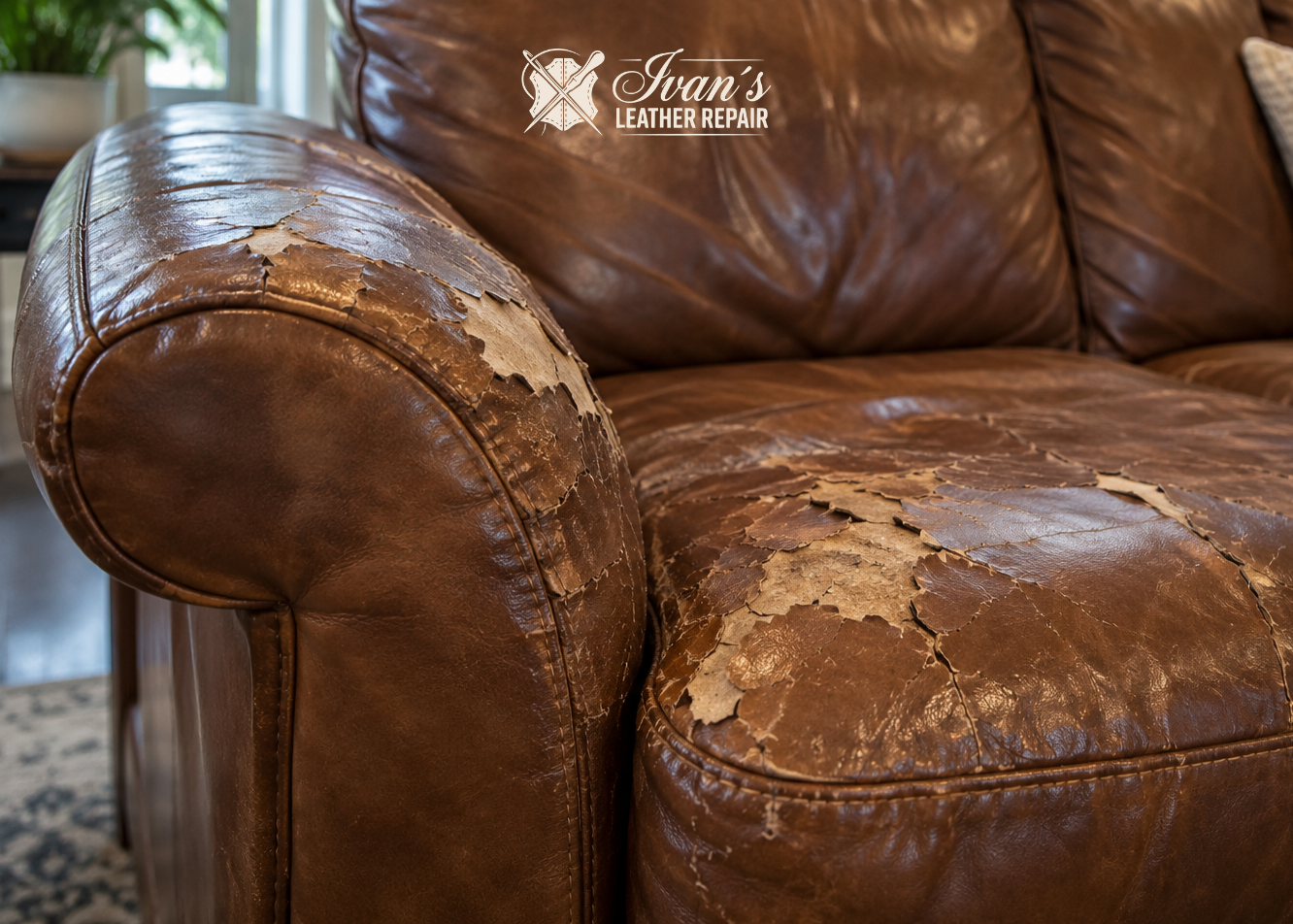
Reception chairs and waiting room sofas are especially vulnerable because they are touched constantly but rarely treated with the same care as executive furniture. Arms, seat cushions, and headrest areas usually wear first. Once those areas begin to break down, the damage can spread visually across the piece and make the entire set look tired.
Accidents, spills, and environmental stress
Commercial spaces also deal with a wide range of accidental damage. Coffee spills, sharp objects, dragged equipment, pet claws in pet-friendly offices, or burn marks from hot items can all create visible flaws. In some cases, the issue is not a single accident but environmental stress, such as direct sun exposure or dry indoor air that slowly dries out the leather.
According to the U.S. Environmental Protection Agency, indoor environments can be affected by temperature, humidity, and ventilation conditions, all of which can influence how materials age over time. In commercial interiors, that matters because leather that dries out too quickly becomes less flexible and more likely to crack. Businesses that understand these causes can make better maintenance decisions before damage becomes widespread.
Damage from heavy use in specialty spaces
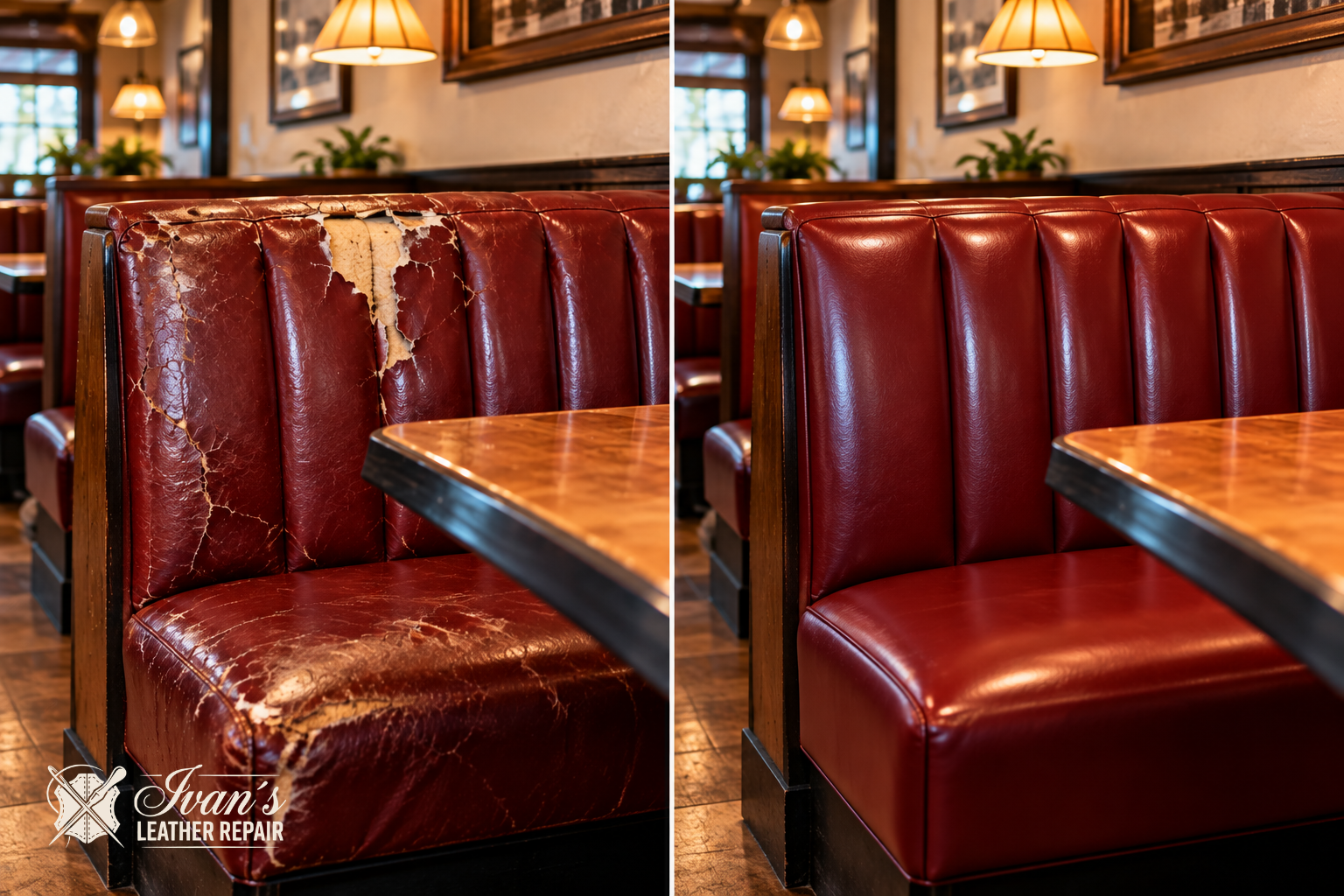
Some commercial settings face unique challenges. Restaurant booths often deal with constant sliding, cleaning, and pressure at the seams. Aircraft interiors require extremely precise work because the environment is compact, highly visible, and subject to frequent wear. Office seating may not be abused in the same way, but it often gets used every single day without interruption. In each case, the repair approach has to match the function of the furniture.
That is why specialized solutions such as restaurant booth repair or aircraft interior repair can be more effective than generic upholstery fixes. Different environments require different restoration strategies, especially when appearance and durability both matter.
How Commercial Leather Repair Supports a Professional Image
Restores consistency across the space
One damaged chair in a lobby may not seem serious, but it can break the visual consistency of the whole room. Customers notice when one piece looks older, faded, or patched differently than the rest. Professional repair helps create a balanced look by blending color, texture, and finish so the piece fits naturally with surrounding furniture.
Consistency matters because it tells people that the space is managed carefully. Even when a business has a large seating area, a unified appearance helps the room feel intentional rather than neglected. That is one reason many companies choose targeted repair instead of waiting until they can replace all the furniture at once.
Helps businesses avoid the look of decline
Leather wear doesn't just affect one item. If left untreated, it can make a business feel less maintained overall. Cracked armrests, peeling edges, and sun-faded panels create a subtle impression that the space is past its prime. That impression can be expensive, because clients may connect visible wear with poor service or weak attention to detail.
Professional repair interrupts that decline. A carefully restored piece looks cared for, which helps the rest of the interior feel more polished too. Businesses that schedule repair before damage becomes severe often avoid the dramatic visual drop that can happen when small flaws accumulate.
Protects comfort as well as style
Professional appearance isn't only visual. Comfortable seating also affects how people perceive a business. A chair with cracked leather, exposed foam, or rough seams feels less welcoming, and visitors may not sit as comfortably or as long. Repair improves not only how the furniture looks but also how it functions for real daily use.
That matters in settings such as reception areas, waiting rooms, and client lounges, where comfort contributes directly to the customer experience. For businesses with visible wear on chairs, sofas, or lounge seating, services like commercial leather repair can restore both the look and the feel of the space without forcing an immediate replacement cycle.
What the Commercial Leather Repair Process Usually Includes
Inspection and damage assessment
Every good repair begins with a close inspection. A technician needs to identify whether the damage is limited to the surface or whether it has affected the padding, seams, backing material, or finish. This step helps determine whether the piece can be restored in place or whether a more detailed treatment is needed.
Assessment also helps set expectations. A small scratch can often be blended quickly, while a deep tear or heavily cracked panel may require more work to rebuild the surface properly. Clear inspection prevents surprises and allows businesses to plan around the repair timeline.
Cleaning, preparation, and surface correction
Before any restoration work begins, the leather must be cleaned and prepared. Dirt, residue, oils, and previous conditioners can all affect how repair materials bond to the surface. Proper preparation is one of the biggest reasons professional results look smoother and last longer than DIY attempts.
Once the surface is ready, technicians may fill small cracks, reshape worn areas, or smooth damaged sections so the final finish blends naturally. If the problem includes discoloration, the repair process can also involve careful color matching and finish adjustment. This is especially important for pieces exposed to sunlight, which may have uneven fading over time. For more on this issue, see sun damage leather repair.
Color blending and finishing
The most visible part of the process is usually color work. Matching commercial leather means accounting for tone, sheen, texture, and age. Even two black chairs may not be the same black, especially if one has been exposed to more light or use. Professional color blending makes the repair less obvious and helps the furniture keep its original character.
After the repair is blended, a protective finish may be applied to help the surface withstand future wear. This finish can support durability, improve the appearance of the repaired section, and help the entire piece look more uniform. A well-finished repair should not draw attention to itself; it should make the whole item feel refreshed.
Why Repair Is Often Smarter Than Replacement
Lower cost, less disruption
Replacing commercial leather furniture can be expensive, especially when the business must buy multiple pieces to keep the room visually consistent. Repair is often a more cost-effective way to extend the life of what you already own. It also avoids the hassle of shopping for new pieces, waiting for delivery, and arranging disposal of the old furniture.
For businesses that can't afford downtime, repair is especially valuable because it usually causes less disruption. Many repairs can be completed without removing every item from service for long periods, which helps keep operations moving. That practical advantage is one reason repair is so often the better first choice.
Preserves matching sets and custom finishes
Commercial interiors often rely on matching furniture sets or custom color schemes. If one item gets replaced, the new piece may not match perfectly, even when the style is similar. Over time, that mismatch can make the room feel disjointed. Repair helps preserve the original set, which keeps the interior looking intentional.
This is particularly important in hospitality and office settings where design consistency supports branding. In many cases, the furniture was selected to reflect a specific image, and repair allows that image to stay intact. If your space includes worn seating that needs more targeted attention, leather sofa and couch repair can help restore the larger pieces that anchor the room visually.
Supports sustainability goals
Repair also fits into a more sustainable approach to business operations. Replacing furniture creates waste, consumes additional materials, and often results in perfectly usable structures being discarded because the surface looks worn. Restoring existing furniture helps reduce unnecessary landfill use and makes better use of durable materials.
Many businesses now treat sustainability as part of their brand story, and repair aligns well with that mindset. A repaired piece still delivers value, but with less material waste and a longer lifecycle. That makes it a smart choice for organizations that want to be both practical and responsible.
Where Commercial Leather Repair Makes the Biggest Difference
Office lobbies and reception areas
Reception seating is one of the first things visitors see. If the furniture is scratched or cracked, the message can feel unintentionally negative, even if everything else in the office is well managed. Restoring these pieces helps create a calmer, more polished welcome for clients, partners, and applicants.
In professional offices, appearance and trust are closely linked. That's why maintaining seating, executive furniture, and waiting areas should be part of a broader interior care plan. In some cases, a combination of repairs and routine cleaning can make an older office feel significantly more current.
Hospitality and customer-facing environments
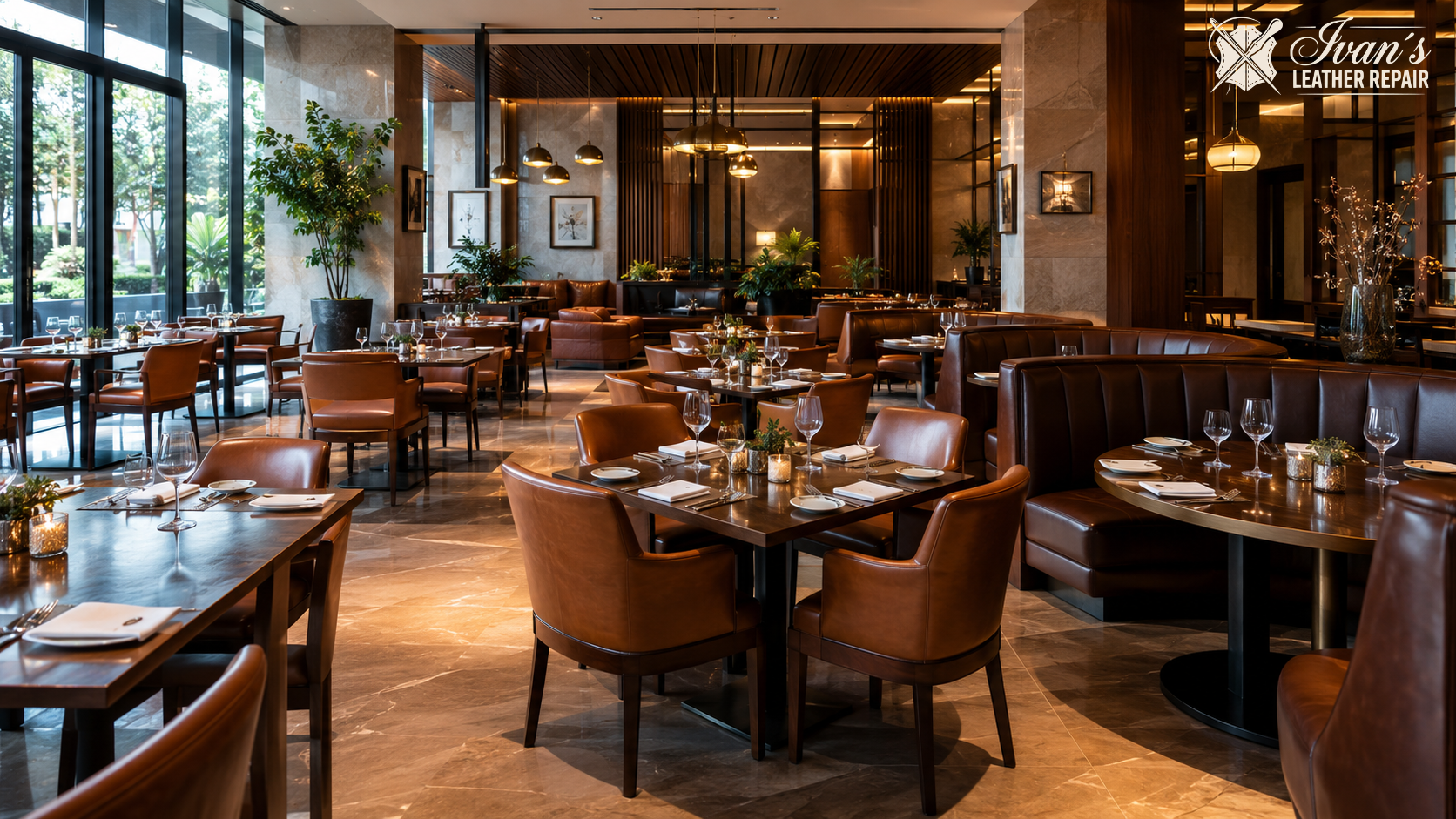
Restaurants, hotels, lounges, and private clubs rely heavily on atmosphere. Leather booths, banquettes, and lounge chairs help define that atmosphere, but they can also wear quickly because of constant traffic. When these pieces crack or lose color, the whole guest experience can feel less refined.
Targeted repair helps businesses protect their guest-facing image without the major expense of a full reupholstery project. In hospitality, even one visibly damaged seating area can influence how people talk about the space. Repair keeps the presentation aligned with the level of service being offered.
Specialty fleets and premium interiors
Some commercial leather surfaces live in vehicles, aircraft cabins, or branded specialty interiors. In those cases, the goal is not just comfort but also a high-end, well-maintained presentation. For vehicle owners and fleet managers, auto leather repair can restore seats and trim that are part of the company’s public image.
Businesses that operate classic or luxury vehicles may also benefit from classic car interior restoration, especially when appearance is part of the value of the asset itself. Premium interiors need careful blending, because poor repairs can stand out immediately and reduce confidence in the vehicle or brand.
How to Tell When Leather Needs Professional Attention
Visible cracking, peeling, or fading
If the leather has started to crack, peel, or lose its color unevenly, it is usually time to act. These signs show that the material is no longer holding up as it should. The sooner the issue is addressed, the more likely the repair can restore the surface before the damage spreads.
Businesses often wait until damage becomes dramatic, but early intervention usually produces better results. A surface that is still structurally sound can often be corrected with a cleaner, more seamless finish than a piece that has already deteriorated deeply.
Loss of comfort or structural support
Not all leather damage is immediately visible. Sometimes the seating starts to feel stiff, sagging, or uneven. That can indicate that the underlying support or cushioning has been affected. When the comfort changes, the piece is no longer serving customers or employees as it should.
Repair specialists can often identify whether the issue is surface-level or more structural. That distinction matters because the right repair strategy depends on the full condition of the piece, not just what the eye can see. For cracked surfaces in particular, cracking leather repair is often the best way to stabilize the appearance before the problem grows worse.
Damage from pets, burns, or repeated contact
Some commercial spaces also deal with damage from pets, smoking materials, equipment, or repeated contact at the same pressure points. When small incidents keep happening in the same area, they often leave behind a pattern of wear that is hard to ignore. Repair can target these specific issues and help the furniture return to a cleaner, more professional state.
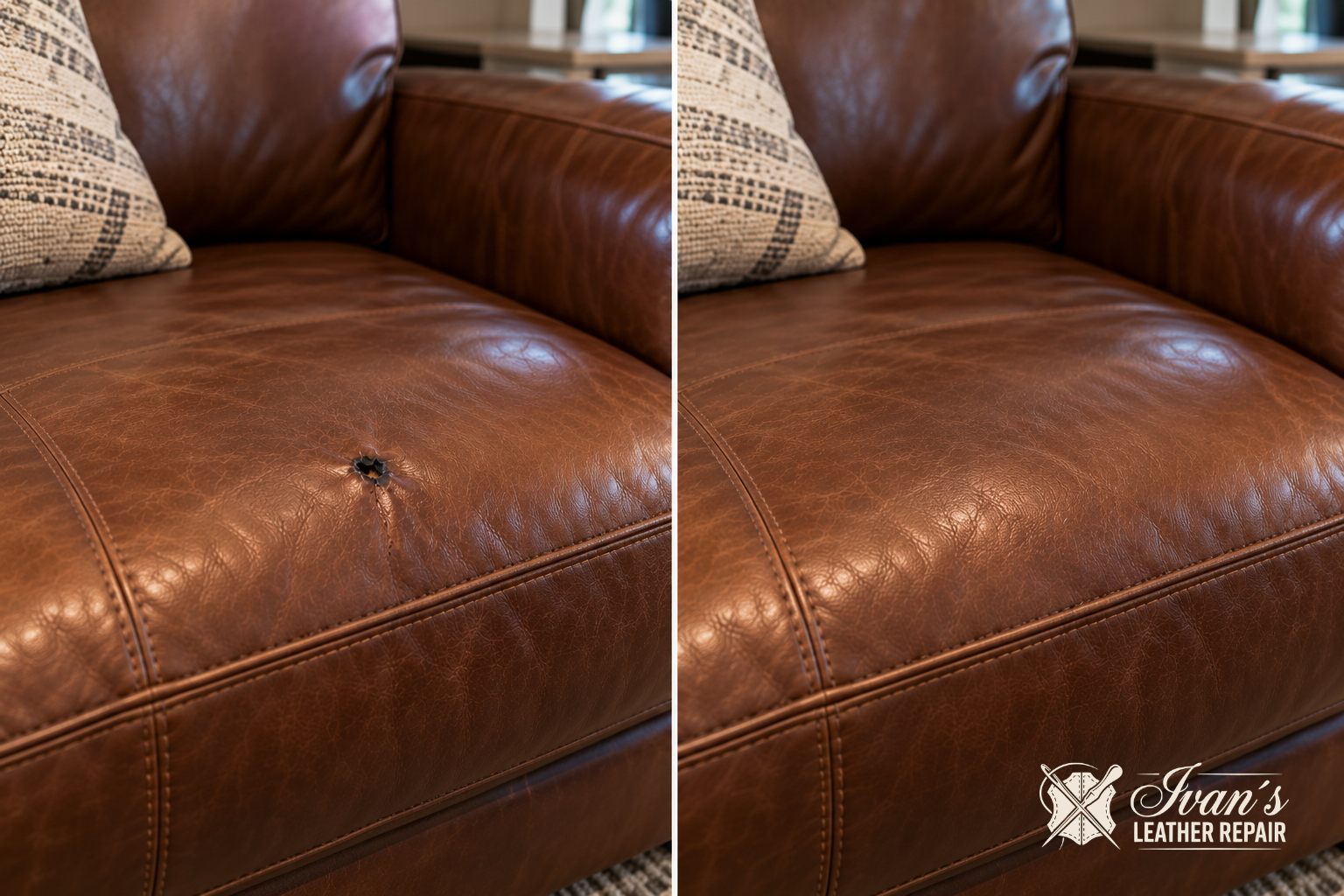
For example, pet-friendly offices or home-based professional spaces may benefit from pet damage leather repair. Likewise, furniture damaged by heat or embers can be addressed through burn hole leather repair, which helps restore a more uniform finish and prevent the flaw from becoming a larger eyesore.
Preventive Care Tips for Businesses
Use routine cleaning and conditioning.
Once leather has been repaired, ongoing maintenance becomes much easier. Regular dusting, gentle cleaning, and appropriate conditioning help preserve the finish and keep the material flexible. Businesses don't need complicated routines, but they do need consistency.
Using products that are compatible with the leather type is important because the wrong cleaner can strip the finish or leave residue. A basic care schedule can help prevent the kind of dryness that leads to cracking, especially in spaces with HVAC systems running year-round. For delicate or older pieces, antique furniture restoration principles can also be useful because they emphasize preservation over aggressive treatment.
Protect high-use areas first.
Arms, seat fronts, and headrests usually age fastest, so those areas should be inspected regularly. If you spot wear early, it's easier to intervene before the damage becomes obvious to customers. This approach is particularly helpful in waiting rooms and lobbies where the same seats are used all day.
Businesses can also make small operational adjustments, such as rotating seating where possible or keeping furniture away from direct sunlight. Those simple steps can noticeably extend the life of repaired leather and reduce the need for frequent touch-ups.
Build repair into facility planning.
Instead of treating repair as an emergency response, businesses should consider it part of normal facilities planning. A scheduled inspection every few months can reveal issues while they are still manageable. This proactive approach is often less expensive than reacting after a surface has failed.
Facility managers who include leather maintenance in their regular checklists tend to keep interiors looking more consistent over time. That consistency supports stronger brand presentation and makes the space feel cared for in a way that customers can sense immediately.
What Businesses Can Expect from a Quality Repair Partner
Clear communication and realistic expectations
A good repair partner should explain what can be restored, what may remain visible, and how long the process may take. Transparent communication matters because commercial clients often need to plan around schedules, visitors, and staff use. A realistic assessment helps avoid disappointment and supports better decision-making.
Quality providers also recognize that commercial projects differ from residential ones. They understand the need to balance appearance, durability, and timing. That combination is what makes professional repair worthwhile for busy businesses.
Attention to detail and matching skill
Color matching, texture blending, and finish control are all critical in commercial work. Small mistakes can stand out in bright lobbies or sleek conference rooms. A skilled technician knows how to work with the leather’s existing character instead of trying to force a one-size-fits-all result.
If the damage includes furniture that is heavily used in hospitality or waiting areas, the best repair strategy may involve both surface restoration and reinforcement. That's why experience matters so much. A careful repair should not only look good on day one; it should also hold up under regular use.
Service that fits the business workflow
Commercial clients often need flexible scheduling, on-site attention, or fast turnaround. A repair partner who understands business operations can work around peak hours and minimize interruptions. That practical support is part of what makes restoration valuable in the first place.
At Ivan's Mobile Leather Repair, the goal is to help businesses preserve a professional look without making the process more complicated than it needs to be. For spaces that need local, hands-on service, learning more about commercial leather repair is a strong first step toward a cleaner and more confident presentation.
Conclusion: Keep Your Business Looking Sharp
Commercial leather repair does far more than patch visible damage. It protects the image a business presents, extends the life of valuable furniture, improves comfort for customers and staff, and helps avoid costly replacement decisions. In spaces where appearance directly shapes trust, repair is one of the most practical investments a business can make.
If your seating, booths, lobby furniture, or vehicle interiors are beginning to look worn, don't wait until the damage becomes harder to hide. A timely repair can make the entire space feel more polished and intentional again. For businesses that want to maintain a professional appearance while protecting their budget, expert leather restoration is a smart and reliable choice.
To discuss the right solution for your furniture or interiors, contact Ivan's Mobile Leather Repair at (347) 207-3031 or email info@repairleathernyc.com. You can also explore service options at repairleathernyc.com and take the next step toward a cleaner, more professional-looking space.