Is Your Restaurant Seating Giving Off the Wrong Vibe?
When guests walk into your restaurant, the seating is one of the first things they notice. If your booths are cracked, torn, or saggy, it might make them question how much you care about your business. Before they've even glanced at the menu, they can form an impression. If your booths are looking a bit tired, it's time to understand what this wear and tear means and what you can do about it.
Many business owners put off booth repairs, thinking they're just cosmetic issues. But worn seating can change how guests view your restaurant, affect how easy it is to clean, impact staff morale, and even lower the long-term value of your furniture. If you're weighing repair options, services like restaurant booth repair and commercial leather repair can often refresh your seating without the need for a costly replacement. Let's dive into how to spot early damage, what causes it, and when it makes sense to opt for professional restoration.
The U.S. Environmental Protection Agency suggests that extending the life of furniture can help reduce waste and improve resource use. You can find more ways to cut down on waste by exploring the EPA’s guidance on sustainable materials and waste management at epa.gov. In this guide, we'll show how fixing up your booths can keep your dining room looking clean and ready for guests.
Why Worn Booths Change the Dining Experience
Guests Notice More Than You Think
First impressions in a restaurant are quick. A ripped booth or a faded cushion can make a place seem less clean, even if the food and service are top-notch. People often link the look of a place to its overall quality, so shabby seating can lower their confidence before they even order.
How Booth Damage Affects Cleanliness
Even small cracks can trap crumbs and spills. Once the surface material starts breaking down, it's harder to keep clean, and dirt can settle into the damaged areas. This can make your dining room look dull and unkempt. Fixing damage early helps your team keep the dining area looking fresh with less effort.
Comfort Affects How Long Guests Stay
When cushioning shifts or upholstery splits, seating becomes less comfortable. Guests who feel comfortable are more likely to relax, stay longer, and enjoy their meal. On the flip side, a booth that feels rough or worn can make them cut their visit short and lessen the chance they'll come back.
Common Causes of Wear and Tear on Restaurant Booths
High Traffic and Daily Use
Your booths are in constant use. Guests slide in and out, staff cleans them, and bags can rub against them. In busy spots, a booth may be used hundreds of times a week, so wear is inevitable. The key is how quickly you address it.
Moisture, Spills, and Cleaning
Spills are part of the restaurant scene, but constant exposure can weaken materials like leather and vinyl. Harsh cleaning products can also dry out surfaces and make cracks worse. Stick to manufacturer-recommended cleaning methods and keep a consistent maintenance routine. If damage is visible, cracking leather repair might help before it gets worse.
Sunlight and Temperature Changes
Restaurants with big windows or bright lighting often see faster fading and drying. Sunlight and heat can make upholstery brittle over time, especially in stressed areas. If this is a problem, sun damage leather repair can help restore the finish.
Pets, Bags, and Sharp Objects
Not all booth issues come from regular use. A sharp zipper, a bag, or a child's toy can cause scratches that worsen if ignored. In family or pet-friendly spaces, this kind of damage might show up more often. Early repair can prevent minor issues from becoming major ones.
Signs Your Booths Need Professional Help
Visible Cracks, Splits, and Peeling
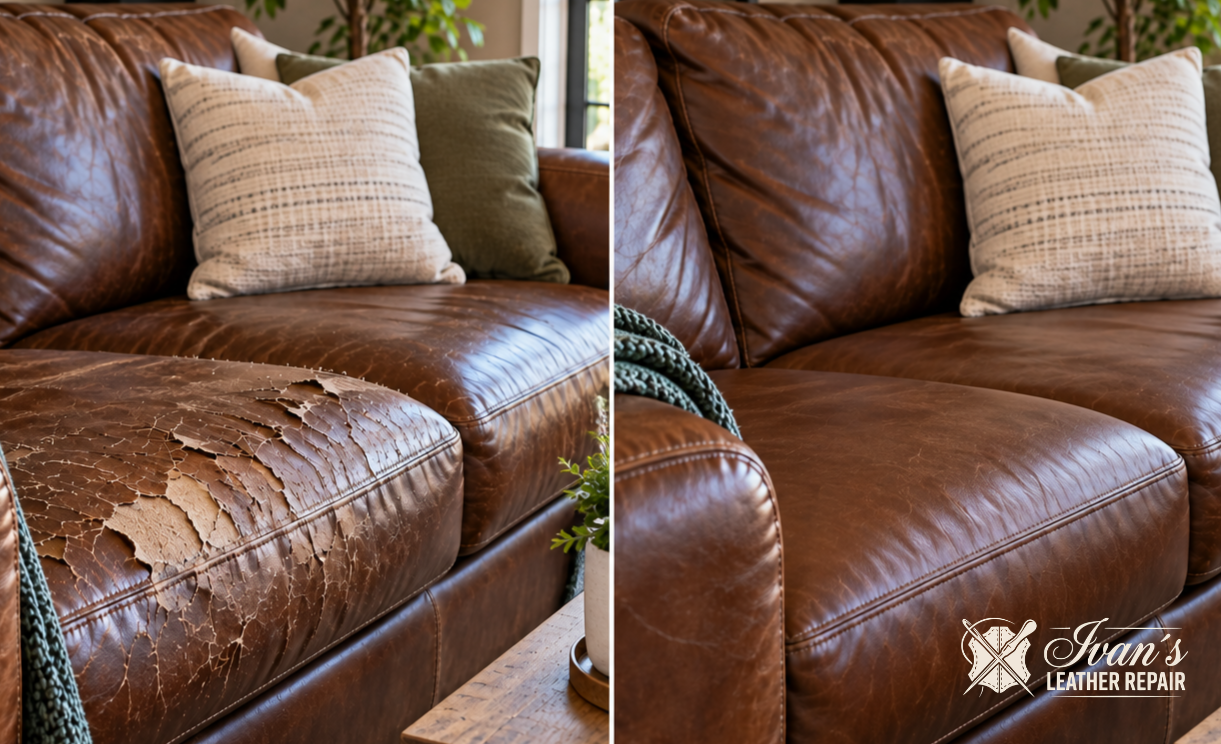
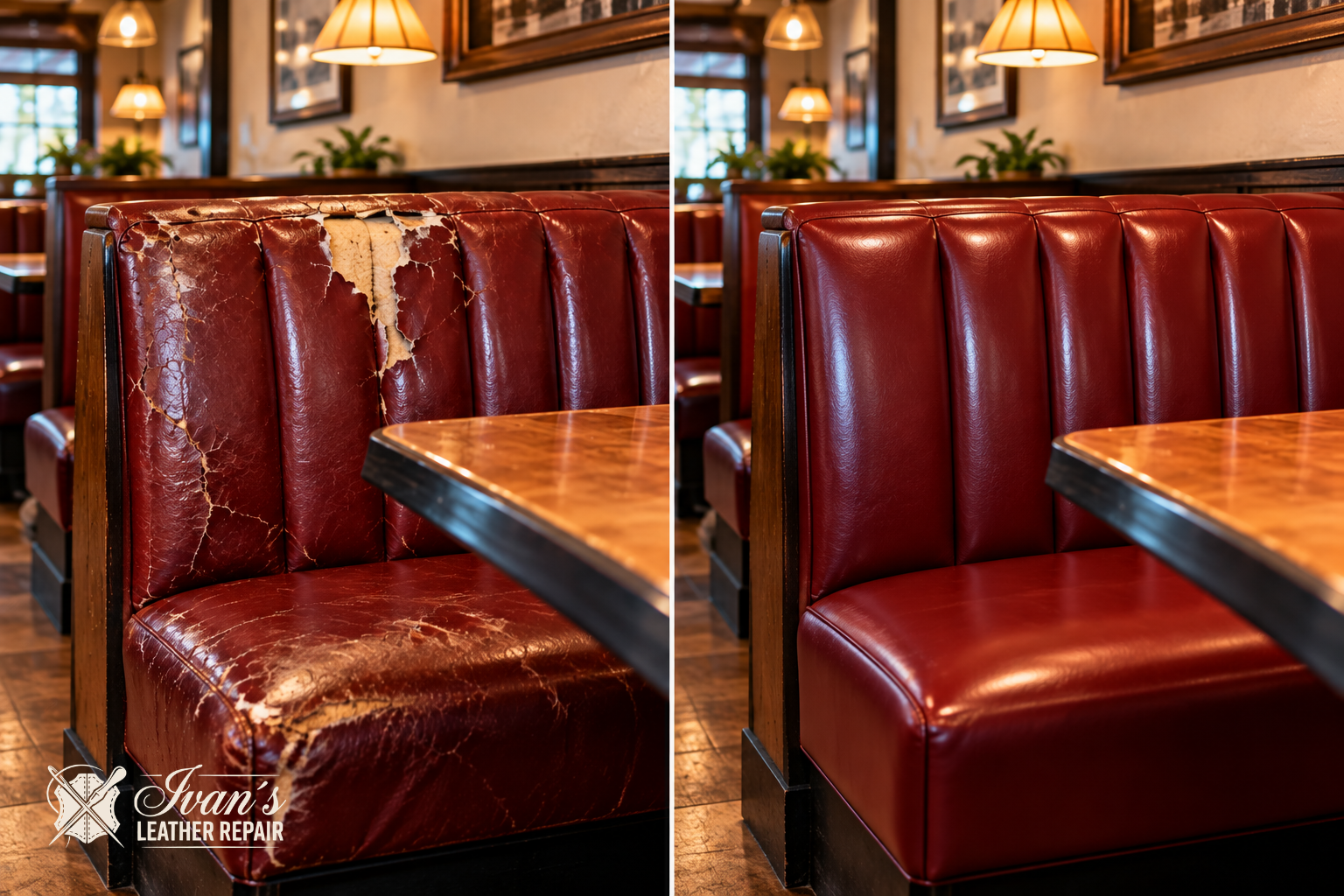
Cracks in the surface are clear signs that simple cleaning won't cut it. If the material is splitting or peeling, it's losing flexibility. This means your booth is under daily stress and needs fixing soon. Waiting too long might turn a simple fix into a full replacement.
Sagging Cushions or Uneven Support
Structure loss is as crucial as surface damage. A booth that doesn't support evenly might have broken foam or loose seams. Guests might not say it, but they will feel it. If seating is sinking, get it checked before more parts are affected.
Stains That Won't Clean Off
Some stains can be cleaned, but deep ones often mean the protective finish is gone. When that happens, liquids can soak in easily, leaving lasting marks. This is a sign that the material needs more than cleaning. Professional color work might refresh the look and improve consistency.
Deciding Between Repair and Replacement
When Repair is the Better Choice
Repair makes sense when the frame is solid, and the damage is isolated. A worn booth can often be restored quickly and cheaply. This is especially true if your seating matches your interior or if you want to avoid a major renovation. If your booths only need surface fixes, targeted work can make a big visual difference.
When Replacement is Needed
Replacement is more likely if the structure is unstable or the upholstery is worn out. If the padding has collapsed or several booths are failing, a phased replacement might be practical. But get an expert opinion first, as some damage that looks bad might be fixable.
The Cost and Downtime Dilemma
Many restaurant owners worry about not just cost, but disruption. Replacing seating can mean delays and interruptions. Repairs are often more flexible, especially with mobile services or phased work. This matters for busy places that can't lose tables for long.
How Professional Booth Repair Can Refresh Your Dining Room
Assessing the Damage
A good repair starts with a careful look at the booth's condition. This includes cracks, color wear, and hidden weak spots. Proper prep ensures the repair bonds well and looks good. Without this step, even a good fix might not last.
Color Matching and Finish Blending
Professional repair ensures the fixed area blends in. A patch that's technically fixed but still obvious can make the room look tired. Skilled color work helps everything look cohesive again.
Localized Repair
Often, you don't need to replace the whole booth. Localized work can fix torn seams or worn corners while leaving the rest intact. This helps maintain your layout and control costs. For deeper wear, leather sofa & couch repair might offer broader insights.
Commercial-Focused Repair Planning
Restaurant seating needs a different approach than home furniture. It must look good, withstand use, and support cleaning routines. That's why business-specific services like commercial leather repair are vital. The aim is not just to fix, but to restore seating in a way that fits your brand.
Benefits of Restoring Worn Booth Seating
Improved Customer Perception
Refreshed booths immediately make a space feel polished. Guests may not analyze upholstery condition, but they react to it. Fresh seating signals attention to detail, boosting confidence in the experience.
Better Cleaning Efficiency
Restored seating is easier to clean. Smooth finishes resist buildup better than cracked ones, saving staff time and supporting sanitation practices.
Longer Furniture Life and Less Waste
Repairing booths extends their life, saving money and supporting sustainability. It also cuts down on waste from removing large furniture components.
Protection for Custom Interiors
Places with custom seating often face tough replacement processes. Matching new pieces can be costly and time-consuming. Repair helps keep the original look and feel consistent.
Steps Before Calling a Specialist
Document the Damage
Take clear photos of each damaged booth from different angles. This helps track changes over time and explain issues when getting estimates.
Clean Gently
Until repairs are done, use mild cleaning products. Harsh chemicals can worsen damage. If unsure, refer to the CDC for safe cleaning tips.
Separate Cosmetic from Structural Issues
Know if damage is just surface-level or if it affects support and comfort. A professional inspection can clarify this and save time.
Why Local, On-Site Service Matters
Less Disruption
On-site service reduces the need to move large seating. That means less downtime and fewer interruptions, allowing you to improve your dining room without shutting it down.
Better Coordination
Repairs may need to happen outside of business hours. A mobile service model can work around your schedule and minimize guest impact.
Helpful for Multi-Location Businesses
If you manage several dining spaces, standardized booth care helps protect your brand and avoid uneven customer experiences.
FAQs About Restaurant Booth Repair
How Do I Know if My Booths Are Repairable?
If the frame is stable and the damage is mostly surface-level, repair is likely possible. Cracks, tears, and fading are often good candidates for fixing.
Will Repaired Booths Match the Room?
Usually, yes. Good repair work focuses on blending colors and textures so the restored section fits naturally with the rest.
How Long Does Repair Take?
Timing depends on the extent of the damage, number of booths, and materials involved. Small repairs can often be done faster than replacements.
Is Repair Worth It for Older Booths?
Older booths can still be worth repairing if the structure is sound. Many owners choose this to preserve layout and save money.
Get Your Dining Room Back in Top Shape
If your booths are showing signs of wear, it's time to act before the damage spreads. A thoughtful repair can improve appearance, extend furniture life, and help your business present a clean, welcoming atmosphere. For help with other seating issues, services like restaurant booth repair, commercial leather repair, and professional leather upholstery restoration can keep your dining room looking its best.
To talk about your restaurant seating and get expert advice, contact Ivan's Mobile Leather Repair at (347) 207-3031 or visit repairleathernyc.com. A well-kept dining room starts with seating that matches the quality of the food you serve.