Get Your Leather Couch Fixed in Brooklyn, NY Before It's Too Late
Noticing your leather couch starting to peel or crack? It might be tempting to ignore it, hoping it won't get worse. But that's rarely the case. Leather typically doesn't fix itself, and those small spots can quickly turn into a bigger issue that impacts comfort and looks. If you've got a favorite sofa or sectional, acting fast can save you money and the hassle of replacement. Considering leather sofa and couch repair early on offers the best chance to keep your beloved furniture in good shape.
At Ivan's Mobile Leather Repair, we often see couches that could have been easily fixed if addressed sooner. Peeling usually means surface wear or a failing top coat, while cracking points to the leather drying out or aging. The National Park Service notes that leather needs care to stay flexible and stable. Ignoring it can speed up deterioration. Here, we’ll cover what causes peeling and cracking, why delaying repairs is risky, how repairs work, and how you can protect your furniture right now.
Understanding Peeling and Cracking
Surface vs. Structural Damage
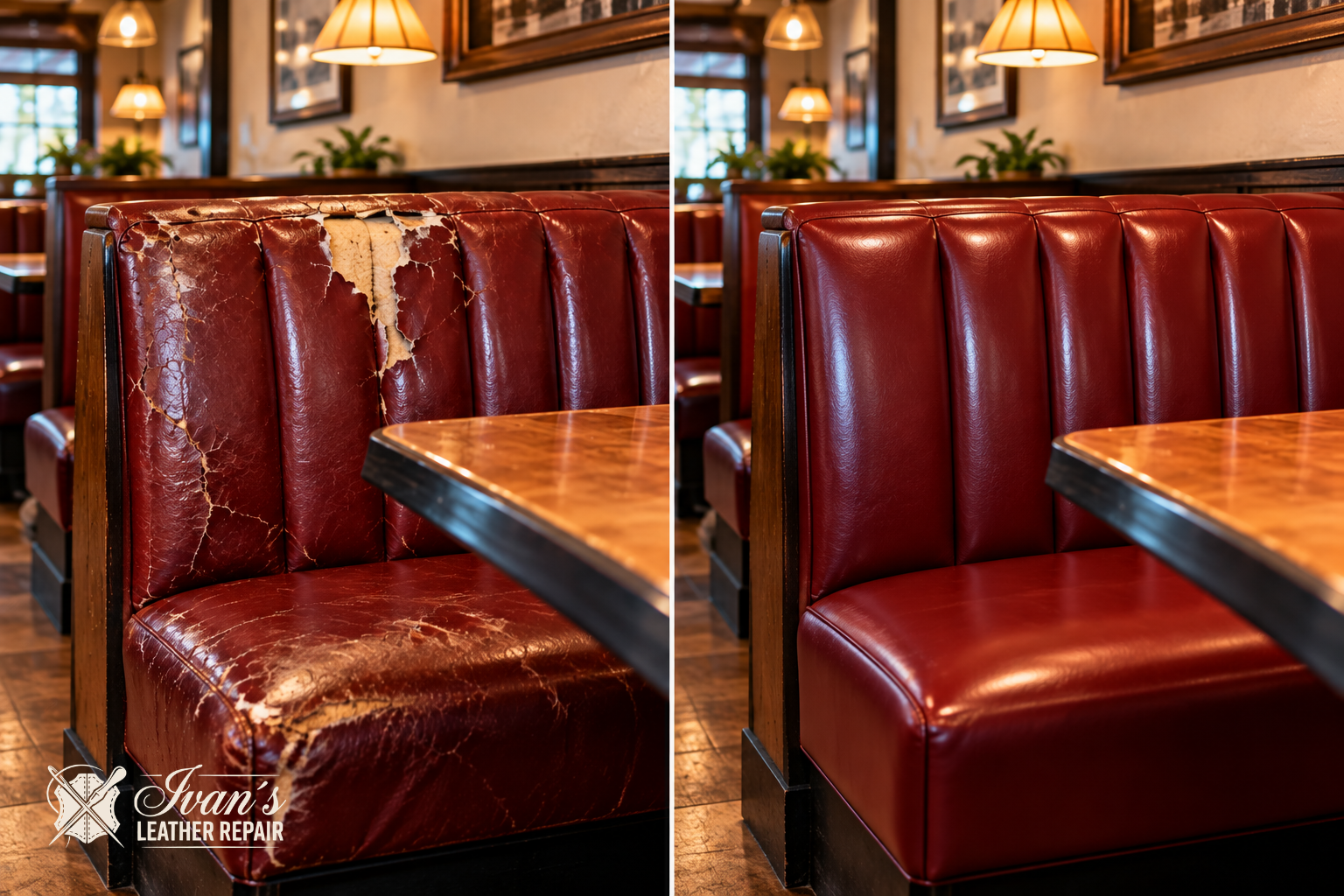
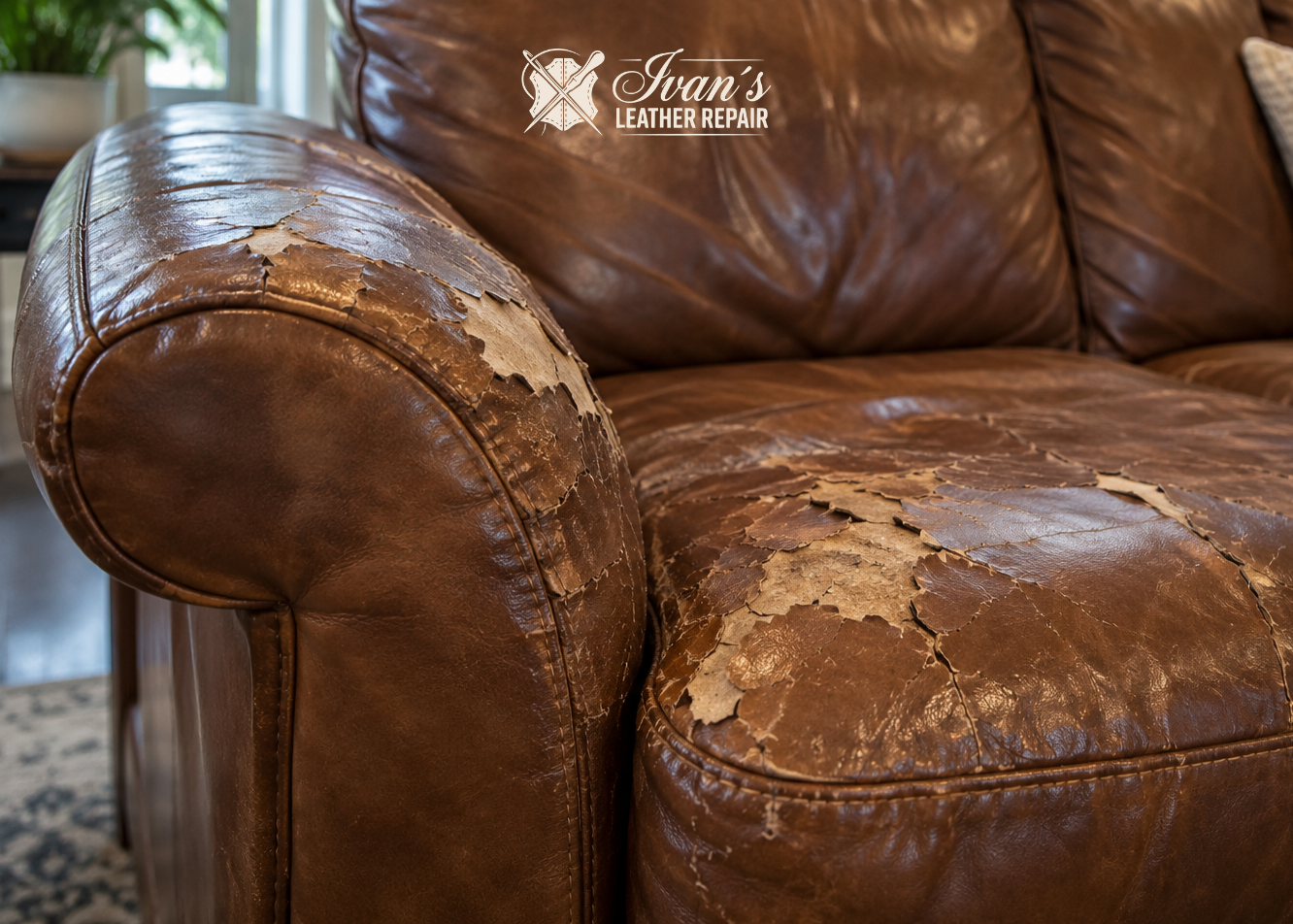
Peeling often signals the outer finish is failing. Many couches have a top layer coating that can peel away from the material underneath when exposed to heat, friction, or poor-quality products. Cracking usually happens when the leather loses oils, causing the surface to split as it flexes. These aren't just cosmetic issues; they're signs that the material is stressed.
If the damage is just on the surface, a skilled repair can restore the finish and extend the couch's life. But once damage spreads into the leather fibers or support layers, repairs get more complex. That’s why it’s crucial to get a quick inspection. If your couch shows broader wear, our cracking leather repair service can tackle more advanced issues before they spread.
Why Leather Deteriorates
Leather is tough, but it’s an organic material that reacts to its environment. Sunlight, indoor heat, body oils, spills, dry air, and regular use can weaken the finish over time. Busy areas like arms, seat cushions, headrests, and corners often show wear first. Pets can make it worse, with claws and scratches accelerating wear.
Research from the Conservation of Leather Association emphasizes the importance of stable cleaning and conditioning routines. While furniture leather isn't the same as archival leather, the principle is similar: maintaining moisture balance matters. Without it, peeling and cracking are more likely.
Why You Should Fix It ASAP
Small Problems Grow Bigger and Costlier
The common mistake is assuming peeling or cracking is just a surface flaw. Once a damaged area opens, it can snag on clothes, collect dirt, and spread with use. A small crack can become a wide split, and a small peel can grow. The cost and complexity of repair increase the longer you wait.
Early fixes are crucial for high-use furniture like family sofas, office chairs, or favorite reading spots. If used daily, the damage gets flexed, pressed, and rubbed constantly, breaking down weak spots fast. Professional residential leather repair can stop damage from spreading and help you avoid a full replacement.
Color Matching Gets Harder
Another reason to act fast is color consistency. Leather fades over time, and damaged sections often look different. Waiting too long can make repair areas more discolored, dry, or stained, complicating a seamless finish. A fresh repair gives technicians better control over matching color and texture.
This matters especially for darker couches, textured finishes, and custom tones. Even if damage seems minor, the color around it may keep changing. Prompt action can make a big difference in the final look.
Replacement Is Costlier
Replacing a leather couch can cost more than fixing it, especially if the frame, cushions, and structure are still solid. Many find the couch is sound, but surface damage makes it look worse than it is. In those cases, repair is often the smarter choice. It also keeps large furniture out of the landfill, which is a bonus for eco-conscious households.
The U.S. Environmental Protection Agency offers guidance on waste reduction and responsible material use. While not specific to couches, the broader idea applies: extending the life of what you own reduces unnecessary disposal and replacement.
What Causes Peeling and Cracking?
Sunlight and Heat
Direct sunlight is a major enemy of leather furniture. UV exposure dries out surfaces, fades color, and weakens the finish. Couches near windows or heating vents age faster than those kept in stable conditions. Over time, leather can become brittle and lose its soft, smooth appearance.
If a couch sits in a bright room, rotating cushions and using window treatments can slow damage, but once the surface starts breaking down, cleaning alone won’t fix it. A professional assessment can determine if the piece needs sun damage leather repair or broader restoration.
Harsh Cleaning Products
Homeowners often damage leather by using the wrong cleaning sprays or chemicals. Strong degreasers, alcohol-based cleaners, and abrasives can strip protective layers. Once weakened, cracking and peeling can begin even if the couch was in good shape.
Use products designed for leather or seek professional advice before applying anything new. Often, less is more. A soft cloth, gentle cleaner, and conditioning are usually enough for maintenance, but if the surface has failed, restoration is needed instead of more cleaning.
Normal Use and Pets
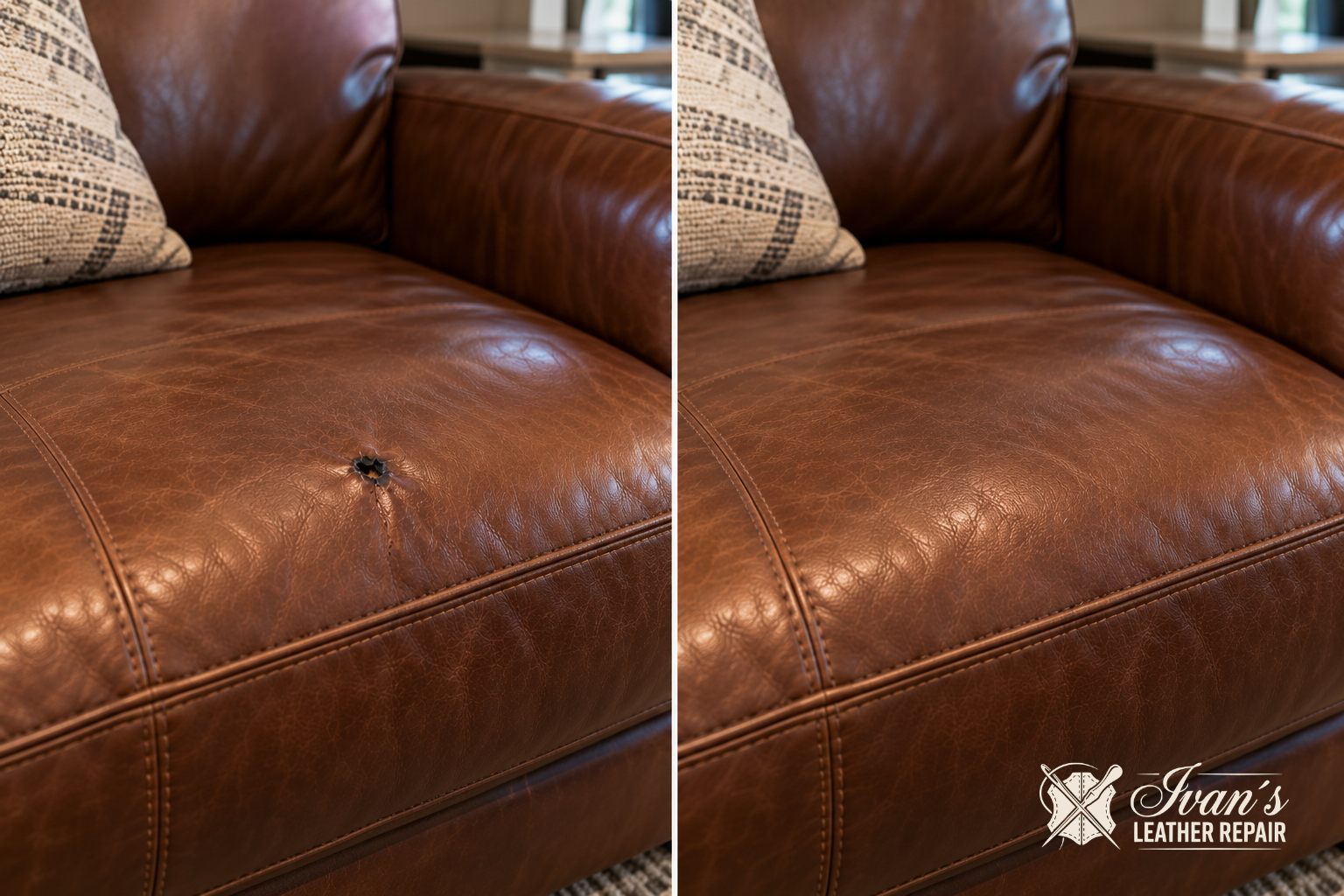
Even the best-made leather couch shows age with daily use. Seams flex, cushions compress, and finishes rub away in high-contact areas. Add kids, pets, or frequent guests, and wear increases. Pets, in particular, can create tiny openings that expand into visible cracks or peeling.
If your furniture has scratches or bites, professional pet damage leather repair can often restore the look before damage spreads. Catching marks early is easier than fixing heavily worn panels later.
How Professional Leather Couch Repair Works
Inspection and Damage Check
Quality repair starts with identifying damage type and progress. A technician checks the finish, surface texture, leather flexibility, and size of the affected area. This determines if repair is localized or multiple sections need attention. Careful inspection avoids over-repairing a couch needing only minor work.
This assessment is valuable as it creates a realistic plan. Not every couch needs major work, but ignoring damage allows minor issues to become major. An expert evaluation helps you understand what’s repairable, stabilizable, and the expected results.
Cleaning and Surface Prep
Before color and finish work, the damaged area must be cleaned and prepped. This removes residue, oils, and loose fragments that could affect adhesion. If the surface is peeling, it must be stabilized for proper bonding. If cracking, conditioning or filling creates a smoother base for restoration.
Preparation isn't flashy, but it’s vital. A repair skipping this stage might look good initially but fail quickly under use. Professional technicians ensure the surface is ready before moving to color blending and refinishing.
Color Blending and Finishing
Once stable, the next step is matching color and texture closely. Experience counts here. A good repair blends the affected area into the surrounding leather so the couch looks consistent, not patched. The goal isn't always to make it look brand new but to restore a clean, attractive look fitting the room.
For larger projects, like full seating areas or worn sectionals, our leather chair repair and upholstery services can balance the room’s interior. This is useful when multiple pieces show similar wear.
Signs Your Couch Needs Immediate Attention
Peeling That Spreads with Touch
If the finish lifts easily when touched, the damage is active and likely spreading. This means the top layer is failing and not bonded to the surface below. The longer it’s loose, the more dirt and moisture can get underneath, complicating repair.
At this stage, it’s better to schedule service soon. A small section might be repairable now, while a larger area may need more extensive refinishing if ignored.
Cracks Showing Lighter Material
Visible cracks, especially showing lighter color or rough undersides, mean the leather is losing more than just appearance. These cracks often widen with pressure and movement, especially on seats and armrests. If you feel the split when running your hand over the couch, the material needs attention.
Some try hiding cracks with conditioner, but it can’t rebuild missing finish or repair open splits. Visible cracking should be treated as a repair issue, not just maintenance.
Dry or Powdery Texture
A surface feeling dry, flaky, or powdery often means lost oils or breaking finish. The couch might be usable, but damage is worsening. Professional repair can restore smoothness and slow breakdown before it becomes widespread.
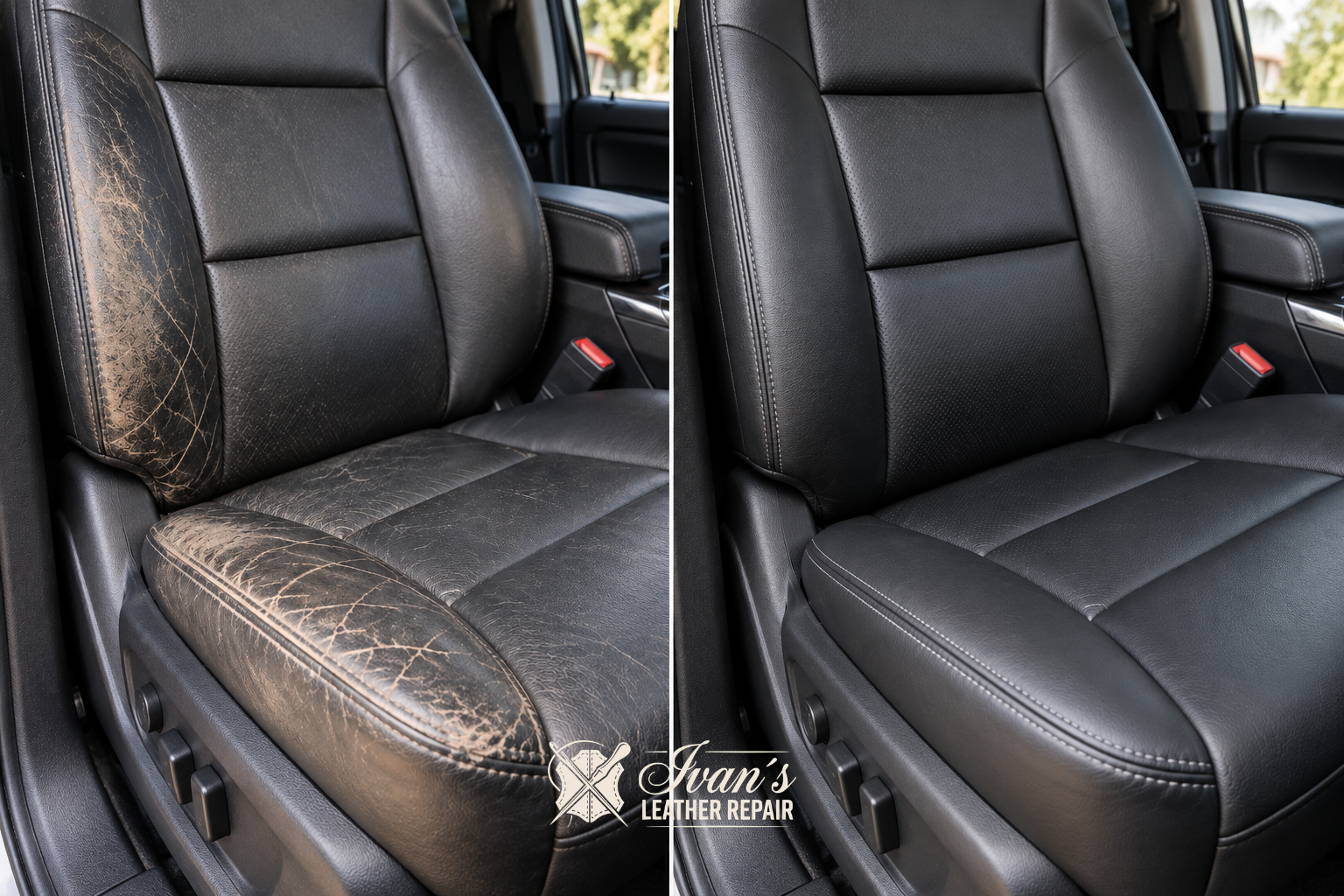
If you notice fading or sun bleaching, combining repair with recoloring may offer the best result. For some, pairing restoration with auto leather repair helps maintain a consistent standard across multiple leather items.
DIY Care vs. Professional Repair
Safe Home Care
Basic maintenance can slow deterioration. Keep the couch away from direct sunlight, dust it regularly, and use leather-safe cleaners. Light conditioning may prevent dryness but should be done carefully. Test new products in hidden areas first.
These steps help prevent damage but don’t substitute repair once damage begins. If leather is visibly peeling or cracking, home care can’t reverse it. The best move is to stop damage from spreading and get professional advice.
Risks of DIY
DIY repair kits can help small cosmetic issues but also complicate fixes if done wrong. Overfilling, poor color matching, or incompatible adhesives can leave the couch uneven. Sometimes, a DIY attempt interferes with professional restoration by altering surface chemistry or texture.
If the couch is valuable or part of room design, professional repair is safer. A trained technician knows how to stabilize surfaces, blend color, and preserve the leather’s natural feel rather than creating a rigid patch.
Deciding Quickly
If damage is small, dry, or faint, preventative care might help. But if it’s visible, spreading, or flaking, repair is better. If unsure, take clear photos in natural light and request an evaluation. A short consultation can prevent months of worsening problems.
Local expertise helps too. Whether it’s a family couch, business seating, or luxury piece, fast advice can make a difference between restoration and replacement.
How Repair Protects Value, Comfort, and Looks
Preserving Beloved Furniture
Many consider replacing a couch just because it looks worn, not because it’s beyond saving. Repair preserves comfort, shape, and style you know works. This matters if the piece fits your space, matches decor, or has sentimental value.
Instead of weeks searching for a similar replacement, restoration lets you keep what works. This is useful for high-quality, custom pieces, and items costly to replace with something similar.
Better Long-Term Maintenance
Once properly repaired, a couch is easier to maintain. A stable surface traps less dirt, resists further tears, and prevents damage from spreading. Regular care is more effective, keeping furniture presentable longer.
Combining repair with a practical maintenance routine is ideal for households wanting leather to look good year after year. Light cleaning, conditioning as needed, and protecting from harsh exposure can extend its life significantly.
Reducing Waste and Unnecessary Replacement
Repairing instead of replacing is practical for reducing waste. Large furniture is hard to dispose of, and replacing it creates unnecessary costs and environmental impact. Repair keeps usable materials in service longer, a smart decision both financially and environmentally.
For a broader view on responsible reuse and waste reduction, the EPA’s waste reduction guidance provides useful context. Even though every couch situation is different, the logic is straightforward: keeping a good piece in use is often the better option.
FAQs About Peeling and Cracking Leather Couches
Can a Peeling Leather Couch Be Repaired?
Yes, many peeling leather couches can be repaired, especially when peeling is limited to certain panels or high-wear areas. The sooner you address it, the more options you'll have. If damage spreads, repair can still improve appearance, but the approach depends on the couch’s overall condition.
Will Cracking Worsen if I Do Nothing?
In most cases, yes. Cracks grow as leather flexes when someone sits or shifts. Environmental dryness and friction worsen splits, so waiting usually complicates the job.
How Long Does a Professional Repair Last?
It depends on damage type, couch usage, and how well it is maintained after repair. A well-done restoration can last long if the couch is used normally and kept from extreme conditions. Proper aftercare is as important as the repair itself.
Is Repairing an Older Couch Worth It?
If the frame is solid, cushions comfortable, and the piece suits your space, repair is often worth it. Older couches can be restored to a better appearance without replacing a functional piece. Evaluate overall condition, not just damaged areas.
Next Steps If Your Couch Is Peeling or Cracking
Check the Damage Today
Look at affected areas in good light. Look for peeling edges, open cracks, fading, dryness, and texture changes. If it’s in one area, act quickly to prevent spreading. If multiple sections are affected, act sooner than later.
Avoid Harsh Products
Don’t use random cleaners, abrasive scrubs, or heavy coatings to hide damage. These can worsen the issue and surface condition. Until you know the right treatment, less handling is safer than more.
Get a Professional Assessment
If your leather couch is peeling or cracking, have it evaluated by someone who understands the material and repair process. Ivan's Mobile Leather Repair helps restore leather furniture before damage becomes irreversible. Whether it's a cherished living room sofa, a busy office piece, or another worn item, prompt action offers the best chance at a strong result.
To learn more or request service, visit Ivan's Mobile Leather Repair or explore solutions like commercial leather repair and burn hole leather repair if your furniture has multiple types of damage. Act soon to keep your couch looking clean, comfy, and ready for daily use.
Don’t wait until a small flaw becomes a costly replacement. If your leather couch is peeling or cracking, schedule an inspection now and give it a chance to last longer.