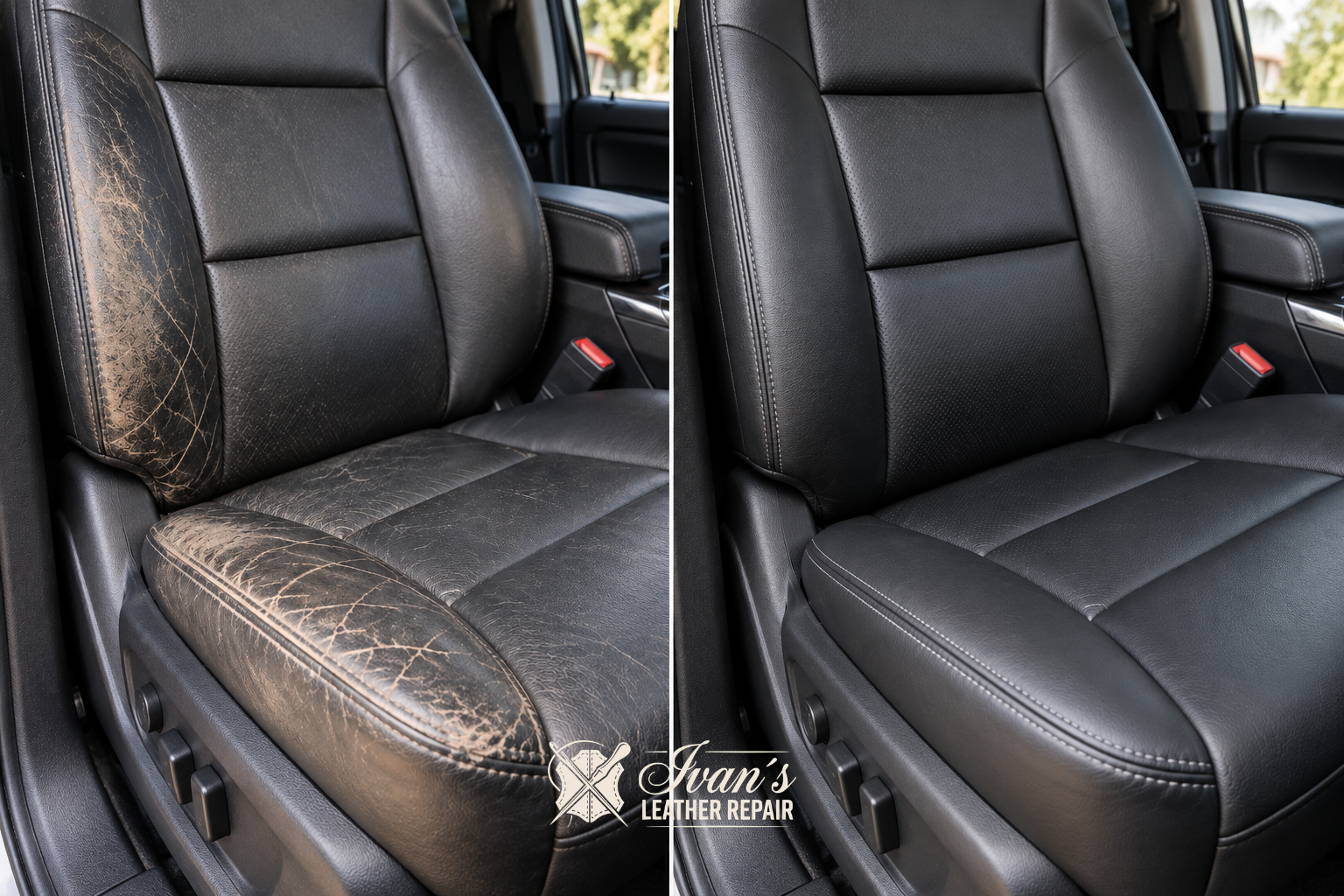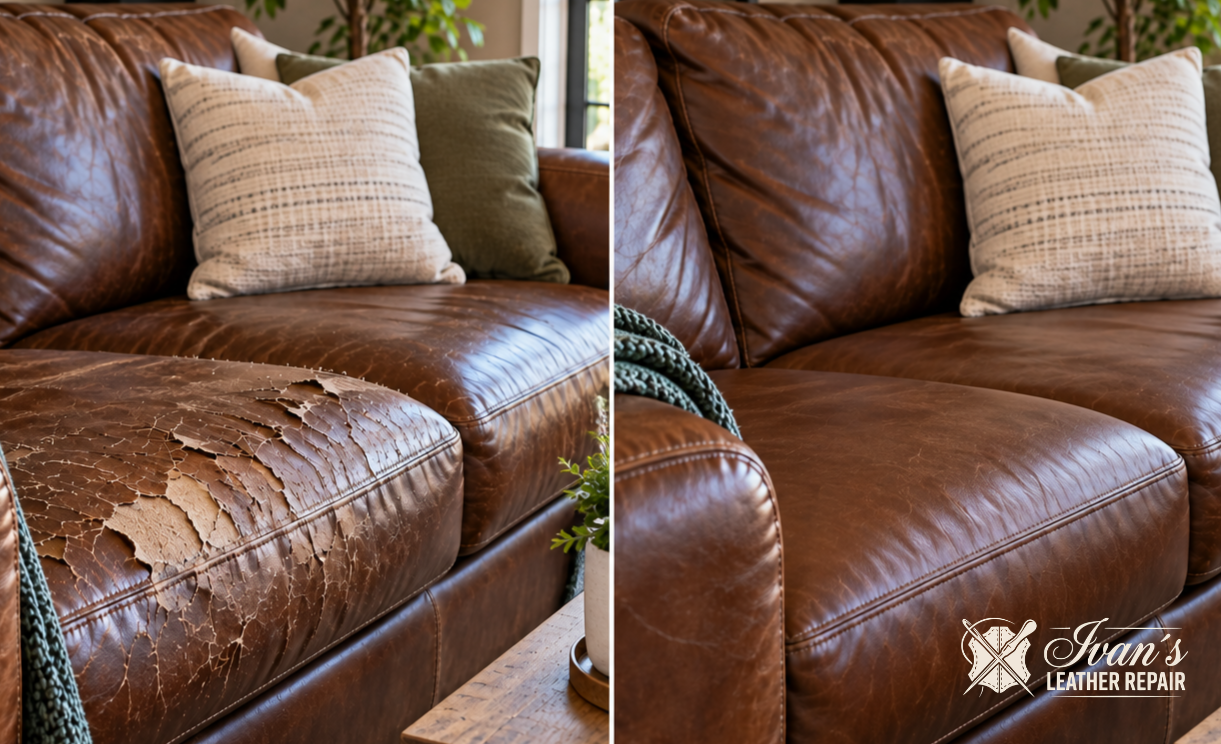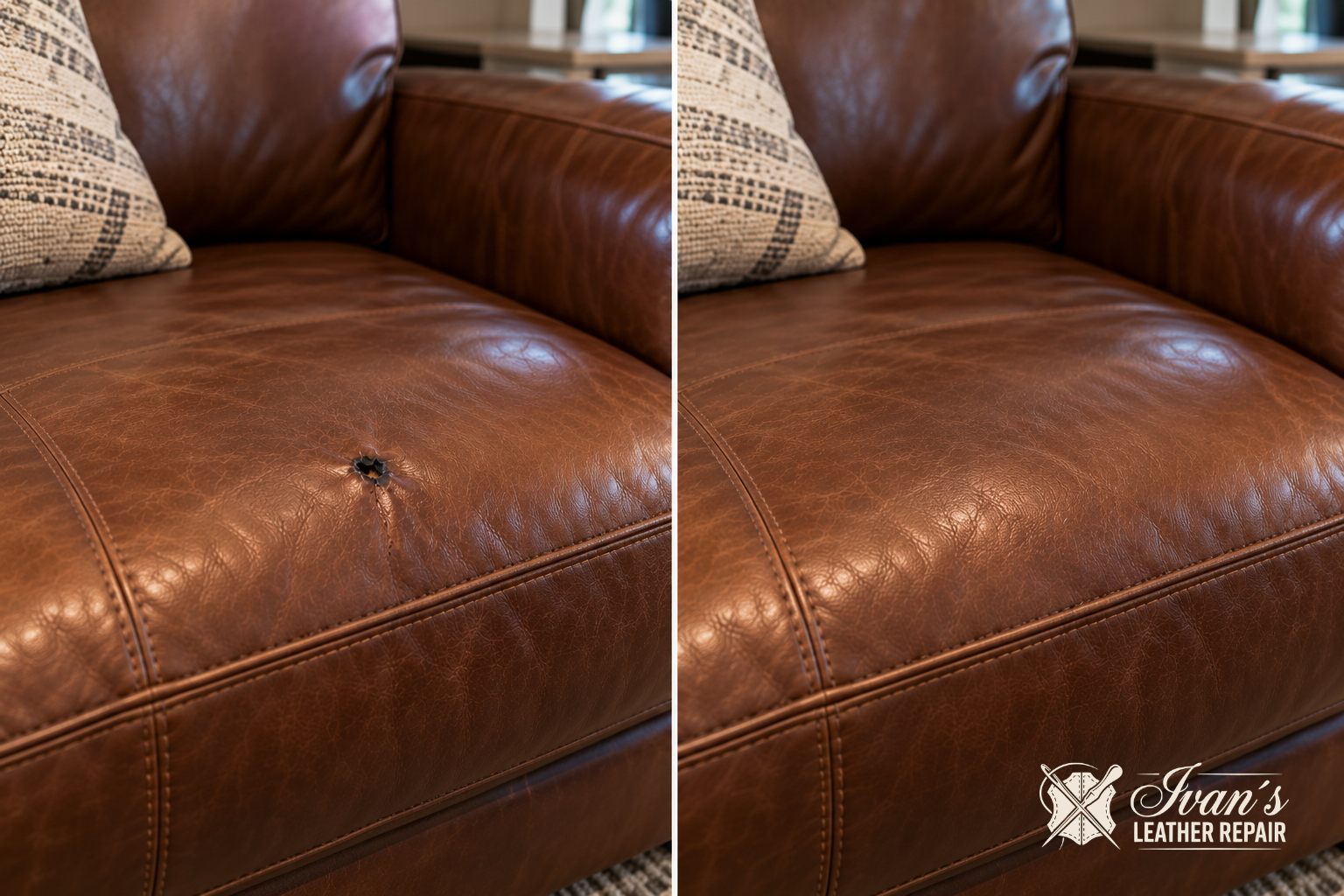
Ever found a burn hole in your leather seat or sofa and thought it was done for? Well, don't worry! Often, burn holes look worse than they are. They might seem like a big problem, but you might be surprised to find that the leather around it, as well as the backing and finish, can often be fixed. This means you save money and keep your favorite piece around.
Let's dive into how burn hole leather repair works, when it's a smart choice, and whether you should consider a full replacement. We'll also talk about what affects the quality of the repair, how to keep the damage from spreading, and the importance of acting quickly. And if you're curious about other repair options, check out our burn hole leather repair service and our leather sofa and couch repair solutions for bigger furniture problems.
Leather is tough, but it's not invincible. Things like heat, embers, cigarettes, candles, or even a stray spark can leave a mark in seconds. But the good news is that a burn hole doesn't necessarily mean your sofa or seat is beyond saving. With the right techniques, many damaged pieces can look fresh and attractive again.
For more info on fire safety and household burn risks, check out the U.S. Fire Administration's guidance at usfa.fema.gov and the National Fire Protection Association’s resources at nfpa.org. Understanding how these incidents happen can help you protect your furniture.
Why You Can Often Fix Burn Holes in Leather
The Damage Might Be Smaller Than It Seems
A burn hole usually affects less area than you'd think. That dark spot or melted edge looks dramatic, but the surrounding leather might still be in good enough shape for a successful repair. Professionals focus on stabilizing the damaged area, blending the surface, and making the defect less noticeable.
The goal isn't to make the damage completely disappear, but to make it look clean, usable, and balanced. Matching the texture, color, and sheen helps it blend into the rest of the upholstery. For many, this is a better option than shelling out for a full replacement.
Leather Has Layers
Leather upholstery typically has several layers: the outer finish, the leather hide, foam underneath, and sometimes a backing. A burn hole might only affect the top layer, or it could go deeper. The repair method depends on how far the damage has gone.
If only the finish and surface are affected, the repair can be simple. But if there's a hole, scorched edges, or missing sections, the repair might involve filling, patching, and recoloring. Even then, replacement isn't always necessary. A good assessment can help figure out the best way to fix it.
Repair Is Often Cheaper Than Replacement
Replacing a leather sofa or car seat can be pricey, especially if it's high quality or hard to match. Repairs usually cost less and are quicker than ordering and installing a replacement. Plus, keeping existing furniture reduces waste and keeps things out of landfills. If the frame and padding are still in good shape, fixing the burned area is often the smarter choice.
What Causes Burn Holes in Leather?
Cigarettes, Cigars, and Hot Ash
Common culprits for burn holes include cigarettes and cigars. Even a small ember can leave a deep mark. Ash that falls on a seat and goes unnoticed can also cause a burn spot that gets worse over time.
In homes, this damage often happens on couches, recliners, or dining chairs. In cars, it's usually on the driver's seat or armrest. Dry or worn leather might be more prone to heat damage, so regular care is just as important as repairs.
Candles, Irons, Heaters, and Appliances
Burn holes aren't just caused by smoking. Hot tools, heaters, candles, and even overheated electronics can damage leather surfaces. When leather is too close to a heat source, the finish can shrink, crack, or melt, leaving a hole or blister.
These incidents often happen in small spaces. If you have a recurring heat source near your furniture, consider making some adjustments to prevent further damage.
Pets, Accidental Friction, and Hidden Damage
Sometimes a burn hole is a mix of friction, pressure, and heat. A small puncture can get worse with heat, making the damage seem bigger. Pets might scratch at softened areas, and repeated use can enlarge a weakened spot.
That's why a thorough inspection is important. A repair professional needs to understand not just the visible hole but the condition of the surrounding leather.
How Professional Burn Hole Leather Repair Works
Inspection and Damage Assessment
A good repair starts with evaluating the hole and the edges around it. A technician examines the size, depth, and type of leather. This helps decide if a surface repair or detailed restoration is needed.
This early evaluation also checks for nearby damage. If the leather is soft, cracked, or faded, the repair plan might involve multiple treatments instead of a quick fix. The solution should address the whole problem, not just the visible part.
Cleaning, Trimming, and Stabilizing
Before any cosmetic work, the area is cleaned and stabilized. Loose fibers and charred edges might need trimming so the repair bonds correctly. This is key because a clean foundation improves the final look and stops the defect from reopening.
If the damage goes into the foam or backing, reinforcement might be added beneath the surface. This helps restore shape and prevent sagging. The technician then uses fill materials, pigments, and finish products to rebuild the visual surface.
Color Matching and Surface Blending
Matching the color is a crucial part of burn hole repair. Leather rarely has a single flat color, especially older pieces. Repair experts blend multiple shades, not just one, to cover the damage.
The aim is a seamless transition so the repaired spot doesn't stand out. The finish is adjusted for sheen and texture too. When done well, the repair should be noticeable only if someone looks closely.
When to Repair and When to Replace
Repair Is Usually Best for Small to Medium Holes
Most small to medium burn holes can be repaired. If the leather frame and padding are still stable, restoration is often the way to go. This is especially true for items with sentimental value or that are part of a matched set.
Even if the burn is visible, it might only affect a small part of the piece. Repairing a single cushion or seat panel is easier than replacing it. This preserves the original furniture and avoids unnecessary hassle.
Replacement Might Be Needed for Severe Damage
If a burn has destroyed a large section or weakened the structure beneath, replacement might be better. This is more common when the foam or frame is affected, or the upholstery is nearing the end of its lifespan. In those cases, repair might not be worth the cost.
Consider if the item has broader wear issues. If the leather is cracking everywhere and the support is worn out, a local fix might not solve the problem. A professional assessment can help you avoid spending on a repair that won't last.
Age, Quality, and Usage Matter
Older leather can still be repaired, but its condition affects the result. High-quality leather is more likely to restore well than thin, low-grade material that's dried out. A well-used seat or sofa might need more blending because the surrounding area has natural wear.
Want to extend the life of older furniture? Related treatments like cracking leather repair and sun damage leather repair can help address wear that often comes with burn damage.
Signs Your Burn Hole Can Be Fixed
The Edges Are Intact
If the area around the hole is firm enough to hold shape, the damage can probably be repaired. Stable edges allow blending, building missing material, and restoring a clean outline.
If the leather around the hole hasn't disintegrated, repair usually holds up better. Quick action matters because a burn hole left untreated can dry, split, or spread, making repair harder later.
The Damage Is Limited to One Section
Burn holes that stick to one cushion or seat panel are easier to fix than widespread damage. Localized damage means the rest of the upholstery can stay in place while the repair focuses on the affected area.
For instance, a single burn on a couch arm or car seat is a good repair candidate. A wide area of melted upholstery might need major reconstruction. The smaller and more contained the issue, the more practical a quality restoration is.
The Leather Is Still Worth Saving
Not every item is worth the same investment, but many leather pieces are. A high-end sectional, a well-made recliner, or a favorite vehicle interior can justify professional restoration because replacing it would cost much more. Sentimental value also matters, especially for furniture that's been part of a home for years.
If the piece still fits your space, style, and comfort needs, repair is often the best first step. In many cases, the damage is cosmetic enough that once the burn is treated, the item feels new again.
Preventing Future Burn Damage
Keep Leather Away from Heat Sources
The simplest way to prevent burn holes is to keep leather away from heat sources. Don't place sofas near radiators, candles, fireplaces, or heaters. In cars, avoid leaving hot items or smoking materials on seats.
Many burn incidents happen because furniture is placed for convenience, not safety. Even a few extra inches of space can reduce risk. If you use candles or heaters at home, keep them away from upholstered surfaces.
Maintain Leather Regularly
Dry or neglected leather is more likely to crack under stress. Regular conditioning helps keep it flexible and reduces the chance of small accidents becoming big problems. Well-maintained leather is more forgiving than material that's already breaking down.
Routine care is also a great time to spot minor issues before they become expensive repairs. If you see fading, scuffs, or early cracking, address them now. Our residential leather repair and auto leather repair services are popular with clients who want to avoid serious damage.
Use Protective Habits in High-Risk Areas
If a seat is used frequently around smoking, candles, pets, or tools, consider adding protective habits. Designated smoking areas, heat-resistant trays, and careful placement of electronics can all reduce risk. In commercial settings, staff training can help prevent accidental burns on furniture.
Businesses needing a clean, professional look may benefit from preventative maintenance on seating used by the public. Our commercial leather repair and restaurant booth repair services help keep high-traffic areas presentable.
What to Expect During a Professional Repair Visit
Clear Communication and On-Site Evaluation
A professional visit should start with a close look at the damage and an explanation of what can be achieved. The technician should tell you if the burn hole is a good repair candidate, how long it might take, and what kind of finish match to expect. Clear communication sets realistic expectations from the start.
Mobile repair is often a convenient solution, reducing the need to move large furniture pieces or transport interiors. If you have multiple items, the technician might evaluate them during the same visit. This makes it easier to plan around your schedule and budget.
Detailed Repair Steps and Finishing Work
Once the plan is approved, the repair process usually includes cleaning, edge preparation, filling, rebuilding, coloring, and finishing. The goal is to restore both the look and durability of the area. Each step matters because skipping one can affect the final result.
If burn damage is part of a larger issue, such as pet scratches or cracking, the technician might recommend treating those problems too. For related issues, our pet damage leather repair and cracking leather repair services can help restore the surrounding leather.
Aftercare and Long-Term Maintenance
After a repair, care for the leather gently while the finish cures and settles. Avoid harsh cleaners, direct heat, and heavy abrasion in the repaired area. Following the recommended aftercare helps protect the repair and keeps the surrounding material in good condition.
Inspect the area periodically over the next few weeks. If you notice a change in color or texture, let the technician know. Usually, a well-done repair will hold up with normal use and routine maintenance.
FAQs About Burn Hole Leather Repair
Can a Cigarette Burn Hole Really Be Fixed?
Yes, often it can. Small cigarette burns, ash marks, and shallow holes can usually be repaired if the surrounding leather is stable. The final result depends on the damage depth, leather type, and whether the burn affected only the surface or deeper layers.
Will the Repaired Area Be Invisible?
Not always, but it can often be blended well. Professional repair aims to make the area less noticeable and consistent with the rest of the piece. In normal use, most people won't spot the repair unless looking closely.
How Long Does Repair Take?
It depends on the damage size and complexity. Small repairs might be quick, while larger or deeper burn holes require more work. A technician can usually give a realistic time estimate after inspecting the item.
Should I Try DIY Repair First?
Minor care, like keeping the area clean, is fine. But for real burn holes, DIY kits may leave the leather looking uneven or make the damage harder to fix professionally later. If the piece is valuable or visible, it's usually better to get an expert opinion first.
Why Acting Quickly Helps
A burn hole in leather isn't something to ignore. Heat damage can weaken the surrounding surface, and over time, the hole may grow or become harder to blend. Early repair gives you more options and a better result.
If you want to keep a favorite sofa, chair, or vehicle seat in service, the best move is to evaluate the damage before it spreads. Sometimes, a small repair today prevents a larger restoration later, which is especially true for pieces used daily.
For broader leather care advice, check out Consumer Reports' guidance on product longevity at Consumer Reports, and ASTM International's materials information at ASTM International. These resources can help you understand how quality and upkeep affect long-term performance.
Fix It Instead of Replacing
A burn hole in your leather seat or sofa doesn't mean you need a replacement. Many times, the damage can be fixed and blended so the piece stays attractive and useful. The key is understanding the severity of the burn and choosing a repair approach that fits the material's condition.
If your leather furniture, car seat, or upholstered piece has a burn hole, professional restoration might be the most practical and cost-effective option. Ivan's Mobile Leather Repair helps clients assess damage and choose the right solution, whether the issue is isolated or part of a larger wear pattern. Ready to take the next step? Check out our burn hole leather repair service or contact us at repairleathernyc.com to learn more.
Don't replace a piece before you know what's possible. A careful repair might be all you need to bring your leather back to life.