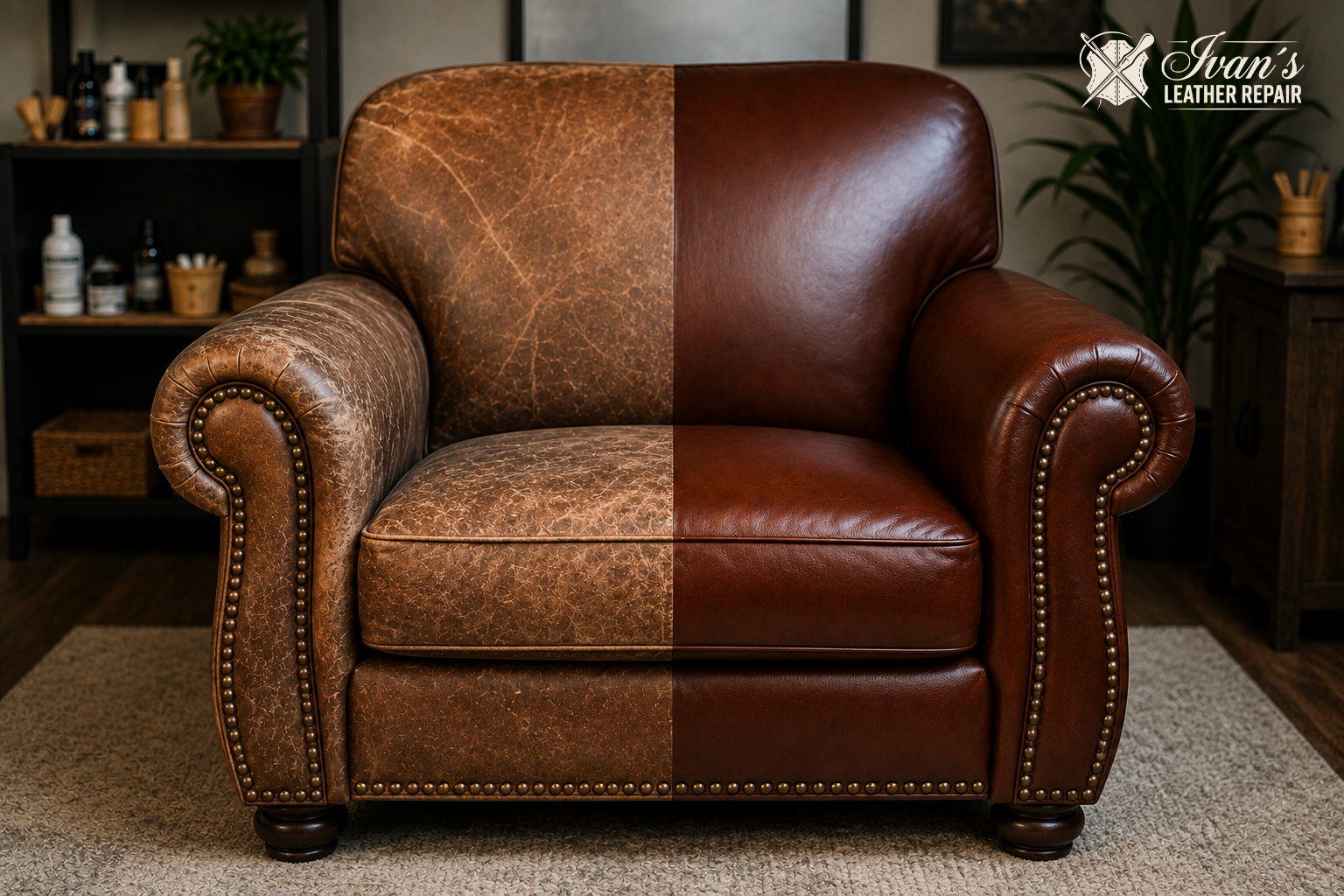
Expert Leather Revival: How to Restore Shine and Finish on Worn Leather
If your leather items are looking a bit tired, don't worry—they usually don't need to be replaced. Often, you can bring back their original charm with the right care. Whether it's a beloved jacket, your trusty sofa, or a car seat, there's a way to revive that shine and softness. For bigger issues, consider our residential leather repair or leather sofa & couch repair services, which can handle more serious wear and tear.
These days, leather restoration is all about using smarter products and eco-friendly methods for longer-lasting results. New conditioners and dyes are designed to penetrate better and last longer, and the trend toward sustainable options is helping reduce waste. The U.S. Environmental Protection Agency notes that extending the life of products is a simple way to cut down on waste, making restoration a smart and eco-friendly choice. If sun damage is your issue, our sun damage leather repair can fix fading and dryness from harsh sunlight.
Why Leather Loses Its Shine
Everyday Wear and Tear
Leather is a natural material, so it changes with use. Every day contact with clothing, hands, and pets can wear down its finish, especially in areas like seat edges and armrests. Over time, this wear can make the surface look dull and uneven.
Heat and Sunlight
Heat and sunlight are major culprits when it comes to fading and cracking leather. They dry out the material, making it brittle. That's why leather in bright rooms or parked cars can age faster. If you're curious about how climate affects leather, check out our article on how climate and humidity influence your leather over time.
Reversing Shine Loss
The good news is that losing shine doesn't mean your leather is ruined. Often, cleaning, conditioning, and renewing the surface can restore its look. When leather is still structurally sound, you can often bring back its original beauty with the right steps. With proper care, high-quality leather can last for decades, making restoration a cost-effective option compared to replacing it.
What's New in Leather Restoration Products
Better Conditioners and Repair Solutions
Today’s leather care products are more advanced than the old cleaners. Top-notch conditioners can replenish oils, soften stiff leather, and improve flexibility without leaving a greasy residue. Dyes and color restorers are also better at bonding with the surface, which helps create a more even finish on worn areas.
Eco-Friendly Choices
Sustainability is a big focus in leather care now. Many people prefer products that are low in harsh chemicals and better for the environment. By restoring leather instead of tossing it, we keep useful items out of landfills and reduce the need for new production. For both homeowners and businesses, this makes restoration not just a visual upgrade but also a responsible decision.
Picking the Right Products
Not every product works for every type of leather. The wrong choice can make leather look cloudy, sticky, or overly shiny. Testing on a hidden area is crucial before using a product widely. For more on how different leathers need different care, check out our guide on how leather types affect durability and care.
How to Restore Leather Shine Step by Step
1. Clean Thoroughly
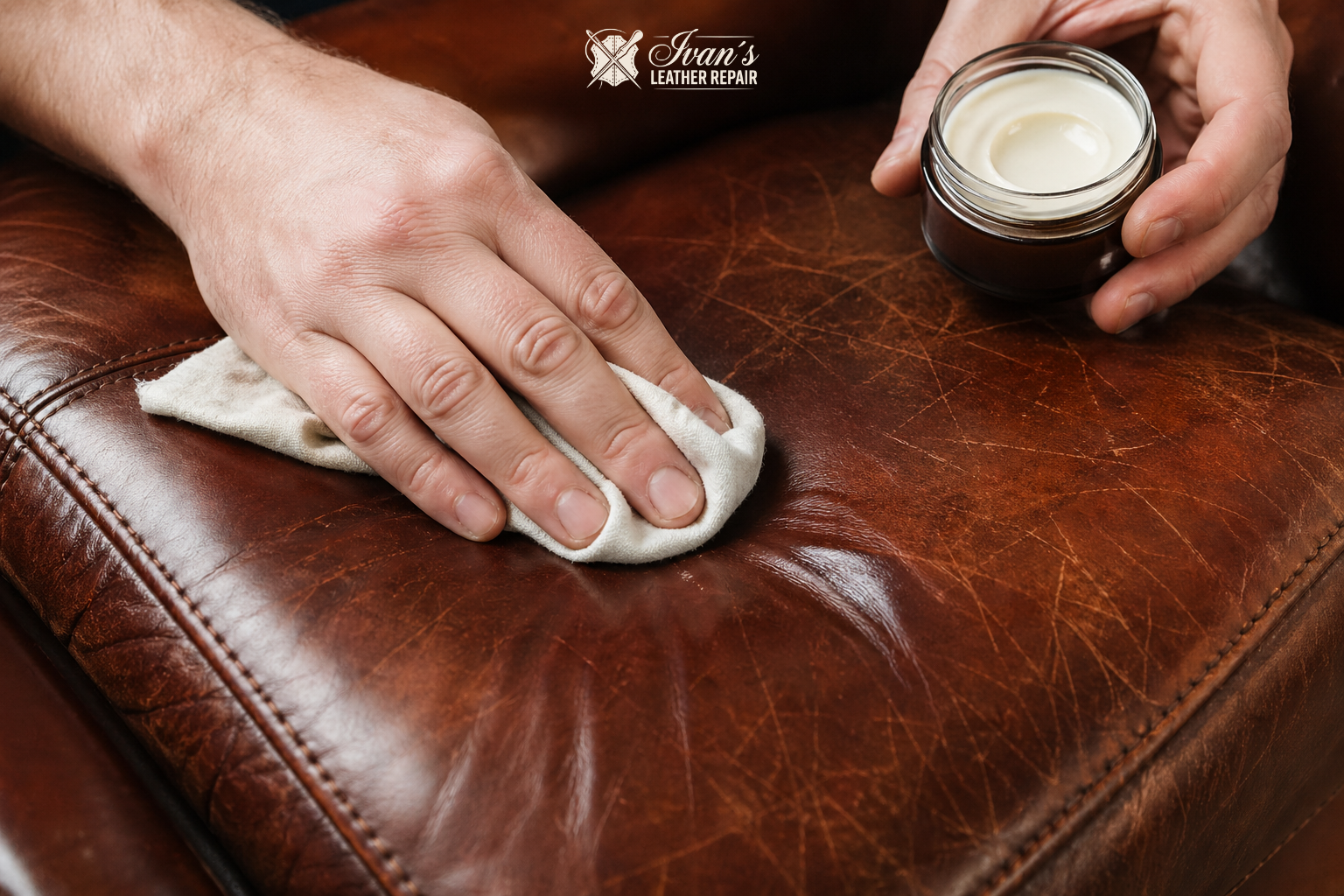
Start by cleaning to remove dirt, oils, and buildup. A pH-balanced leather cleaner is safest because it cleans without stripping the finish. Use a soft cloth in circular motions and let the leather dry fully before moving on. Cleaning is the foundation of any good restoration, as dirty surfaces can prevent other products from working properly.
2. Condition to Add Flexibility
Once clean, conditioning helps restore moisture and reduce stiffness. This is vital for dry or slightly cracked leather. Apply conditioner lightly and let it absorb as per the product's instructions. Over-conditioning can leave residue, so aim for balance. Experts recommend conditioning every four to six months, but more often in dry climates or for heavily used items.
3. Repair Scratches and Scuffs
If there are visible scratches or faded areas, you might need to repair the surface before finishing. Minor marks can often be softened with conditioner, but more serious damage might need fillers or recoloring. Matching the existing color is key. If your leather has tears, cracking, or pet damage, our pet damage leather repair and cracking leather repair services can help.
4. Recolor for an Even Finish
Recoloring is where worn leather can look renewed. Experts use dyes to blend worn areas with the rest of the surface, keeping a natural look. For example, a faded armrest can be recolored to match the sofa, making it look cohesive. Professionals usually apply several thin layers instead of one heavy coat for a natural finish.
5. Seal and Protect
The final step is applying a sealant to protect against moisture, dirt, and future wear. A good sealant also enhances the shine, giving leather a polished look. This step helps preserve your work and slows down future wear. If you’re working on a car interior, our auto leather repair service includes color work and protective finishing to help seats stand up to everyday use.
Tips from the Pros
Test Products First
Professionals always test products on hidden areas first to see how the leather reacts. This can prevent unwanted spotting or damage. It's a simple step that can save a valuable piece from unnecessary harm.
Use the Right Tools
Soft cloths, foam applicators, detailing brushes, and microfiber towels are all handy in leather restoration. Avoid harsh scrub pads, as they can damage the leather. The right tools help apply products evenly, which is crucial for blending repairs.
Take It Slow
Leather restoration is best done in stages. Each step requires attention and patience. Rushing can lead to streaks or uneven finishes. The best results come from building the finish gradually so the leather absorbs treatments evenly.
Know When to Call a Pro
While minor wear can often be handled at home, severe issues like deep cracks or torn seams may need professional help. This is especially true for high-value items where mistakes could reduce their worth. For heirlooms or collectibles, our antique furniture restoration service can help preserve their charm while addressing wear.
Real-Life Leather Restorations
Reviving Vintage Jackets
A vintage leather jacket might show fading and dryness over time. Restoration involves cleaning, conditioning, and recoloring to bring back its original tone. The result is usually a jacket that looks lived-in but loved, not neglected.
Sofa and Couch Makeovers
Leather furniture often needs restoration because it’s used daily. A faded sofa can be revitalized with cleaning, conditioning, and color correction. If sun exposure is a factor, check out our article on can your cracked leather sofa be saved for more guidance.
Office Seating Refresh
Commercial leather sees a lot of use and can develop dull spots quickly. Restoration helps keep business spaces looking sharp without the cost of replacing furniture. For business settings, our commercial leather repair service can extend the life of your seating.
Keeping the Shine Alive
Set a Maintenance Routine
Once leather is restored, regular care is key to keeping it looking great. Dust it with a microfiber cloth, wipe up spills quickly, and condition regularly. For a practical checklist, see our post on how to keep leather furniture looking great every day.
Guard Against Heat and Sun
Keep leather away from direct sunlight and heat sources like radiators. These elements can dry out leather over time. When the environment is well-managed, the restored shine lasts longer.
Condition Regularly
Conditioning every four to six months is a good rule of thumb, but adjust based on climate and usage. If the leather starts to feel stiff or look dull, it's time for another round of conditioning.
Common Mistakes to Avoid
Avoid Household Cleaners
Don't use generic cleaners on leather. They can strip protective coatings and dry out the material. Stick to products made for leather to avoid patchy shine loss.
Use Products Sparingly
Too much product can cause buildup or a shiny, unnatural finish. Thin, even layers are best, especially for smooth leather where mistakes show easily.
Don't Ignore Deeper Issues
While shine loss is obvious, deeper problems like cracks or weakened seams can go unnoticed. These need to be addressed to prevent further damage. For more severe issues, our burn hole leather repair and leather chair repair services can tackle what surface treatments can't.
Why Restoration Beats Replacement
Cost and Durability
Restoration is often cheaper than replacing a quality leather item. Well-made leather can last decades with care, and repairing is the smarter choice.
Eco-Friendly Benefits
Repairing leather supports sustainability by reducing waste and cutting demand for new items. Each restored piece is one less thing in a landfill.
Keeping Value and Character
Some leather items have sentimental or financial value that’s irreplaceable. Restoration preserves these memories and keeps the item functional. For classic vehicles, our classic car interior restoration service maintains authenticity while enhancing comfort.
FAQs on Leather Shine Restoration
How Often Should Leather Be Conditioned?
Most leather benefits from conditioning every four to six months. Dry environments or items in frequent use might need more care.
Can You Restore Badly Damaged Leather at Home?
Minor issues can be handled at home, but big problems like deep cracks or discoloration usually need a pro. For tricky cases, consulting a specialist is safer than a DIY attempt.
Will Restoration Make Leather Look New?
It depends on the condition. Restoration can significantly improve appearance and shine, but older leather might still show some character. Often, the goal is to refresh, not erase its history.
Wrapping Up: Bringing Leather Back to Life
Reviving worn leather is an art and a smart way to maintain your belongings. With proper steps, many items can get a fresh lease on life. This protects your investment, keeps things comfy, and supports sustainable use of materials. If you're ready to make your leather look new again, Ivan's Mobile Leather Repair is here to help. From detailed repairs to color restoration, our team focuses on natural, lasting results. To explore options and get professional support, visit Ivan's Mobile Leather Repair and see how we can restore the beauty and function of your leather items.