How Leather Color Restoration Revives Tired Furniture
Leather furniture is a hit in homes and offices because of its comfort, durability, and timeless look. But like anything else, leather can fade, get scuffed, dry out, or lose color over time, especially in spots that see a lot of action. This is where leather color restoration steps in, breathing fresh life into your pieces without the hassle or cost of buying new ones. If you're thinking about a professional fix, services like leather sofa & couch repair or leather chair repair often kick off with a detailed look: what can be spruced up, what's got structural issues, and how to get that color looking natural again.
In this guide, we'll explore how leather color restoration works, what types of damage it can tackle, and why it might just be the smartest move to keep your furniture going strong. We'll also touch on how pros figure out what type of leather they're dealing with, how much color has been lost, and where wear and tear show up before they dive into a restoration plan. For those curious about why it's smart to fix rather than replace, check out our practical guide to professional leather repair. Plus, we'll reference some respected sources like the U.S. Consumer Product Safety Commission and the Smithsonian Institution for tips on preserving materials and maintaining them well.
What Leather Color Restoration Really Does
It Fixes More Than Just Surface Scratches
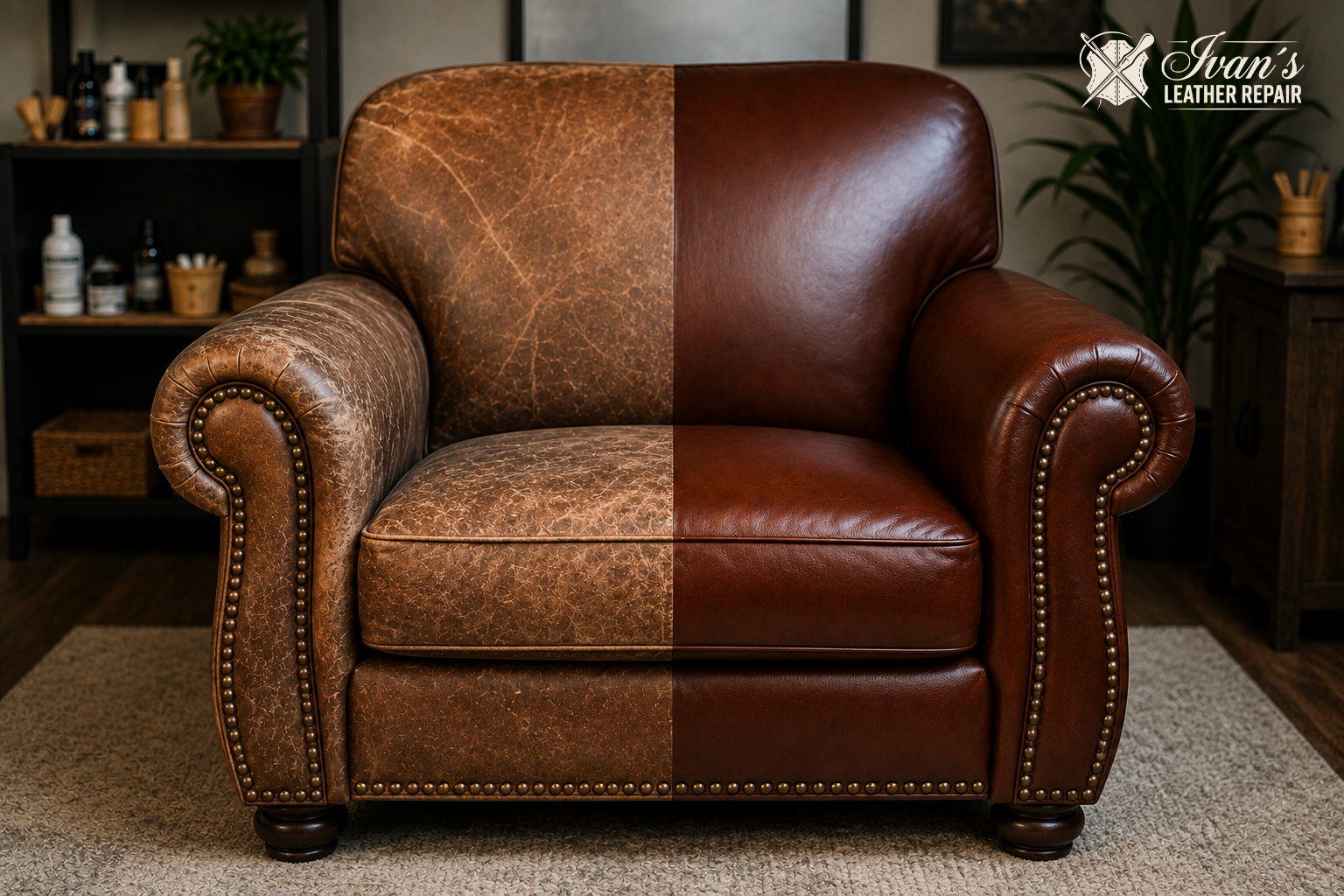
Leather color restoration goes beyond just slapping on some dye. The process typically starts with a deep clean to get rid of any residue and identify where the original finish has worn off. Then, small defects are patched up, worn spots filled if needed, and color is rebuilt in thin, controlled layers. The aim is to restore a consistent look while keeping the leather's natural feel and character intact.
It Smooths Out Faded Areas
The best restorations don't leave leather looking fake. They balance out the difference between faded and intact areas, making the whole piece look cohesive. This blending is key for spots like seat cushions, armrests, and headrests, which tend to fade first from use and sunlight. A careful blend can make a huge difference without erasing the leather's unique character.
It Protects the Material
Once the finish starts to wear down, leather is more prone to moisture, friction, and cracking. Color restoration helps rebuild the protective layer that keeps the material looking good longer. According to the U.S. Environmental Protection Agency, extending the life of usable goods is a simple way to cut down on waste. So, color restoration is a practical choice for anyone who wants to keep quality high and waste low.
Common Signs Your Leather Needs a Color Touch-Up
Sunlight Fading or Heavy Use
One of the biggest giveaways is fading, especially on pieces near windows or in bright rooms. Sunlight can gradually bleach pigments and dry out the finish, leaving leather looking uneven. In homes, this usually shows up on the back of sofas, sofa arms, and accent chairs. In businesses, it might be more obvious on waiting room seating and restaurant booths. If fading is noticeable, a service like sun damage leather repair might be your best bet.
Scuffs, Scratches, and Worn Edges
Areas that get a lot of contact naturally show wear over time. Repeated sitting, shifting, and pressure can cause scuffed patches that look lighter than the rest of the leather. Edges also lose their color faster because they get more abrasion. When this happens, restoration can bring the whole piece back to life and smooth out that patchy look that makes furniture seem older than it is.
Cracking and a Dry-Looking Finish
Color loss often comes with dryness and surface cracking. Once the top layer wears down, the leather might start to look chalky or stiff. In these cases, just recoloring isn't enough; the surface might also need conditioning or repair. A good tech will check if you need cracking leather repair before recoloring to make sure the final result looks great and lasts longer.
How the Leather Color Restoration Process Works
Inspection and Material Check
The first step is always a thorough evaluation. Leather can be full-grain, top-grain, aniline, and more, and each type reacts differently to cleaning and recoloring. A pro has to figure out if the leather can take new color evenly and if the original finish can hold up. This step is crucial because the wrong product or technique can mess things up.
Cleaning and Prep
Before any color goes on, the surface needs a good cleaning. Oils, body residue, dust, and old conditioners can mess with how well the color sticks. Pros use the right cleaning methods to prep the leather without over-saturating or stripping it aggressively. This prep work often makes the difference between a lasting restoration and a temporary fix.
Fixing Damage Before Recoloring
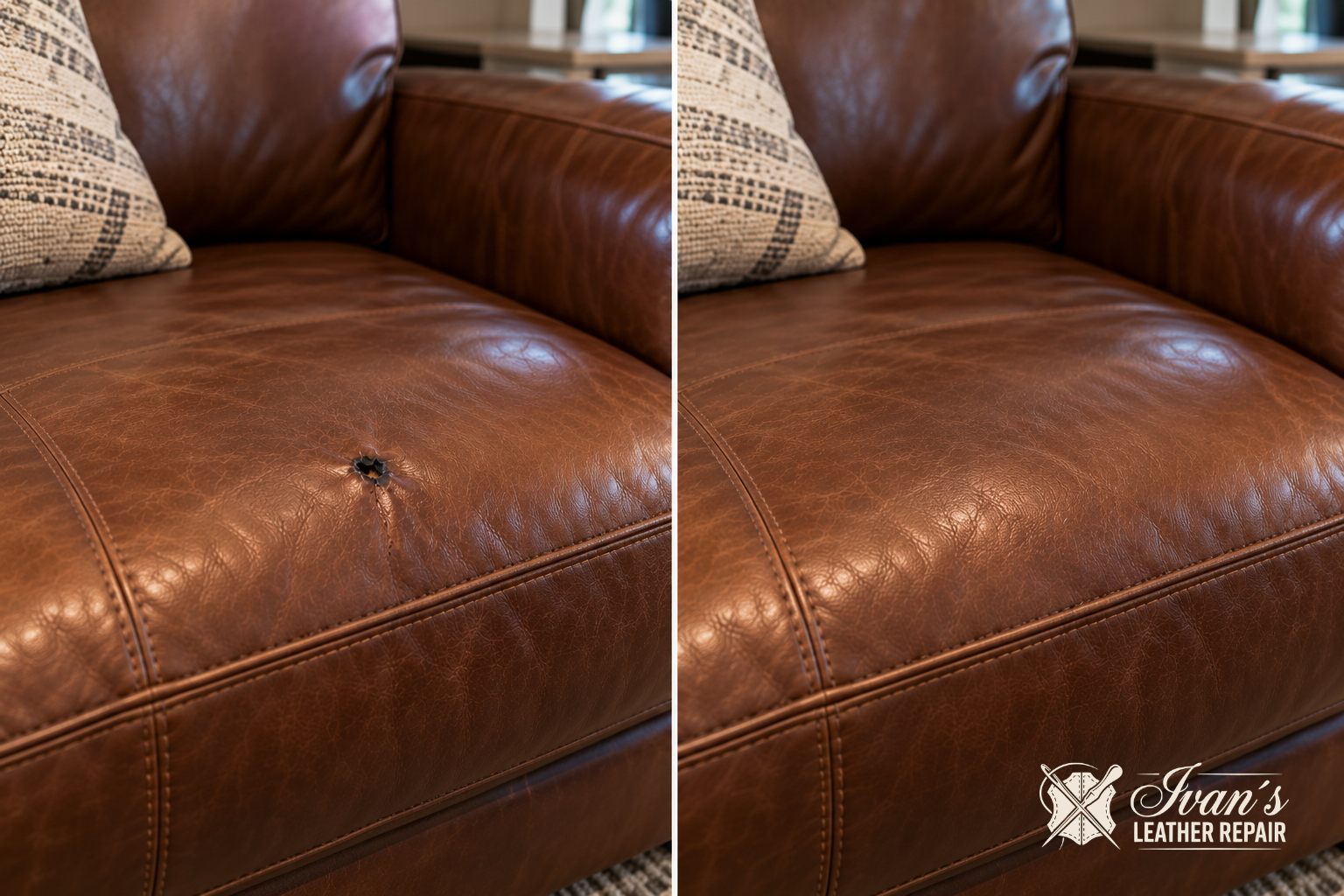
If there are tears, cracks, or deep gouges, these issues get fixed before any color is applied. Filling, patching, and smoothing edges might be needed for a solid base. For instance, furniture with pet damage often needs structural repairs before color work can hide the flaws. In those cases, pet damage leather repair can help restore both the look and usability. For burn marks, a specialist might suggest burn hole leather repair to provide a stable foundation for the color finish.
Matching and Applying Color
Color matching is a big deal in this process. A skilled tech studies the original shade, lighting conditions, and surrounding wear so repairs don't stand out. The new color is usually applied in thin coats to keep the texture and avoid a heavy look. Depending on the damage, they might recolor just the worn parts or the whole visible section for a seamless blend.
Finishing Touches
Once the color is set, a protective topcoat is applied. This layer helps resist future wear and matches the sheen to the rest of the piece. Good finishing is especially important if you have pets or kids, or if the furniture is in a busy area.
Why Restoration Beats Replacement
It's Easier on the Wallet
Replacing a full leather sofa or a set of restaurant booths can be pricey, especially if the frame and padding are still in good shape. Color restoration lets you keep the structure you have while giving it a fresh look. This route is usually the most cost-effective for high-end furniture, custom pieces, and items with sentimental value.
It's Better for the Planet
Fixing instead of replacing is a straightforward way to cut down on waste. Making furniture uses up materials, energy, and transportation resources, so extending the life of what you have is environmentally friendly. The EPA’s sustainable materials guidance encourages reuse and repair whenever possible. Leather color restoration fits right in with that mindset.
It Keeps Comfort and Craftsmanship
Many leather pieces are worth keeping because they're already super comfy. New furniture might look shiny, but it often lacks the same feel and quality. Restoration lets you keep the comfort and design you already love while sprucing up the look. That's especially valuable for heirloom furniture, designer pieces, and custom seating that would be tough to replace exactly.
Where Leather Color Restoration Shines
Living Room Furniture
Sofas, sectionals, recliners, and accent chairs are some of the top candidates for color restoration. They show the most wear because they're used every day and are often in bright, open spaces. Color work can bring a cohesive look back to cushions, armrests, and headrests. For bigger home seating projects, residential leather repair can tackle both the finish and the underlying wear.
Commercial Seating and Hospitality Furniture
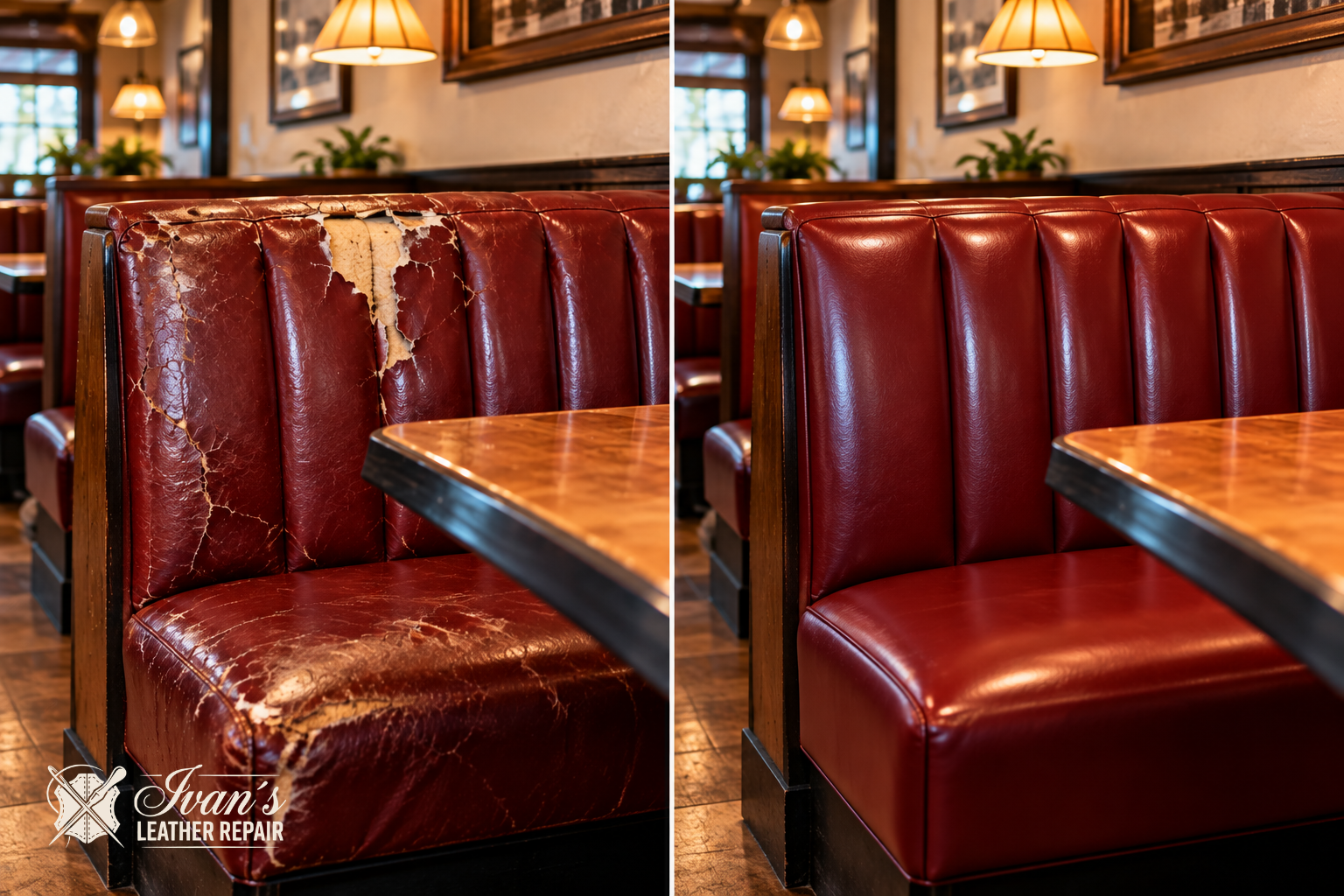
Businesses rely on first impressions, and worn leather can make a place look tired. Restaurants, offices, and waiting rooms benefit from restoration because it keeps everything looking polished without replacing all the furniture. If your business has booth seating that’s showing its age, restaurant booth repair can be especially effective. For office settings, commercial leather repair helps keep seating presentable and comfy.
Vehicles and Specialty Interiors
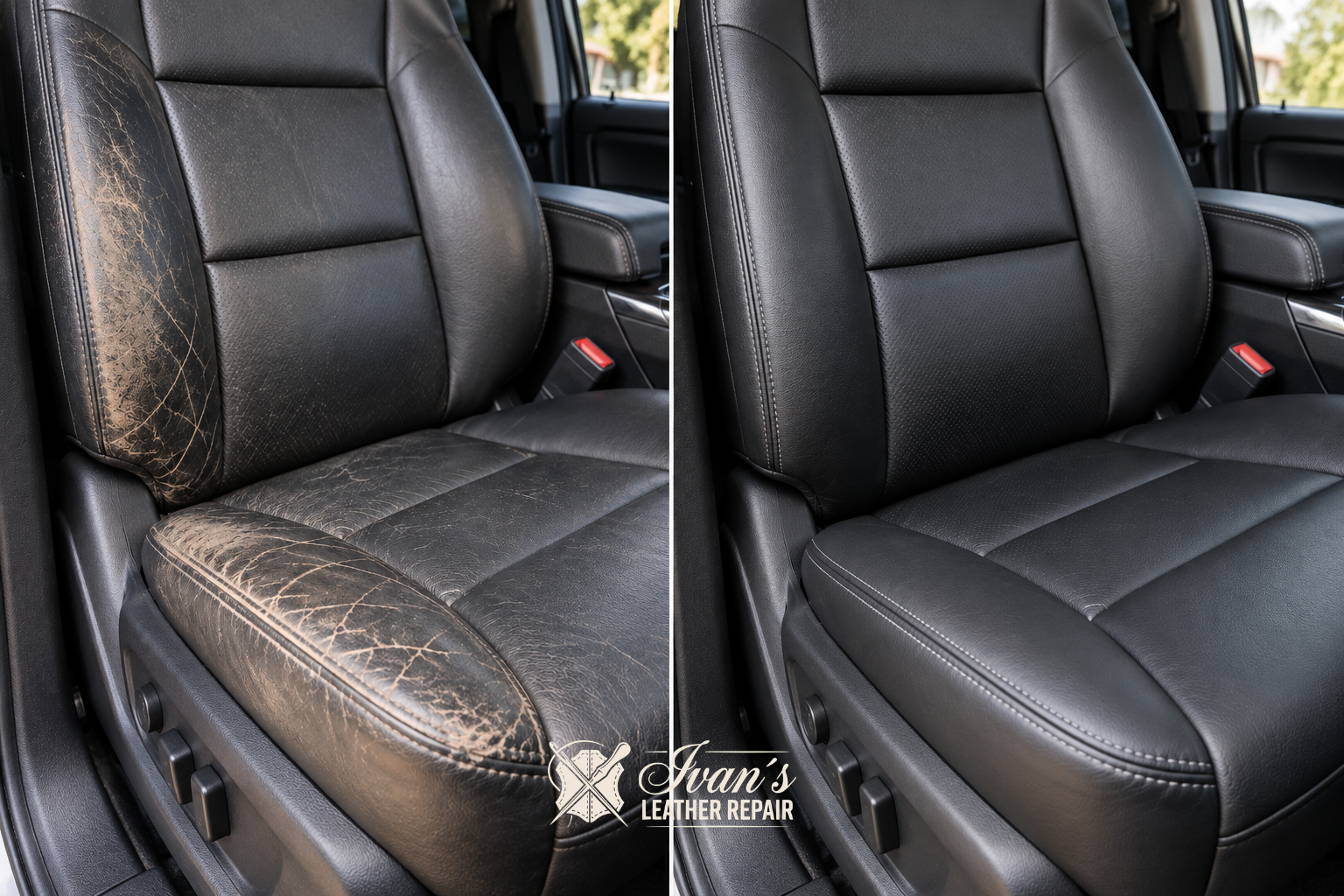
Leather color restoration is also big for car interiors, classic cars, and specialty spaces. Car seats and trim often fade from sun exposure, while vintage interiors might need careful color matching to preserve their original look. That's why auto leather repair and classic car interior restoration often include detailed recoloring as part of a bigger restoration plan. If severe fading from sunlight is the issue, specialized sun damage leather repair can help recover the original look more effectively.
How Pros Match Color Naturally
They Consider Undertones, Not Just the Obvious Color
Matching leather color isn’t as easy as picking the closest swatch. Pros look at undertones, grain pattern, gloss level, and how the leather looks under different lights. A tan piece might have warm, cool, or reddish undertones that you only notice once it’s clean. Getting these details right is what makes repairs blend into the rest.
They Consider Age and Patina
Older leather usually isn't uniform, even if it's been well-kept. Small variations in tone and sheen are part of its story. A good restoration doesn’t aim for a brand-new look but instead focuses on a balanced finish that respects the piece's age while removing the most noticeable damage.
They Use Test Spots and Layering
Before going all-in, pros might test color in a small, hidden area. This allows for adjustments in opacity and brightness. Multiple thin layers are better than one thick coat because they maintain the grain detail and flexibility. The result is a more believable finish that stands up to everyday use.
DIY Fix or Call a Pro?
When Conditioning is Enough
If the leather is just a bit dry or dull, a good conditioner and gentle cleaning might be enough for a quick fix. This works best when the surface is intact, and the color loss is minor. But conditioning doesn’t bring back missing color or fix deep scuffs. Once the finish is gone, it’s beyond a simple touch-up.
When DIY Can Go Wrong
Home color kits can leave streaks or mismatched tones if not done right. Overusing oils and conditioners can also mess up the finish or create residue that complicates future repairs. If you’re unsure, it’s safer to stop before trying products that might make things worse. Often, fixing a failed DIY attempt costs more than getting it done professionally in the first place.
When to Call in a Specialist
Professional help is your best option when the leather has large faded areas, multiple scratches, or color inconsistency. It’s also the right move for items that are valuable, custom, or hard to replace. For instance, if your favorite chair is showing wear, leather chair repair can restore it without sacrificing comfort. And if it’s a worn couch instead of a single chair, leather sofa & couch repair often provides a more thorough result than DIY recoloring.
Tips to Keep Restored Leather Looking Fresh
Avoid Direct Sunlight
UV exposure is one of the quickest ways to fade leather again after restoration. If you can, move furniture away from windows or use blinds during the brightest parts of the day. In offices and hospitality spaces, rethinking the layout can make a big difference in keeping things looking nice.
Clean Gently and Regularly
Regular dusting and mild cleaning avoid buildup that can dull the finish. Stay away from harsh chemicals, alcohol-heavy sprays, and abrasive cloths. These can strip the protective coating or dry out the leather. A simple routine keeps both the look and feel of the furniture intact.
Address New Damage Quickly
Small scratches or fading spots are easier to manage if you catch them early. Waiting lets the damage deepen and spread. If you notice new wear, it’s smarter to tackle it right away rather than waiting for a bigger restoration project. For tips on early intervention, read our article on why fixing small leather damage quickly is a smart move.
FAQs About Leather Color Restoration
Will Restored Leather Look Brand New?
It can look a lot better, but the exact outcome depends on the original condition. Restoration usually gets rid of the most obvious wear while keeping some natural texture and age. The goal is a clean, even, and attractive finish rather than a fake-looking one.
Can All Leather Colors Be Matched?
Most common upholstery colors can be closely matched, including black, brown, tan, gray, and more. Some specialty finishes or heavily sun-damaged areas need more testing and layering. Matching also depends on the leather type and surrounding wear, so professional evaluation is key.
How Long Does the Restoration Last?
It depends on use, exposure, and upkeep. Pieces in a bright, busy room may need attention sooner than those in a low-use area. With proper care, restored color can stay attractive for years. Protecting the surface from excess sun, friction, and harsh cleaning products is important.
Can Color Restoration Fix Cracks and Tears?
Color restoration can hide and improve many surface flaws, but structural damage needs fixing first. Cracks, tears, and holes often need filling before recoloring begins. In advanced cases, services like leather crack repair are necessary to create a stable base for the finish.
Giving Your Furniture a Second Chance
Leather color restoration is a great way to give worn furniture a fresh start by tackling fading, scuffs, and surface wear. Instead of ditching a quality piece, you can refresh its look, keep it comfy, and make it last longer. That’s good for your wallet, the environment, and the spaces you love. Done right, it’s not just about prettier furniture; it’s a smarter long-term choice.
If your leather sofa, chair, or car interior is looking a bit tired, now's a great time to explore your options. A skilled repair plan can help you figure out if you need cleaning, recoloring, structural repair, or a mix of all three. Ivan’s Mobile Leather Repair is here to help you choose the right fix and bring your leather back to life. To find out more, visit our website or call (347) 207-3031 to discuss your project today.