Scratched Leather Car Interior? Here's How to Restore It Without Replacing Everything
Got scratches on your leather car seats or trim? They can make your ride look a bit worn out. The good news is, you don't always need to replace everything. Many scratches are just on the surface and can be fixed without a full overhaul. With the right repair, you can make your car look and feel better and keep its value too.
If you're looking for solutions, this guide covers what causes leather scratches, how to fix them, when it's worth fixing them, and how to stop things from getting worse. If you're keen on finding the right fix, our auto leather repair services are here to help with worn-out seats and scuffed surfaces. You can also check our cracking leather repair and sun damage leather repair services for those issues that go beyond simple scratches.
Leather care is important because your car's interior deals with a lot—friction, heat, sunlight, and everyday use. According to the U.S. Department of Energy, heat can build up quickly in parked cars, which stresses interior materials over time. For more on vehicle safety and maintenance, the National Highway Traffic Safety Administration and the EPA offer great resources.
Why Leather Car Interiors Get Scratched So Easily
Daily Use Causes Friction
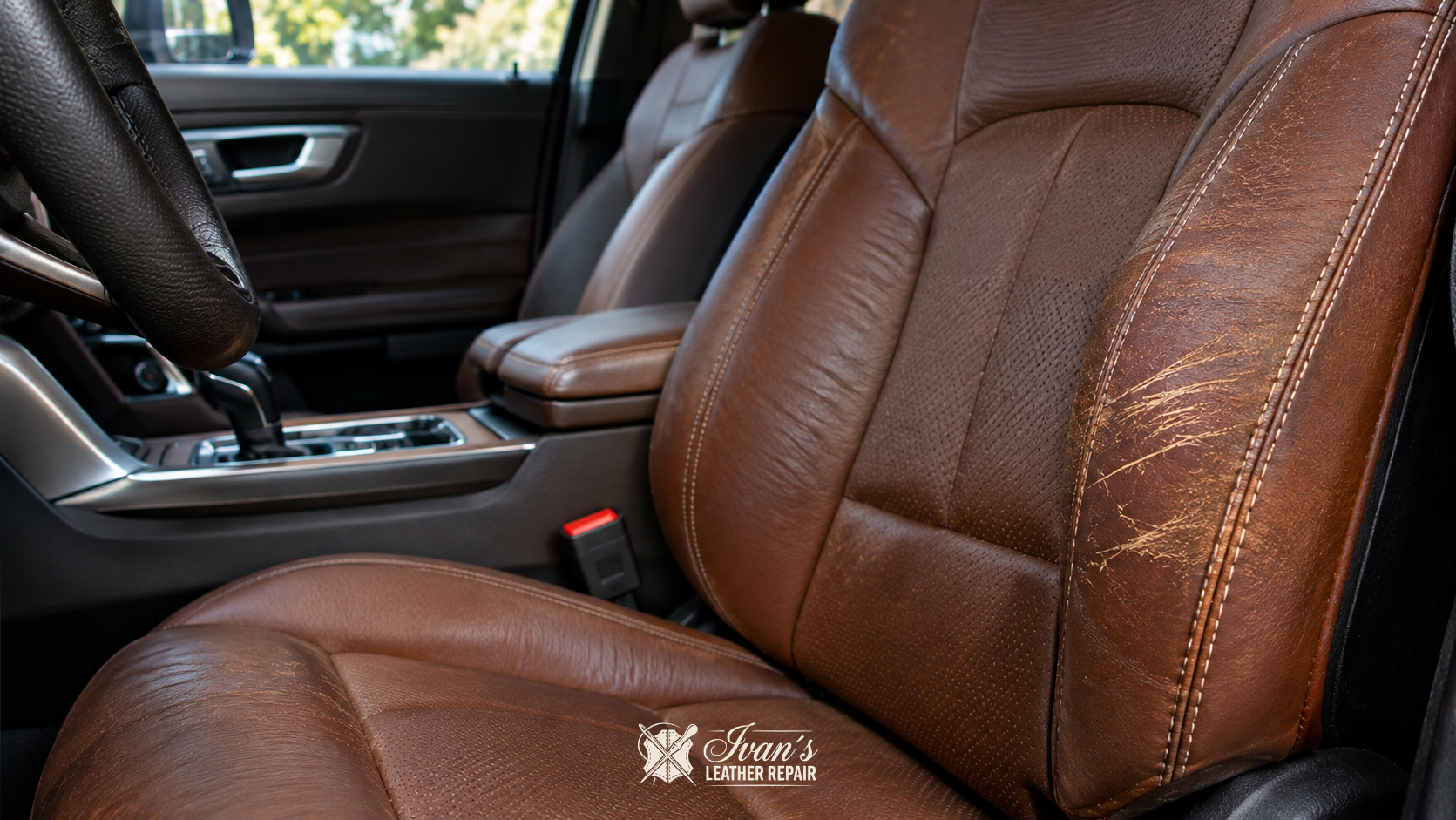
Leather is tough but not indestructible. Getting in and out of the car, shifting around, and carrying bags all create friction. The most affected areas are the driver's seat bolster, passenger seat edges, armrests, center consoles, and door panels.
Improper Cleaning Can Make Things Worse
Many folks use harsh cleaners or rough towels, which can actually make scratches more visible. Instead, use a soft microfiber cloth and a leather-safe cleaner. These are much better than abrasive household products.
Pets, Cargo, and Sharp Objects Add Risk
Pets jumping in, grocery bags dragging, keys scraping—these can all leave marks. If you regularly carry family, sports gear, or work equipment, scratches are even more likely. In such cases, preventing damage is just as important as repairing it. If scratches come with tears or gouges, check out our pet damage leather repair or burn hole leather repair services.
How to Tell if Damage Is Superficial or Structural
Light Scratches Usually Just Affect the Finish
Most scratches are cosmetic. If the mark is pale or shiny but doesn't split the leather, it's likely just on the surface. These scratches can often be cleaned, conditioned, and refinished to blend in.
Deep Scratches May Expose Leather Fibers
If a scratch catches your fingernail or feels rough, it might go beyond the finish. This usually needs a more detailed repair, which could include filling, smoothing, and color matching.
Cracks and Scratches Often Go Together
Dry leather tends to scratch and crack more easily. A professional assessment can help determine if a scratch is a sign of a bigger issue. For interiors showing both scratches and cracks, a combined approach with cracking leather repair can help.
What Professional Leather Repair Usually Involves
Assessment and Surface Preparation
First, a technician inspects the leather. They check the type, damage extent, finish condition, and whether it can be blended. The surface is then cleaned to ensure the repair will last.
Repairing the Damaged Area
After cleaning, scratches are leveled, filled, or smoothed, depending on depth. The aim is to recreate a smooth, natural look that blends in.
Color Matching and Refinishing
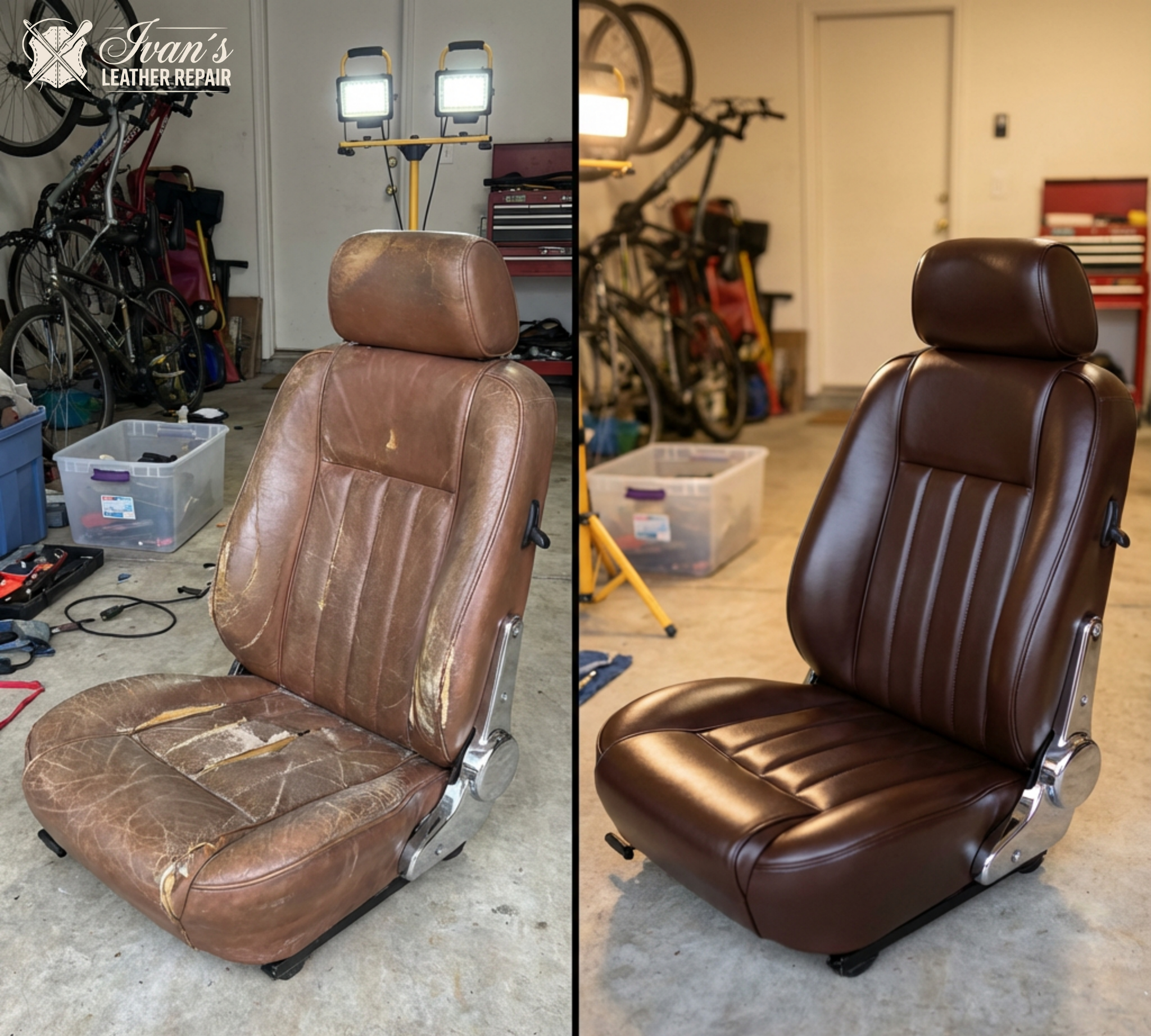
Color work is crucial. The repaired area needs to match the rest of the interior. Technicians often layer colors carefully for a consistent look. For heavily worn seats, broader recoloring can make a big difference. Check our leather sofa & couch repair and leather chair repair for more on how these techniques apply to other leather surfaces.
When Repair Makes More Sense Than Replacement
Repair Is Often Better for Localized Damage
If a scratch is just on one part of the seat or trim, replacing the whole thing can be expensive and time-consuming. Repair is smarter if the leather is still good and the rest of the interior looks fine.
Matching Original Materials Is Tricky and Costly
Vehicle interiors have specific patterns and colors. Replacing one section can be more complicated than it seems, and a mismatch can stand out more than the original damage.
Repair Can Protect Resale Value
A well-maintained interior can make a car more appealing to buyers. Scratches might suggest poor care, even if the car runs perfectly. Restoring the interior can improve the car's perceived value. For classic cars, consider classic car interior restoration for a more thorough solution.
DIY Fixes: What Helps and What Can Backfire
Safe At-Home Care for Minor Scratches
You can do a few things at home to minimize light scratches. Gentle cleaning and conditioning can help soften dry leather and improve shallow marks. These are good for maintenance, not major restoration.
Avoid Heat, Paint, and Household Products
Quick fixes like hair dryers or shoe polish can harm the leather. If a scratch is noticeable or rough, it's better to avoid experimenting.
Know When to Call a Specialist
If a scratch is deep or in a visible spot, professional repair is usually best. A specialist can see if the issue is just cosmetic or part of a bigger problem.
How Technicians Restore Scratched Leather for a Natural Finish
Blending Is Key
Good restoration should blend into the surrounding material. The goal is a repair that doesn't stand out.
Texture Matters as Much as Color
A repair can look off if the texture doesn't match, even if the color is perfect.
Final Protection Helps Extend the Repair
After fixing a scratch, a protective finish can help prevent future wear. It doesn't make the leather invincible, but it does improve durability.
How to Prevent Future Scratches in Your Car Interior
Keep Sharp or Abrasive Items Away
Try to reduce contact with objects that can scratch leather. Prevention is especially important if you regularly carry kids, pets, or work gear.
Use Regular Cleaning and Conditioning
Leather performs better with consistent care. Maintenance helps preserve flexibility and appearance.
Park and Drive with Interior Exposure in Mind
Sunlight and heat contribute to fading. Parking in the shade or using sun protection can help keep the interior looking new.
Common Questions About Scratched Leather Car Interiors
Can Every Scratch Be Repaired?
Not all scratches can be erased, but many can be improved significantly. The best way to know is to have the damage inspected.
Will the Repair Area Look Different?
A quality repair should blend closely, but the final result depends on the condition of the rest of the seat.
Is Repair Worth It for Older Cars?
Yes. Older cars can benefit from targeted restoration, especially if you want to keep the original materials. For more on preserving old leather, visit our antique furniture restoration page.
Why Professional Mobile Leather Repair Is Convenient
On-Site Service Reduces Disruption
Mobile repair is convenient. The work can often be done at your location, so you don't have to leave your car at a shop.
Service Tailored to the Problem
Mobile repair focuses on the specific damage. It's more efficient and cost-effective.
Local Expertise Matters
A local specialist knows the common types of damage and can recommend the right repairs. Our services like leather jacket repair and residential leather repair show how leather restoration adapts to different needs.
Final Thoughts: Restore Your Interior
Scratched leather interiors don't always mean you need to replace everything. Many times, damage can be repaired and protected to keep the cabin looking fresh. If your seats, trim, or armrests show wear, now's the time to get an expert opinion. Check out our auto leather repair solutions or contact Ivan’s Mobile Leather Repair to discuss your vehicle's condition. A careful repair today can save money and keep your interior looking sharp for much longer.